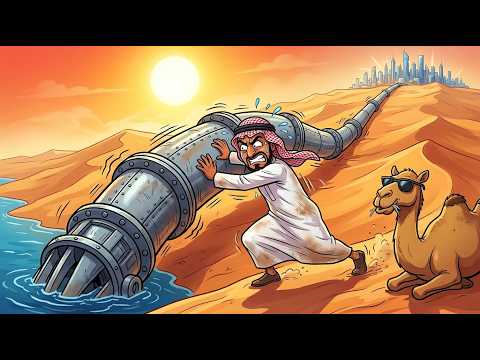
How a Country With Zero Rivers Drinks Water (Saudi Arabia)
The Paradox of Water in Saudi Arabia
Introduction to the Landscape
- Despite vast oil wealth, Saudi Arabia lacks permanent rivers or lakes, presenting a unique geographical paradox.
- Historically, great civilizations have thrived near rivers; however, Saudi Arabia defies this trend with its arid landscape.
Historical Context and Water Sources
- Over 20,000 years ago, during the last ice age, the region was lush with rainwater that is now trapped underground in limestone pockets.
- The discovery of these ancient water reserves coincided with the 20th-century oil boom, leading to rapid agricultural development.
Agricultural Experimentation
- In the 1980s, Saudi Arabia initiated an ambitious farming project using ancient water reserves to grow wheat in extreme desert conditions.
- This experiment initially succeeded but ultimately led to depletion of water resources by the early 2000s.
Desalination: A Solution or a Gamble?
Transition to Desalination
- With dwindling freshwater supplies and no natural sources available, Saudi Arabia turned to desalination as a solution for drinking water.
- The Ross Alkhair facility emerged as a monumental achievement in desalination technology, processing vast amounts of seawater into potable water.
Energy Demands and Environmental Impact
- Desalinating seawater requires immense energy; thus, facilities rely heavily on burning crude oil for power.
- This reliance creates an ironic situation where valuable oil is consumed merely to produce fresh water for consumption.
Infrastructure Challenges
Engineering Obstacles
- Transporting desalinated water from coastal plants to inland cities like Riyadh poses significant engineering challenges due to elevation differences.
- Extensive networks of pipelines are necessary to move millions of tons of water uphill through harsh desert terrain.
Fragility of Supply Systems
- The process generates toxic brine waste that harms marine ecosystems when discharged back into coastal waters.
- Any disruption in power supply could lead to immediate freshwater shortages for millions living in urban areas.
Future Prospects and Sustainability
Innovations and Alternatives
- To address sustainability concerns, investments are being made into solar-powered desalination technologies as alternatives to fossil fuels.
- Futuristic projects aim at creating emission-free systems while exploring artificial rain generation techniques.
Conclusion: A Delicate Balance
- The ongoing struggle between technological advancement and environmental sustainability raises questions about long-term viability in such an inhospitable environment.
Turn any video into a summary like this
YouTube links, meetings, lectures. With transcripts, search, and chat.