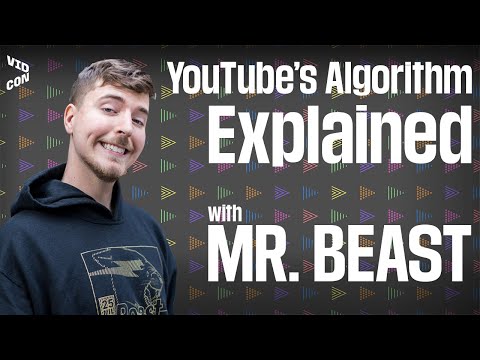
YouTube's Algorithm Explained with Mr. Beast
Introduction
The video begins with applause and the host, Mr. Beast, addressing the audience.
Mr. Beast's Introduction
- Mr. Beast greets the audience and acknowledges their presence.
- He mentions that this is one of the largest crowds he has ever spoken to in person.
- Mr. Beast introduces Todd, who is the head of discovery at YouTube.
Todd's Role at YouTube
Mr. Beast explains Todd's role at YouTube and highlights his expertise in understanding the YouTube algorithm.
Todd's Role as Head of Discovery at YouTube
- Todd is responsible for leading the discovery product team at YouTube.
- His main focus is improving YouTube products for viewers by enhancing personalization and performance.
- He collaborates with product designers and machine learning engineers to make the interface more user-friendly and recommend relevant videos to viewers.
Q&A Format and Audience Questions
Mr. Beast discusses the format of their conversation, which involves asking each other questions sourced from Discord to provide valuable insights to creators.
Q&A Format and Audience Questions
- Mr. Beast mentions that they have gathered questions from Discord to address topics that would be most valuable to creators.
- They will take turns asking each other questions during their conversation.
Focus on Creator Track
The importance of focusing on the creator track during their discussion is emphasized.
Focusing on Creator Track
- It is highlighted that they are on the creator track, where Jimmy (Mr. Beast) aims to help other creators succeed on YouTube.
- The audience is encouraged to keep their questions focused on this topic.
Todd's Job at YouTube
Mr. Beast asks Todd about his role at YouTube and what it entails.
Todd's Job at YouTube
- Todd explains that he leads the discovery product team and attends numerous meetings.
- His main objective is to improve YouTube products for viewers, ensuring they find videos they love and want to keep coming back to.
- He collaborates with product designers and machine learning engineers to enhance the user interface and recommend the right videos to each viewer.
How Does the Recommendation Algorithm Work?
Mr. Beast asks Todd about how the recommendation algorithm on YouTube works.
The Recommendation Algorithm on YouTube
- Todd mentions that there is complexity behind the algorithm but breaks it down into two key parts: personalization and performance.
- Personalization focuses on understanding each viewer, while performance looks at how a video is performing more generally.
- Contrary to popular belief, recommendations are not solely based on uploading a video; they are calculated in real-time when someone opens the app or visits specific pages like the home page or up next section.
- Personalization takes into account a viewer's history of watched videos, subscribed channels, and individual video preferences.
- Recommendations are tailored based on this information, such as suggesting new videos from subscribed channels or considering specific video preferences.
Leveraging Channel Subscriptions and Individual Videos
Todd explains how channel subscriptions and individual video preferences influence recommendations.
Leveraging Channel Subscriptions and Individual Videos
- The algorithm considers a viewer's subscribed channels to suggest new videos from those channels.
- It also analyzes individual video preferences, such as watching specific videos from a channel related to Minecraft leading to more Minecraft-related recommendations.
This summary covers only a portion of the transcript provided.
How YouTube Recommends Videos Overview
In this section, the speaker discusses how YouTube recommends videos to users based on their preferences and behavior. They mention the use of deep learning techniques and real-time data collection to personalize recommendations and improve performance.
Personalization Techniques
- YouTube uses deep learning models that mimic how the human brain works to understand user preferences.
- The machine learns by analyzing data about videos that people watch, finding patterns, and making connections between videos.
- User data is used to map out their interests and recommend similar videos.
Performance Analysis
- YouTube collects real-time data as videos are shown to users.
- Similar users' reactions are analyzed to predict how a particular user will interact with a video.
- Factors such as click-through rate, watch time, likes/dislikes, and survey responses are considered in ranking videos.
Satisfaction Measurement
- YouTube aims to reward videos that inspire viewers and make them want to come back for more.
- Surveys are conducted while users scroll through their homepage to gather feedback on previously watched videos.
- Millions of survey responses are fed into the system to determine viewer satisfaction.
Diversifying Results
- To avoid showing only one channel's videos at the top of recommendations, YouTube includes measures to diversify results.
- Viewers prefer seeing a variety of content when they open up YouTube unless it's a specific channel they love.
Future Predictions
- YouTube aims not only to predict user behavior with current videos but also future engagement on the platform.
- The goal is for each video recommendation to enhance the viewer's experience and strengthen their connection with YouTube.
Advice for Small Creators Overview
In this section, the speaker addresses small creators on YouTube and provides advice for those who are just starting or struggling to gain traction.
Empathy for Small Creators
- The speaker acknowledges that they were once a small creator themselves.
- They understand the challenges faced by small creators who may not have a large subscriber base.
Tips for Small Creators
- The speaker suggests focusing on creating valuable content that resonates with the target audience.
- Building a community and engaging with viewers through comments and social media is crucial.
- Collaborating with other creators can help expand reach and attract new viewers.
- Consistency in uploading content and optimizing video titles, descriptions, and tags is important for discoverability.
Timestamps provided are approximate.
Advice for Smaller Creators
In this section, the speaker provides advice for smaller creators on how to improve their content and gain more views.
Making 100 Videos and Continuous Improvement
- The speaker advises smaller creators to make 100 videos and focus on improving one aspect with each video.
- By continuously honing their craft and making incremental improvements, creators can enhance the quality of their content over time.
- It is important not to worry too much about the algorithm initially but rather focus on creating content that people want to watch.
Refining Skills and Entertaining People
- The speaker emphasizes that refining skills and becoming a good storyteller takes time, often several years or even a decade.
- Before worrying about getting views, it is crucial to become proficient in making entertaining videos that captivate an audience.
- The numbers on the screen represent real people, so it is essential to create compelling content before focusing on optimization.
Importance of Practice and Improvement
- Regardless of the type of content being created, making a large number of videos allows for continuous improvement.
- By dedicating oneself to producing numerous videos while consistently enhancing specific aspects, significant progress can be made.
- After creating around 100 videos, there should be noticeable improvement compared to the first video.
Understanding Viewer Perspective
This section highlights the importance of understanding viewers' perspective as a creator.
Being a Viewer Yourself
- The speaker encourages creators to put themselves in the shoes of viewers who have countless options available.
- By searching for popular topics or keywords related to their own content niche, creators can observe what successful creators are doing differently.
- Innovative approaches such as introducing storytelling or finding unique angles help make content stand out among competitors.
Differentiating from Other Creators
- If many other creators are already covering a particular topic extensively, it is crucial to find a way to differentiate oneself.
- Creating something different and interesting that captures viewers' attention is essential for success.
- Building an audience starts with offering something unique and compelling that makes people want to click on your videos.
Content Ideas and Evolution
The speaker discusses their journey in deciding what content to create and how it has evolved over time.
Continuous Improvement
- The speaker's approach has always been focused on improving with each video they create.
- Starting from humble beginnings, they gradually refined their skills over 11 or 12 years, resulting in significant progress.
- Transitioning from one type of content (e.g., gaming) to another (e.g., recreating Squid Game) usually requires several years of growth.
Reinvesting in Content
- The speaker mentions reinvesting the money earned from brand deals back into creating more content.
- By constantly improving and reinvesting, creators can experience continuous growth in their channel.
Leading the Audience or Being Led by Them
- The speaker reflects on whether they lead the audience or if the audience leads them in terms of content direction.
- It is not explicitly answered in this section.
This summary covers only a portion of the transcript.
The Challenge of Evolving Content
In this section, the speaker discusses the challenge of evolving content and avoiding becoming stagnant in their YouTube career. They emphasize the importance of innovation and adaptation to keep growing.
Adapting to Avoid Stagnation
- It's important to avoid relying on one type of content or series for too long.
- Donating large sums of money to Twitch streamers was a popular video idea, but it couldn't be sustained as a long-term career.
- The speaker wants to keep growing, innovating, and adapting instead of being known solely for one type of content.
- Predicting when a series is about to decline and pivoting before it happens is crucial.
Being Creative and Taking Risks
In this section, the speaker emphasizes the need for creativity and taking risks in order to lead in innovation. They also mention that not every video will be successful, but that shouldn't deter creators from continuing to innovate.
Leading with Creativity
- To be an innovative creator, one must embrace creativity and think beyond what already exists.
- Not every video will perform well when trying new things, but failure is part of the process.
- Being open to taking risks and trying different approaches is essential for growth.
YouTube's Support for Small Creators
This section highlights YouTube's dedication to supporting small creators. The platform has teams focused on helping small creators break through by analyzing data and finding ways to introduce their content more intelligently.
Support for Small Creators
- YouTube cares about small creators and has dedicated teams working towards their success.
- It can be challenging for YouTube to promote videos from unknown creators since limited information is available about their content.
- The recommendation system relies on audience feedback to understand who will enjoy a video.
- YouTube tracks the number of small creators reaching milestones like 300 subscribers and supports their growth.
Balancing Exploitation and Exploration
This section discusses the challenge of balancing exploitation (recommending popular videos) and exploration (finding hidden gems). YouTube aims to find ways to introduce lesser-known videos to viewers more intelligently.
Balancing Recommendations
- Exploitation involves recommending videos based on existing data, such as viewer preferences and popular channels.
- Exploration focuses on finding potential hidden gems that haven't gained much attention yet.
- YouTube is working on finding the right balance between exploiting popular content and exploring new possibilities.
The Power of Optimization and Audience Feedback
This section highlights the impact of optimization and audience feedback in growing a channel. By studying analytics, creators can learn what resonates with their audience and improve their content accordingly.
Learning from Analytics
- Click-through rate (CTR) is an important metric for understanding video performance.
- In the past, CTR data was not readily available, making it challenging for creators to analyze why certain videos performed better than others.
- Optimization efforts, guided by analytics, can lead to significant growth in views and engagement.
- A video's success builds over time as more people watch it and enjoy it, leading to increased visibility through recommendations.
The transcript provided does not cover the entire duration of the video.
Analyzing Retention and Gathering Data
The speaker discusses the importance of analyzing retention charts to identify areas for improvement in videos. They emphasize the need to gather data and take notes on viewer behavior, such as identifying patterns when viewers drop off. This process helps in understanding factors like video quality, lighting conditions, and viewer preferences.
Analyzing Retention and Identifying Mistakes
- The speaker suggests looking at the retention chart to identify mistakes and areas for improvement in videos.
- They encourage questioning why there are dips in retention and how those could have been avoided.
- Gathering data from different channels and countries helps understand audience preferences.
Taking Notes and Fact Checking
- After uploading a video, the speaker checks if there is any loss of retention and takes notes on specific moments where viewers drop off.
- They compare these notes with previous videos to determine if certain actions or events consistently lead to a decline in viewership.
Understanding Viewer Preferences
- Over time, by gathering enough notes, patterns start emerging that reveal viewer preferences.
- For example, dimly lit rooms may result in lower attention from viewers compared to well-lit rooms.
- These observations help improve future video production by considering factors that enhance viewer experience.
Importance of Thumbnail Updates
The speaker discusses the significance of thumbnail updates for older videos. They explain that while they usually don't change thumbnails immediately after uploading a video, they periodically revisit older content to update thumbnails based on improved knowledge and skills. Updating thumbnails can lead to increased engagement with older videos.
Updating Thumbnails Over Time
- Thumbnail updates are not done immediately after uploading a video but rather revisited after a few years.
- By updating thumbnails based on new knowledge and skills, older videos can see an uptick in engagement.
- The speaker mentions the example of zooming in on thumbnails to make them more visible and appealing.
Thumbnail Vision and Sketching
The speaker discusses their approach to thumbnail creation, including sketching out ideas before finalizing a thumbnail. They highlight the importance of finding creative ways to represent video content while considering visibility and viewer comprehension.
Thumbnail Creation Process
- The speaker wishes for a projector-like tool to visualize thumbnail ideas.
- Thumbnails are usually sketched out beforehand by someone named Chucky.
- Sketches help determine if the thumbnail effectively represents the video content and if it is visually appealing.
Balancing Jet Representation with People Visibility
- An upcoming video involves showing people placing their hands on a jet.
- The challenge lies in representing both the jet and people clearly in the thumbnail due to size constraints.
- Through sketches, they experiment with different approaches to find an effective balance.
Focus on Storytelling over Algorithm Manipulation
The speaker expresses their preference for discussions centered around improving storytelling skills rather than focusing solely on algorithm manipulation. They believe that creating great videos that stand out and resonate with viewers is more important than gaming algorithms.
Importance of Becoming a Better Storyteller
- The speaker wishes for more conversations about becoming better storytellers and making high-quality videos.
- They feel that discussions about algorithm manipulation should take a backseat as algorithms simply reflect audience preferences.
- Creating unique and interesting content tends to perform well, emphasizing the significance of storytelling skills.
Understanding Audience Preferences
The speaker emphasizes understanding one's audience instead of fixating on algorithm-related questions. They suggest replacing "algorithm" with "audience" when considering factors like upload time, frequency, and content choices.
Replacing Algorithm with Audience
- The speaker advises replacing the word "algorithm" with "audience" in questions related to upload time or frequency.
- Understanding one's audience is crucial for making informed decisions about video production.
- They highlight the importance of knowing what viewers want to watch and creating content that resonates with them.
Understanding Audience Metrics in YouTube Analytics
In this section, the speaker discusses the importance of analyzing audience metrics in YouTube Analytics to gain insights about the audience. The "Audience" tab in analytics provides valuable information such as videos watched by the audience, videos that attracted new viewers, and audience retention.
The Audience Tab in Analytics
- The "Audience" tab in YouTube Analytics provides metrics that help creators understand their audience better.
- It shows which other videos your audience watched during a specific period, giving you an idea of their interests.
- It reveals which videos attracted new viewers to your channel and whether they continued watching more content from your channel.
- Analyzing the audience tab can provide valuable signals about video quality and viewer engagement.
Comparing Videos and Groups
- There is a hidden feature in YouTube Analytics that allows you to compare different videos against each other, controlling for time.
- Grouping videos together can help analyze performance based on factors like subscribers gained or watch time.
- This comparison feature is useful for understanding how certain types of videos perform compared to others within your channel.
Impact of Subscriber Interaction on Video Potential
In this section, the speaker addresses concerns about a video's potential if subscribers do not interact with it. They explain how YouTube's algorithm aims to show videos to relevant viewers beyond just subscribers and emphasizes the importance of diversifying content while considering subscriber preferences.
Subscriber Interaction and Video Success
- Creators often worry that if their existing subscribers do not interact with a new video, it will negatively impact its potential.
- YouTube's algorithm aims to show videos to viewers who are likely to be interested, not solely relying on subscribers.
- Most views on channels come from non-subscribers, indicating the importance of reaching a broader audience.
Subscriber Diversity and Content Pivot
- Subscribers have diverse interests, and assuming they will like all videos is oversimplifying.
- While pivoting content can attract a new audience, abruptly changing topics may alienate existing subscribers.
- It is advisable to pivot gradually over time rather than making sudden and drastic shifts in content.
The transcript provided does not include timestamps for every section.
The Importance of a Smooth Transition in Content Pivots
In this section, the speaker emphasizes the importance of gradually transitioning to new content rather than abruptly pivoting. They compare it to watching 100 episodes of SpongeBob and suddenly encountering an episode of Adventure Time, which can be confusing for the audience. It is advised to make the switch slowly over time.
Smooth Transition in Content Pivots
- Abruptly switching content can confuse the audience.
- Gradually transition to new content over time.
- Avoid making super abrupt changes.
Be Patient with Traffic When Pivoting
This section highlights the need for patience when pivoting to something new. The speaker mentions that it may take some time for the algorithm to adjust and for traffic to pick up. They share an example where a video initially didn't perform well but gained traction after a week.
Patience with Traffic When Pivoting
- It takes time for the algorithm to adjust when switching content.
- Don't panic if a new video doesn't perform well immediately.
- Give it at least a week before assessing its performance.
Utilizing Shorts as Long Form Creators
The discussion revolves around utilizing shorts as long-form creators. The speaker suggests considering goals with shorts, such as deepening engagement with current fans or experimenting in a new direction. They also mention how shorts can help drive traffic to long-form videos.
Integrating Shorts as Long Form Creators
- Experiment with shorts based on your goals.
- Determine if you want to deepen engagement or explore new directions.
- Shorts can drive traffic towards long-form videos.
Exploring Different Strategies with Shorts
The speaker discusses the growth of shorts and how creators are using them in various ways. They advise long-form creators to experiment with shorts and find strategies that align with their goals, whether it's engaging current fans or acquiring new viewers.
Exploring Different Strategies with Shorts
- Shorts have experienced significant growth.
- Long-form creators can experiment with different strategies using shorts.
- Determine if you want to engage current fans or acquire new viewers.
Shorts' Positive Impact on Long Form Content
This section highlights the positive impact of shorts on long-form content. The speaker shares examples of creators who have seen an increase in subscribers and views on their long-form videos after incorporating shorts into their content strategy.
Positive Impact of Shorts on Long Form Content
- Incorporating shorts can lead to more subscribers and views on long-form videos.
- Examples show increased engagement and revenue from long-form content due to successful shorts.
Growth Potential of Channels Utilizing Shorts
The speaker addresses concerns about monetization differences between short-form and long-form content. They share data analysis indicating that channels utilizing both formats tend to grow faster and achieve more success. Short form is here to stay, and integration will likely improve over time.
Growth Potential of Channels Utilizing Shorts
- Channels utilizing both short form and long form tend to grow faster.
- Data analysis shows success for channels incorporating shorts.
- Short form is a growing trend that will continue to evolve.
Algorithm Adjustments for Shorts Launch
The speaker shares insights into algorithm adjustments during the launch of shorts. They explain how viewer behavior within the shorts feature affected recommendations outside of it, emphasizing the need for experimentation as YouTube continues refining the integration of shorts.
Algorithm Adjustments for Shorts Launch
- Viewer behavior within shorts affected recommendations outside of the feature.
- YouTube continues to refine the integration of shorts.
- Experimentation is necessary as YouTube evolves its algorithm and features.
The Algorithm's Handling of Long-Form and Shorts
This section discusses how the algorithm handles long-form content and shorts on YouTube, as well as the need to bridge the gap between the two.
Algorithm's Treatment of Shorts
- Viewers started complaining about long-form content in the main YouTube.
- The algorithm didn't know how to handle shorts properly.
- To address this, they split off the history for viewers in the main YouTube, ignoring what shorts they watched.
- However, this created a disconnect between short and long-form content.
Building a Bridge
- Currently, there is no bridge from shorts to long-form content.
- The team is working on building that bridge back in.
- They aim to give the system context about viewers watching shorts so it can understand their preferences.
Balancing Video Length and Audience Appeal
This section explores the tension between serving existing long-time viewers and attracting new ones by creating videos that appeal to a broad audience.
Attracting New Viewers
- About one-third of viewers in a particular month had not watched the channel at all in the previous year.
- It was surprising that an established creator still attracted new viewers regularly.
- Different approaches work for different creators, such as tight-knit communities or broader video styles.
- They aim to make videos that anyone can jump into and enjoy regardless of their background or age.
Storytelling and Analytics
This section delves into storytelling techniques and its impact on analytics. It also discusses challenges faced when deciding which aspects of storytelling to focus on due to high view counts.
Importance of Storytelling
- Storytelling affects analytics by engaging viewers.
- It is a tool to enhance the overall video experience.
- Challenges arise when deciding which aspects of storytelling to prioritize due to high view counts and diverse viewer preferences.
Depth in Storytelling
This section focuses on the challenge of providing depth in storytelling when there are numerous individuals involved in a video.
Balancing Depth for Individuals
- Providing depth for individuals can be challenging when there are many people featured in a video.
- Deciding how much depth to show for each person is crucial.
- Storytelling aims to create attachment and connection with viewers.
The transcript provided does not contain enough information beyond this point.
The Book "Save the Cat" and Storytelling
In this section, the speaker discusses a book called "Save the Cat" that is recommended for learning more about storytelling.
Save the Cat Book Recommendation
- The speaker mentions a book called "Save the Cat," which is about storytelling.
- The book is recommended by someone named Hayden, who is obsessed with storytelling.
- The speaker talks to Hayden a couple of times a year and he always shares his knowledge on storytelling.
Retention and Storytelling in Solitary Confinement Video
In this section, the speaker discusses the process of creating a video about solitary confinement and how it was easier to create a compelling story due to having ample footage.
Creating a Compelling Story in Solitary Confinement Video
- The solitary confinement video featured one person staying in a room for multiple days.
- For each day the person stayed in the room, they received ten thousand dollars.
- With 23 days of footage available, there was plenty of content to build an engaging story around.
- Having 300 hours worth of footage made it easier to create a captivating narrative.
Interesting Trends on YouTube Platform
In this section, the speaker discusses interesting trends observed on the YouTube platform during the pandemic.
Trends During Pandemic
- When the pandemic hit, there was an expected increase in viewership due to people being stuck at home.
- Surprisingly, there was also an increase in content creation during this time.
- Live streaming has seen significant growth as it provides a simultaneous and interactive experience for viewers.
- Learning online became essential for many young people during the pandemic, leading to growth in educational content.
- Shorts, a feature on YouTube, has become a popular format for creating and consuming short videos.
Seasonal Traffic Patterns on YouTube
In this section, the speaker discusses how seasonal factors, such as school schedules, can impact traffic patterns on YouTube.
Seasonal Traffic Patterns
- When school is out, there is a shift in traffic patterns on YouTube.
- Instead of spiky traffic on weekends, there is more consistent traffic throughout the week during summer or when people are not busy with school.
- Uploading videos on Saturdays may result in fewer views during summer but overall views remain consistent or even increase by the end of the week.
- Real-time metrics should not be overly focused upon as videos can continue to gain views over time.
Growth of Watching YouTube on TV
In this section, the speaker discusses the growing trend of watching YouTube content on living room devices such as gaming consoles and smart TVs.
Growth of TV Viewing
- Watching YouTube content on living room devices like gaming consoles and smart TVs is experiencing significant growth.
- Mobile remains the number one way people watch YouTube, but watching on TV is rapidly increasing.
- Creators should consider how their content will appear and be engaging on both big screens and small screens.
Reminders for Making Better Videos
In this section, the speaker discusses common reminders given to their team members regarding video production.
Common Reminders for Video Production
- Team members often forget to prioritize quality over ease when making videos.
- The focus should be on finding effective ways to create compelling content rather than taking shortcuts or opting for easy solutions.
New Section
In this section, the speaker discusses trade-offs and the importance of making the best video possible. They also mention forgetting to incorporate certain elements into videos, such as jokes or emotional responses at the end.
Adjusting Priorities for Video Quality
- The speaker emphasizes that it's important to focus on making the best video possible, regardless of how difficult it may be.
- Traditional film-making approaches differ from their perspective, where they prioritize creating the best video rather than considering effort or trade-offs.
Forgetting Elements in Videos
- The speaker mentions that they try to end their videos with a joke or an emotional response to engage viewers.
- However, they admit that sometimes they forget to include these elements due to exhaustion after long hours of filming.
- Despite wanting to end videos on an emotional note, fatigue often leads them to overlook this aspect.
New Section
In this section, the speaker expresses excitement about the growing recognition of the creator economy and shares their appreciation for YouTube's support towards creators. They also discuss upcoming trends and formats in content creation.
Excitement about Creator Economy
- The speaker is excited about how people have become aware of the creator economy and its potential for earning money online.
- They recall that during the pandemic in 2020, news outlets started focusing on this concept while creators had already been involved in it for some time.
- The speaker appreciates YouTube's values and support for creators, mentioning revenue sharing initiatives that began 15 years ago through their partner program.
Future Trends in Content Creation
- The next era of content creation involves exploring multiple formats such as short form, long form, image posts with memes, live streams, and even live shopping experiences.
- An example is given where a creator in China sold nearly 2 billion worth of lipstick or makeup in a single day through live shopping.
- The speaker invites viewers to send questions or topics they would like to discuss, indicating their willingness to address any missing aspects.
New Section
In this section, the speaker responds to a question about the importance of click-through rate (CTR) and average view duration (AVD) for YouTube's algorithm. They also mention the impact of features like chapters and hover previews on AVD.
Impact of Features on Average View Duration
- The introduction of chapters allows viewers to skip to specific parts of a video, potentially reducing average view duration.
- Hover previews that highlight the best parts of a video may also influence how long viewers watch, as they can skip boring sections.
- The speaker acknowledges that determining whether absolute minutes or percentage watched is more important for AVD remains uncertain even after years of experience.
Due to the length and complexity of the transcript, it was necessary to divide it into three sections.
New Section
In this section, the speaker discusses the importance of video retention and how it affects a video's performance on YouTube. They emphasize that longer videos with higher retention rates tend to perform better.
Video Retention and Performance
- The harder it is to create a video, the better it tends to perform.
- Getting 70% retention on a 30-minute video is challenging for most creators.
- Higher retention rates indicate that viewers enjoyed the content.
- Aim for 70% retention while maintaining the length of the video.
- Longer videos generally perform better if they can maintain high retention rates.
New Section
In this section, the speaker continues discussing video length and audience retention. They mention that making videos as long as necessary while keeping audience engagement is crucial. They also touch upon the importance of providing chapters and tools for viewers to find what they want in a video.
Video Length and Audience Retention
- Make videos as long as necessary while maintaining audience engagement.
- If retention starts dropping, it may indicate that the video is too long or contains filler content.
- Viewers appreciate having tools like chapters to find specific parts of a video.
- Providing these tools improves the viewing experience and prevents viewers from migrating to other platforms.
New Section
In this section, the speaker emphasizes that there is no set rule regarding video length. They highlight that creating videos people want to watch is more important than focusing on specific lengths. The discussion concludes with an acknowledgment of viewer preferences for shorter videos.
No Set Rule for Video Length
- There are no strict guidelines stating that videos must be longer.
- Focus on creating engaging content that people want to watch regardless of length.
- Videos can go viral at any length, from one minute to 25 minutes.
- Viewer preferences for shorter videos should be considered.
New Section
In this section, the speaker addresses a question about the importance of thumbnails in the age of mobile and autoplay. They explain that while thumbnails are still important, YouTube has been moving towards previewing videos automatically on the homepage. This allows viewers to make better decisions about which videos to watch.
Importance of Thumbnails and Autoplay
- Thumbnails are still important but have become less prominent on the YouTube homepage.
- YouTube now focuses on previewing videos by starting them automatically.
- Viewers can unmute and watch videos directly on the homepage.
- Spending less time on static thumbnails helps viewers make better video-watching decisions.
New Section
In this section, the speaker discusses techniques for hooking viewers in the beginning of a video. They mention that autoplay on the homepage can help viewers decide if they want to watch a video based on its initial moments. Brighter intros tend to attract more attention and increase viewer confidence before clicking or tapping to watch.
Techniques for Hooking Viewers
- Autoplay on the homepage allows viewers to get a glimpse of a video's first five seconds.
- Brighter intros tend to attract more attention and increase viewer confidence before watching.
- Autoplay helps viewers make confident decisions about whether they want to watch a video or not.
The transcript does not provide timestamps for subsequent sections/questions.
Importance of the First Few Seconds in Video Content
The speaker discusses the significance of the first few seconds of a video and how it can impact viewer engagement.
Key Points:
- Viewers often tap on a video after seeing the first couple of seconds, rather than tapping on the thumbnail itself.
- It is important to consider how the initial moments of a video reinforce its title and generate interest, especially for viewers who watch videos on mute.
Increasing Revenue and Creating Cool Videos
A question is posed to Mr. Beast regarding increasing revenue from videos and creating more engaging content.
Key Points:
- The questioner suggests having a platform where personal items featured in videos can be sold as collectible items, potentially tripling revenue.
- Examples are given, such as selling 10,000 Orbeez from a video for $10 each on this platform.
- The questioner expresses interest in discussing this idea further with Mr. Beast after the session.
Selling Collectible Items from Content
Further discussion about selling collectible items from content takes place.
Key Points:
- Mr. Beast mentions that he would prefer to sell such items on his merch site for convenience.
- The questioner emphasizes that these items are not part of regular merchandise but unique collectibles tied to specific content.
Shorts Drive Through and Surprises
Mr. Beast asks the audience about their experience with the Shorts Drive Through and mentions upcoming surprises.
Key Points:
- Mr. Beast inquires about how many people have already experienced the Shorts Drive Through with the Mr. Beast gumball machine.
- He hints at cool surprises planned for the event and encourages those who haven't checked it out to do so.
The transcript does not provide further information beyond this point, and no additional timestamps are available for reference.
Turn any video into a summary like this
YouTube links, meetings, lectures. With transcripts, search, and chat.