Durkheim y la Educación - Clase 8 | SOCIOLOGIA de la EDUCACIÓN
Understanding Functionalism in Education
Introduction to Functionalist Theory
- The video introduces the functionalist approach within sociological theories of education, focusing on key representatives like Émile Durkheim.
- It emphasizes the importance of understanding society and analyzing its problems through institutions such as family, economy, politics, religion, and education.
Émile Durkheim's Contributions
- Durkheim posits that changes in educational systems are a direct result of external economic and social transformations within society.
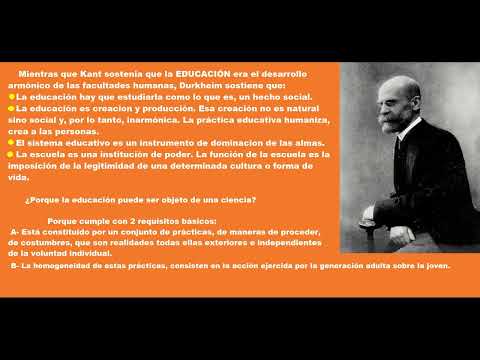
- He argues that education is a social fact that creates and produces individuals; it is not a natural process but rather a socially constructed one.
Key Insights from Durkheim
- Education serves as an instrument for the domination of societal norms and values; schools impose legitimacy on specific cultures or lifestyles.
- According to Durkheim, education can be studied scientifically due to its structured practices that exist independently of individual will.
The Role of Education in Society
- The nature of education reflects the dominant culture imposed by those in power, shaping public opinion and accepted knowledge.
- Education is influenced by adult generations who guide younger ones on how to perceive the world; this dynamic highlights its role in cultural transmission.
Conclusion
- The discussion encapsulates Durkheim's perspective on functionalism within sociology and invites further exploration into these concepts. Viewers are encouraged to engage with comments or questions regarding their understanding.