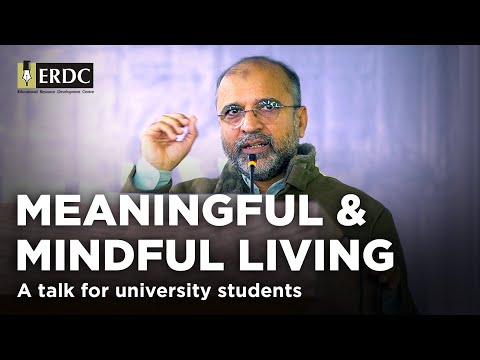
Meaningful & Mindful Living | Salman Asif Siddiqui | A Talk For University Students
माइंडफुलनेस और मीनिंगफुलनेस पर चर्चा
माइंडफुलनेस की परिभाषा
- वक्ता ने माइंडफुल और मीनिंगफुल शब्दों पर ध्यान केंद्रित करने का निर्णय लिया है।
- माइंडफुलनेस को उस स्थिति के रूप में वर्णित किया गया है जब कोई व्यक्ति किसी कार्य को करते समय पूरी तरह से उपस्थित होता है।
मीनिंगफुलनेस की समझ
- मीनिंगफुलनेस का अर्थ है जीवन में गहराई और उद्देश्य होना, जो हमें एक बड़ा संदेश देता है।
- वक्ता ने उदाहरण दिए कि कैसे लोग बातचीत या गतिविधियों में उपस्थित नहीं होते हैं, जिससे उनकी अनुभव की गुणवत्ता कम हो जाती है।
नमाज और माइंडलेसनेस
- नमाज को एक महत्वपूर्ण क्रिया के रूप में प्रस्तुत किया गया है, जिसमें अक्सर लोग मानसिक रूप से उपस्थित नहीं होते।
- नमाज के दौरान लोगों का ध्यान भटकने का उदाहरण दिया गया, जैसे कि खाने के समय टीवी देखना।
ध्यान देने की गुणवत्ता
- "प्योरिटी ऑफ अटेंशन" और "क्वालिटी ऑफ अटेंशन" जैसे सिद्धांतों पर चर्चा की गई है।
- आजकल लोग जल्दी में रहते हैं, जिससे उनकी उपस्थिति और ध्यान प्रभावित होता है।
मानसिक स्वास्थ्य और जिम्मेदारी
- वक्ता ने यह सवाल उठाया कि क्या इंसान अपने मनोवैज्ञानिक स्वास्थ्य को नियंत्रित कर सकता है।
- यह भी बताया गया कि अपनी मानसिकता को सुधारने के लिए प्रयास करना चाहिए।
नींद की गुणवत्ता सुधारने के उपाय
नींद का महत्व
- अच्छी नींद लेने के लिए उसकी गुणवत्ता को सुधारना आवश्यक बताया गया है।
बाहरी कारक जो नींद प्रभावित करते हैं
- साइलेंस (खामोशी), डार्कनेस (अंधेरा), और हवा (एयर क्वालिटी) जैसी चीजें नींद की गुणवत्ता को प्रभावित करती हैं।
सोने से पहले की आदतें
- रात के खाने से पहले 2.5 से 3 घंटे का गैप रखने की सलाह दी गई ताकि नींद बेहतर हो सके।
जीवन में अर्थ खोजने के तरीके
अर्थपूर्ण जीवन जीने के तत्व
- एक अर्थहीन जीवन वह होता है जिसमें केवल करियर या आर्थिक संघर्ष शामिल होते हैं।
संबंधों का महत्व
- रिश्ते बनाने और उन्हें बनाए रखने पर जोर दिया गया, जैसे परिवारिक संबंधों का महत्व।
व्यक्तिगत विकास
- वक्ता ने सुझाव दिया कि हमें अपने विचारों को अनसब्सक्राइब करना चाहिए ताकि हम अधिक अर्थपूर्ण जीवन जी सकें।
Understanding Personal Strengths and Self-Awareness
The Importance of Identifying Personal Strengths
- A brief exercise is suggested to list one's top ten strengths within two minutes, highlighting the challenge many face in recognizing their own qualities.
- This exercise aims to raise awareness about personal attributes that may not be consciously acknowledged.
Reflection on Materialism and Existence
- Discussion begins on the nature of existence, questioning whether it is materialistic or if there exists a non-material world.
- Emphasis is placed on understanding the order and nature of one’s unique qualities.
Aspirations and Their Impact
- Reflecting on personal desires, it's noted that aspirations can either elevate or clarify one's purpose in life.
- The speaker mentions how young individuals often feel drawn towards certain activities, indicating a need for self-discovery.
The Role of Forgiveness in Personal Growth
- It is emphasized that forgiveness should not depend on proving someone else's fault first; rather, it should come from a place of empathy.
- True forgiveness involves acknowledging past grievances without holding onto them as burdens.
Challenges in Understanding Religious Texts
- Many people read religious texts but struggle to apply their teachings practically in daily life.
- The speaker encourages reflection on how understanding these texts has changed one’s approach to forgiveness over time.
Motivation vs. Knowledge: What Drives Us?
Distinguishing Between Motivation and Knowledge
- Motivation is described as temporary; true change requires deeper knowledge and understanding rather than just motivational speeches.
- The speaker clarifies they do not identify as a motivational speaker but rather aim to share knowledge for genuine improvement.
Building Confidence Through Knowledge
- Confidence stems from understanding one's abilities and recognizing divine potential within oneself.
- Trusting oneself leads to better decision-making aligned with one’s capabilities.
Practical Steps Towards Improvement
- Individuals are encouraged to take actionable steps based on insights gained from discussions or readings, emphasizing the importance of prayer for guidance.
Managing Time and Relationships Effectively
Creating Space for Self-reflection
- It's crucial to allocate free time for introspection; this helps reduce distractions and enhances self-awareness.
Addressing Anger Management
- Anger issues can affect relationships negatively; thus, finding frameworks for managing temperament becomes essential for personal happiness.
Overcoming Societal Negativity
- Acknowledging societal challenges while maintaining hope is vital; focusing on personal growth can counteract feelings of despair.
Education's Role in Personal Development
Limitations of Contemporary Education Systems
- Current educational systems often fail to prepare individuals for internal growth despite providing academic qualifications.
Experience vs. Accumulation of Knowledge
- True improvement comes from experiences shared with others rather than merely accumulating degrees or accolades.
Emotional Intelligence Matters
- Financial success does not equate to emotional well-being; fostering positive relationships is key to overall happiness.
Mastering Self-Control through Awareness
Understanding One's Inner Self
- Recognizing one's inclinations allows individuals to manage their impulses effectively.
Continuous Self-Purification
- Ongoing efforts toward self-improvement involve removing impurities from one’s character through conscious actions.
Importance of Vigilance
- Maintaining awareness over one’s thoughts ensures consistent progress towards betterment.