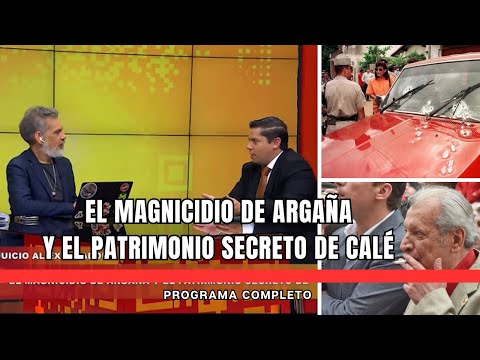
MADE IN PARAGUAY - EL MAGNICIDI* DE ARGAÑA Y EL PATRIMONIO SECRETO DE CALÉ.
The Assassination of Argaña and Calega La Verna's Secret Wealth
Introduction to the Topics
- The discussion opens with a provocative title linking the assassination of Argaña to the secret wealth of Calega La Verna, suggesting a deep connection that will be explored throughout the program.
- Emphasis is placed on the importance of staying engaged with this content, as it promises significant insights relevant for discussions in Paraguay over the coming week.
Historical Context and Women's Role
- The conversation will also delve into historical perspectives on women in Paraguay, tracing back to colonial times and independence, highlighting their evolving roles.
- Milda Rivarola's impressive collection is mentioned as a key resource for understanding women's history in Paraguay, indicating that this segment will be educational and informative.
Legal Background: Luis Canillas' Case
- Guillermo Duarte Cagabelos introduces himself as an attorney representing Luis Canillas, setting up a legal narrative that requires historical context for clarity.
- A brief overview is provided about Canillas’ previous involvement in legal matters related to Deiremas, establishing his background within Paraguayan political conflicts during Cartes' presidency.
Controversial Video Evidence
- Discussion shifts to a viral video featuring Dr. Canillas during a politically charged moment involving opposition figures; this video becomes central to understanding subsequent legal actions against him.
- The video’s content led to significant repercussions including a lawsuit from former senator Sire Masi due to perceived defamation or slander stemming from its contents.
Legal Outcomes and Implications
- After lengthy proceedings, it was confirmed that Dr. Canillas acknowledged his actions related to the video; he issued apologies which were part of fulfilling court mandates following his conviction.
- The narrative highlights how public statements can lead to serious legal consequences, especially when they involve accusations against prominent political figures like Horacio Cartes and others involved in high-stakes politics at that time.
Investigation and Legal Proceedings
Context of the Case
- The speaker discusses a case where an individual was convinced that no evidence would be found against them, leading to a decision to move forward with the legal process.
- Emphasis is placed on the importance of applying law and due process correctly, highlighting the need for conflict resolution in legal matters.
Relationships and Conflicts
- The speaker reflects on past cases where lawyers have switched sides after concluding their initial involvement, suggesting a personal connection influenced this behavior.
- A mention of ongoing investigations into an individual's assets indicates potential conflicts of interest or hidden motives behind legal actions.
Key Individuals Involved
- Two lawyers are identified: Víctor Galeano Perrones and another unnamed lawyer (LC), both linked to significant criminal activities.
- The discussion reveals that Galeano Perrones played a crucial role in a high-profile crime, indicating his influence within the legal system.
Media Influence and Public Perception
- The conversation shifts to media coverage surrounding political crimes, particularly focusing on the murder of Argaña as part of broader political narratives.
- An anecdote about immediate media reactions following statements made by Luis Canilla illustrates how public figures navigate accountability through media interactions.
Legal Strategy and Implications
- The speaker outlines how defamation laws apply in this context, emphasizing that accusations tied to serious crimes like murder carry significant weight legally.
- There’s a strategic focus on demonstrating how one party used journalists to shift blame away from themselves during legal proceedings.
Accountability and Responsibility
- A critical analysis is presented regarding Calé's attempts to distance himself from direct responsibility while implicating others, showcasing tactics often employed in high-stakes legal battles.
- Questions arise about Calé's motivations for his statements; whether they stemmed from overconfidence or miscalculation highlights complexities in human behavior within legal frameworks.
Internal Conflicts and Legal Maneuvering
Power Dynamics within Honor Colorado
- The discussion revolves around the perceived impunity of a figure who believes they control the judiciary, hinting at internal conflicts within the Honor Colorado party.
- The speaker suggests that divisions are emerging among key players, particularly between Luis Canillas and Horacio Cartes, indicating a struggle for influence and power.
- Luis Canillas is portrayed as an outsider in politics, having only participated during Horacio's presidency due to trust rather than political ambition.
Implications of Legal Actions
- The conversation highlights how legal actions can lead to revictimization of individuals involved, emphasizing the emotional toll on those affected by criminal allegations.
- Historical context is provided regarding previous incidents involving Luis Canillas, suggesting a pattern in his responses to similar situations.
Challenges in Legal Proceedings
- The current case involves family members of Luis Canillas being affected by legal disputes, complicating personal dynamics amidst professional challenges.
- A lack of proper legal representation for opposing parties is noted, raising questions about fairness and equity in the judicial process.
Judicial Manipulation Allegations
- There are claims that certain judges may be obstructing justice by failing to facilitate necessary evidence gathering for trials.
- The speaker argues that there seems to be an intentional effort to undermine the legitimacy of their case through procedural delays orchestrated by judicial figures.
Financial Considerations in Legal Outcomes
- Questions arise regarding the relevance of investigating financial assets related to ongoing cases; understanding wealth can impact penalties imposed on defendants.
- It’s explained that knowing a defendant's financial status is crucial for determining appropriate punitive measures beyond imprisonment.
Economic Repercussions from Defamation Cases
- Discussion includes how reputational damage can have economic implications; establishing this requires proof of both harm caused and financial capacity for restitution.
- An example illustrates how previous cases failed due to lack of tangible assets linked to defamation claims, highlighting complexities in pursuing such legal actions.
Economic Composition Penalties and Investigative Challenges
Overview of Economic Penalties
- The discussion begins with the challenges in determining appropriate economic penalties, suggesting that they may not meet expectations due to insufficient investigation into assets.
- It is noted that individuals can cleverly hide their wealth through anonymous companies, complicating asset discovery.
Investigative Procedures
- The speaker outlines the investigative process for illicit enrichment, which includes inquiries about personal connections and potential shareholder interests in various companies.
- Judicial authorization is required to access private banking information, emphasizing the legal framework surrounding financial investigations.
Delays in Legal Proceedings
- A delay in court proceedings is highlighted due to opposition from defendants regarding evidence admission; however, a ruling favored the prosecution's request for evidence collection.
- The judge's initial reluctance to issue subpoenas until trial raises concerns about timely access to necessary information.
Asset Discovery and Wealth Analysis
- There is speculation about the source of wealth for an individual named Calé, who has a history as a senator but lacks transparency regarding his financial background.
- The investigation aims to uncover whether Calé possesses any significant assets or if he has been living beyond his means without legitimate income sources.
Implications of Findings
- The outcome of asset verification will influence further legal actions and could reveal discrepancies between declared wealth and actual lifestyle.
- An analysis of correspondence and reports from regulatory bodies will be crucial in establishing any wrongdoing related to illicit enrichment.
Potential Justifications for Wealth
Examination of Lifestyle vs. Assets
- Questions arise regarding how Calé justifies his lifestyle if no assets are found under his name; this could indicate money laundering or other illegal activities.
Historical Context and Political Connections
- Reference is made to past political dealings involving Calé, including claims about receiving substantial monthly payments for political services during Horacio Cartes' administration.
Allegations of Political Mercenarism
- The speaker describes Calé as a "political mercenary," suggesting that his financial dealings were tied closely with political favors rather than legitimate income sources.
Conclusions on Investigation Outcomes
Anticipated Revelations
- There’s an expectation that ongoing investigations will unveil significant insights into Calé's financial practices and connections within political circles.
What Led to the Shift in Political Allegiances?
The Change in Stance on Political Issues
- Discussion revolves around a notable shift from opposing Horacio Cartes during the amendment debate to aligning with him, raising questions about integrity and consistency in political beliefs.
- Emphasizes that moral correctness should remain constant over time; one cannot switch sides based on convenience or changing circumstances.
- Highlights concerns regarding financial transactions, questioning how large sums of money can be concealed without proper documentation or transparency.
Financial Integrity and Concealment
- Discusses methods of hiding money in Paraguay, comparing it to drug trafficking practices, indicating a culture of cash handling that complicates accountability.
- Raises skepticism about public officials' wealth declarations, suggesting that some may appear financially destitute while living comfortably through undisclosed means.
Judicial System and Accountability
- Critiques the inefficacy of the judiciary and prosecution services in Paraguay, implying they fail to act against corrupt practices among politicians.
- Expresses disappointment with current judicial leadership compared to previous figures like Sandra Quiñones, indicating a decline in moral standards within legal institutions.
Perception of Legal Roles
- Argues that being a prosecutor today is seen as a degradation of intellectual and moral standing due to systemic corruption pressures.
- Suggests that honest individuals are often forced into compromised positions within the legal system, undermining their ability to uphold justice.
Public Interest vs. Personal Gain
- Asserts that ongoing legal disputes primarily serve personal interests rather than benefiting public welfare or transparency.
- Notes potential for resolution between conflicting parties but emphasizes unpredictability due to entrenched interests and past grievances.
Consequences of Accusations
- Reflects on the gravity of accusations against high-profile individuals, questioning whether reconciliation is feasible after serious allegations such as murder threats against political figures.
- Concludes with an acknowledgment that regardless of outcomes—whether acquittal or conviction—the pursuit for justice will continue until all matters are resolved satisfactorily.
Discussion on Accusations and Public Appearances
Clarification of Accusations
- The speaker emphasizes the importance of clarifying accusations made against him, particularly regarding being labeled a "magnicida" (assassin).
- He expresses disbelief that anyone could genuinely believe such claims, indicating a need for transparency in public discourse.
Invitation to Dialogue
- The speaker publicly invites Calé to join the program, highlighting previous attempts to engage him.
- He mentions having numerous chats with Calé, suggesting that he prefers platforms where he can avoid challenging discussions.
Analysis of ANDE's Tariff Increase
Government's Announcement and Public Reaction
- Discussion begins on the government's proposal to increase electricity tariffs amidst low charges from neighboring countries like Brazil and Argentina.
- Initial plans for a general tariff increase were met with public protests due to financial strain on 500,000 users unable to pay their bills.
Shift in Policy Following Protests
- In response to backlash, the government revised its stance, stating that increases would only affect large consumers.
- The conversation highlights how Brazil benefits from lower tariffs while Paraguay faces higher costs despite supplying energy at reduced rates.
Economic Implications for Paraguay
Revenue Losses Due to Pricing Policies
- The discussion reveals that Paraguay sells energy at significantly lower prices than market value, resulting in substantial revenue losses estimated at $3.6 billion over two years.
Recommendations for Improvement
- Suggestions are made for Santiago Peña regarding proper allocation of electric revenues solely towards the ANDE sector.
- Historical context is provided showing past profitability under different administrations compared to recent losses attributed to mismanagement and pricing strategies.
Strategies for Addressing ANDE's Financial Issues
Proposed Solutions Without Raising Tariffs
- Two key recommendations are presented: implementing technical tariffs for cryptocurrency operations and adjusting energy prices charged to Brazil and Argentina.
Potential Financial Recovery
- By addressing these issues effectively, it is suggested that significant financial recovery could occur without imposing additional burdens on Paraguayan families.
Discussion on Paraguayan Women's History
Introduction to the Topic
- The conversation begins with a transition to discussing women's history in Paraguay, featuring Milda Rivarola.
- The host acknowledges Milda's impressive collection and recent award, setting the stage for a deeper exploration of women's roles in Paraguayan history.
Representation of Women
- Milda highlights the stereotypical portrayal of Paraguayan women, often depicted as either suffering or entertaining (e.g., "botellera" imagery).
- This representation is reinforced by official symbols used during celebrations like International Women's Day, which focus on these limited narratives.
Historical Revisionism
- Milda discusses her efforts in historical revisionism regarding women's contributions, noting that significant work has been done by others like Ana Barreto.
- She emphasizes that studying social history inevitably includes women's stories and experiences, including those of indigenous and peasant women.
Indigenous Women: Case Study of Juliana
- The discussion shifts to Juliana, an indigenous woman from the 1550s who resisted Spanish colonization.
- Juliana's story involves her attempt to poison her captor and rally other Guaraní women to escape their oppression.
Resistance Against Colonization
- Juliana symbolizes resistance against colonial forces; she encourages other women to reclaim their autonomy and return to their roots.
- The narrative challenges stereotypes about Guaraní submissiveness, highlighting their active resistance until 1620 against Spanish settlers.
Role of Spanish Women: Mencia de Zanabria
- The conversation introduces Mencia de Zanabria, a Spanish woman who faced numerous hardships while bringing young brides for settlers in Paraguay.
- Her journey reflects themes of empowerment and survival amidst adversity as she aimed to influence the demographic landscape of early Paraguay.
Historical Representation of Women in Paraguay
Education and Historical Narratives
- The speaker reflects on the lack of education regarding women's roles in Paraguayan history, noting that schools often skip over significant contributions made by women during colonial times.
- A character named Juana de Lara is introduced as a fictional representation created to include women in the narrative of independence, highlighting the absence of female figures in historical accounts.
- Juana de Lara is depicted as a Catholic woman who participated symbolically in the independence movement by bringing flowers to represent the national flag, showcasing an attempt to integrate women into important historical events.
Contributions of Facunda Perati
- Facunda Perati is celebrated as an influential figure whose contributions are overlooked; she played a crucial role during the independence period but remains largely unrecognized in educational settings.
- At just 19 years old, Facunda signed documents for military funding and actively engaged in political matters, demonstrating her empowerment and defiance against societal norms for women at that time.
Legacy and Recognition
- A notable quote from Facunda emphasizes her belief that defending one's country is inherent to existence, illustrating her commitment to patriotism despite being a young woman in a male-dominated society.
- The discussion highlights how Facunda's actions challenged social conventions; she was literate and politically active, yet her legacy remains underappreciated due to her gender.
Comparison with Other Historical Figures
- The speaker contrasts Facunda with other prominent figures like Elisa Lynch and Juanita Pesoa, pointing out how historiography has favored European-descended women over local Paraguayan women.
- Both Juanita Pesoa and Elisa Lynch had children with Mariscal López; however, only Lynch's story gained prominence. This disparity raises questions about racial and cultural biases within historical narratives.
Conclusion on Women's Visibility
- The conversation concludes with reflections on how women's stories have been marginalized or omitted from history books. It calls for greater recognition of their contributions to Paraguayan history.
Madame Lynch and the Legacy of Her Influence
The Story of Madame Lynch
- Discussion about Madame Lynch's legacy, particularly regarding inheritance issues and her relationship with Lupe López. The speaker notes that there are supernatural elements tied to their interactions.
- A recounting of a story involving Juanita Pesoa, who allegedly prepared boiling water to pour on Madame Lynch as she passed by, highlighting local folklore and gossip surrounding her figure.
- The anecdote is described as a charming piece of gossip, though its authenticity is questioned. It reflects the cultural narratives surrounding Madame Lynch in Paraguay.
Historical Context and Donations
- Transition to discussing the donation of jewels during the War of the Triple Alliance, initiated by Hilde Barrios, a relative of López. This act was framed as patriotic but had complex implications.
- Clarification that only 20% of donated jewels were accepted by the military leadership; this highlights issues around women's contributions during wartime and their financial autonomy.
- Examination of how women’s wealth was assessed through precise weighing methods for jewelry donations, emphasizing gender dynamics in taxation and war responsibilities.
Post-War Societal Changes
- Insight into how many women concealed their valuables from confiscation during wartime due to fear of losing them to authorities.
- Discussion on how these donations were portrayed as acts of patriotism despite Paraguay being economically blocked at that time; most jewels were melted down for currency instead.
Women’s Roles After the War
- Mentioning Madame Lynch's attempt to return post-war under dubious circumstances related to hidden treasures; it illustrates ongoing tensions over lost wealth.
- Exploration into how Paraguay became increasingly populated by immigrants after the war, shifting labor dynamics significantly towards women in various sectors.
Labor Dynamics in Post-War Paraguay
- Description of women's roles in agriculture and other labor-intensive jobs post-war; they took on tasks traditionally seen as male-dominated like plowing fields.
- Observations from travelers noting that many laborers seen upon arrival were women carrying goods such as oranges—this challenges traditional gender roles associated with labor at ports.
Cultural Perceptions
- Reflection on foreign perceptions labeling Paraguay as "the country of women," indicating a significant shift in societal structure following male casualties from war.
- Visual documentation shared about female workers (aguateras and lavanderas), showcasing their integral role within society during this period.
This structured summary captures key discussions around Madame Lynch's influence, historical context regarding women's contributions during wartime, societal changes post-war, and evolving perceptions about gender roles in Paraguayan culture.
Gender Inequality and Historical Context in Paraguay
The Impact of War on Education and Occupations
- Discussion on the gender imbalance in Paraguay, noting a higher number of young men compared to adult women.
- The war led to the loss of skilled trades that were taught by English instructors during Carlos Antonio López's era.
- Post-war, education in trades had to be re-established by immigrants from Catalonia, Spain, and Italy.
Cultural Significance of Attire
- Reference to a traveler’s quote appreciating the aesthetic value of black and white clothing worn by women, symbolizing cultural identity.
- The colors were not only for mourning but also reflected the materials available at the time; English fabrics were not yet affordable.
Digital Archiving of Historical Images
- Milda mentions having over 10,000 high-resolution images archived digitally for public access without charge.
- Challenges discussed regarding how to exhibit such a vast collection effectively.
Transitioning into the 20th Century: Key Female Figures
- Introduction of Élida Hugarriza de Gaona and Serafina Dávalos as significant female figures in early 20th-century Paraguay.
Serafina Dávalos' Contributions
- Noted for her wealth and establishment of a school for accountants; she was pivotal in training women as accountants at the turn of the century.
- Recognized as one of Paraguay's first female lawyers and an early feminist theorist.
Feminism's Emergence
- Involvement in international feminist events highlighted; Serafina used "humanism" instead of "feminism" during discussions about women's rights.
Legislative Efforts for Women's Rights
- Two failed attempts to pass women's suffrage laws noted; these efforts predated actual voting rights granted in 1961 by several decades.
Élida Hugarriza de Gaona's Activism
- Élida organized protests advocating for teachers’ rights under restrictive liberal policies that prohibited public sector strikes.
Women’s Role During Conflict
- Discussion on women's contributions during the Chaco War, particularly their roles as nurses, emphasizing their importance in wartime efforts.
The Role of Women in Historical Conflicts
Contributions of Female Volunteers
- Discussion on the involvement of women as volunteers during conflicts, contrasting with previous wars where only men were recognized for their contributions.
- Emphasis on the emotional support provided by female presence to soldiers, reminding them of familial ties amidst the chaos of war.
Significant Photographs and Their Context
- Reference to a photograph capturing Estigarri's triumphant return, highlighting the role of women in welcoming him back.
- Another significant photo shows women mourning at Tigarría's funeral, illustrating their continuous presence in both celebratory and tragic moments.
Historical Perspectives on Leadership
Dictatorship vs. Liberal Thought
- Discussion about López’s absence from power during liberal periods due to ideological opposition against dictatorship.
- Critique on how historical narratives often overlook the sacrifices made by common people in favor of glorifying leaders who did not lead from battlefields.
Post-War Political Landscape
- Examination of the Communist Party's rise during WWII and its subsequent decline after the civil war in 1947.
- Mention of protests led by leftist unions that included equal participation from men and women against dictatorial regimes.
Women's Activism Through Political Changes
Shifts in Power Dynamics
- Analysis of how post-war political changes forced dictatorships to liberalize, leading to increased democratic engagement.
- Highlighting women's roles in political movements during this period, showcasing their active participation despite being overshadowed historically.
Legacy and Recognition
- Acknowledgment that early voting rights legislation was influenced by female lawyers within political parties, emphasizing women's contributions to democracy.
- Reflection on how women's grassroots efforts supported political campaigns, demonstrating their integral role behind the scenes.
Carmen de Lara Castro: A Figure of Resistance
The Role of Women in Politics
- Discussion on the significant role women played in politics, particularly highlighting Carmen de Lara Castro's contributions.
- Mention of Carmen creating a human rights organization from parliament to defend prisoners and persecuted individuals, showcasing her as a symbol of female resistance.
Historical Context and Impact
- Reflection on Carmen's death occurring just before a pivotal victory for liberal forces, emphasizing her lifelong struggle for political change.
- Reference to Alfredo Seifer’s desire to witness the fall of Stronner, illustrating the political tensions and personal stakes involved during that era.
Evolution of Women's Rights Organizations
- Transitioning 20 years forward to discuss the emergence of organizations focused on legal reforms and support for abused women.
- Description of grassroots efforts led by women who utilized radio to educate the public about their rights and governmental accountability.
Institutional Changes Post-Stronism
- Overview of how post-Stronism brought about significant legal frameworks aimed at enhancing women's rights within various government sectors.
- Critique regarding the ineffectiveness of these institutional changes due to lack of genuine commitment from authorities.
Current Political Landscape for Women
- Notable increase in women occupying roles in health, education, and judicial positions, marking progress in gender representation.
- Highlighting current female candidates running for mayoral positions, indicating a shift towards greater female participation in leadership roles.
Challenges Ahead
- Discussion on the need for more impactful female representation within legislative bodies despite an increase in numbers.
- Speculation about future possibilities including a woman president, reflecting ongoing societal debates about gender roles in leadership.
Recognition and Achievements
- Closing remarks on receiving an award (Order of Arts and Letters), signifying recognition for contributions made towards cultural or social advancements.
Recognition and Influence: A Personal Journey
The Role of Recognition in Personal Achievement
- The speaker reflects on the significance of receiving recognition from a foreign state, contrasting it with their own government's lack of acknowledgment throughout their career.
- They express that the award is particularly meaningful as it represents a lifetime of contributions to Paraguay, highlighting the emotional impact of external validation.
- The speaker discusses the creation of an order for artists and scientists by Gold, emphasizing its importance as one of Europe's highest honors, which traditionally was reserved for military and political figures.
Educational Background and Language Proficiency
- The speaker shares their educational journey in Paris, where they spent seven years studying, indicating a strong foundation in French culture and language.
- They emphasize that French is almost like their mother tongue, showcasing their deep connection to the language through thinking and writing.