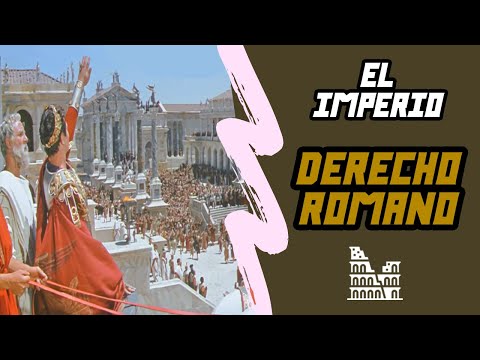
DERECHO ROMANO / tema 3 "El Imperio"
Imperial Rome: Understanding the Two Eras
Overview of the Imperial Period
- The imperial period is divided into two main eras: the Principate (or Oligarchy) and the Absolute Empire (Dominatus) .
- In the Principate, power was shared between the emperor and the Senate, while in the Absolute Empire, power was centralized solely in the emperor's hands .
The Principate Era
- The Principate began with Augustus' rise to power in 27 BC and ended with Diocletian's proclamation as emperor in AD 284 .
- Augustus aimed to restore republican institutions, leading to transformations within magistracies, Senate, and assemblies that eventually shifted functions to emperors .
- This era marked both peak splendor for the empire and early signs of decline, which were not immediately recognized by its citizens .
Legal Framework During the Principate
- The classical stage of law emerged during this time; formal sources included previous republican laws plus new imperial constitutions introduced by emperors .
- Key powers of emperors included:
- Proconsular Power: Authority over foreign policy and military command.
- Tribunician Power: Provided inviolability and veto rights against lower magistrates' decisions.
- Censorship Power: Allowed oversight of Senate membership and appointments during vacancies.
- Pontifex Maximus Role: Positioned emperors as religious leaders representing Roman public religion.
- Military Authority: Empowered emperors to declare war or negotiate peace agreements.
- Judicial Appeal Power: Gave exclusive rights over appeals from lower courts [].
Role of the Senate
- Despite losing control over foreign policy, the Senate remained a crucial governmental body with expanded judicial powers and legislative authority after popular assemblies ceased functioning [].
- Over time, it became more subservient to imperial mandates but still played a role in creating legal norms through senatorial consultations [].
Evolution of Legal Sources
- Formal legal sources continued from republican times but saw a decline in senatorial consultations by Septimius Severus’ reign; imperial constitutions became more prevalent [].
Types of Imperial Constitutions
- Edicta: Direct communications from emperors resembling magistrates' decrees on various matters including provincial administration.
- Mandata: Instructions directed at provincial governors or officials.
- Rescripta: Judicial decisions made by emperors acting as supreme judges.
- Restricta: Responses from emperors addressing specific legal inquiries from officials or individuals [].
Transition to Absolute Empire
The Fall of the Eastern Roman Empire
Transition to Constantinople
- In 330 AD, Emperor Constantine relocates the capital of the Roman Empire from Rome to Byzantium, renaming it Constantinople. This marks a significant shift in power and influence within the empire.
Christianity's Role in the Empire
- The Edict of Milan, issued by Constantine, grants tolerance to Christianity, allowing it to flourish. This contrasts with the Edict of Thessalonica, which later makes Christianity the official religion of Rome under Emperor Theodosius I.
Division of the Empire
- In 395 AD, Theodosius I divides the Roman Empire between his two sons: Honorius receives the Western Roman Empire with its capital in Rome, while Arcadius governs the Eastern Roman Empire based in Constantinople.
Decline of Western Rome
- The Western Roman Empire faces rapid decline; it is sacked by barbarian king Alaric in 410 AD and ultimately falls in 476 AD when its last emperor is overthrown.
Endurance of Eastern Rome
- In contrast, the Eastern Roman (Byzantine) Empire continues for centuries until its fall in 1453 when Constantinople is captured by Turkish forces. This highlights a stark difference in longevity between both halves of the empire.
Future Discussions on Justinian's Era