Patellar Tendinopathy / Tendinitis / Tendinosis | Jumper’s Knee Rehab (Education, Myths, Exercises)
Patellar Tendinopathy: Understanding and Management
Overview of Patellar Tendinopathy
- The discussion focuses on patellar tendinopathy, also known as tendinitis, tendinosis, or jumper's knee. The video is detailed and lengthy, encouraging viewers to utilize timestamps for navigation.
Anatomy of the Quadriceps
- The quadriceps consist of four muscles: vastus medialis, vastus lateralis, vastus intermedius, and rectus femoris. These muscles form the quadriceps tendon that attaches to the patella (kneecap) and connects to the tibial tuberosity via the patellar tendon.
- Together, these structures are referred to as the knee extensor mechanism; they play a crucial role in activities like squatting, jumping, and running.
Defining Patellar Tendinopathy
- Patellar tendinopathy is characterized by persistent pain and loss of function due to mechanical loading. It is inaccurately labeled as tendinitis due to its inflammatory connotation.
- Inflammation may be present but is not considered the primary cause; it reflects normal responses to tendon loading rather than necessitating ice or complete rest.
Misconceptions about Terminology
- Terms like "tendinosis" are misleading; a systematic review found that imaging can show asymptomatic abnormalities in 0% to 83% of cases. Imaging alone cannot diagnose or guide treatment effectively.
- Jumper's knee refers specifically to athletes in sports like basketball and volleyball but does not encompass all forms of knee pain experienced by these individuals.
Diagnosis Criteria for Patellar Tendinopathy
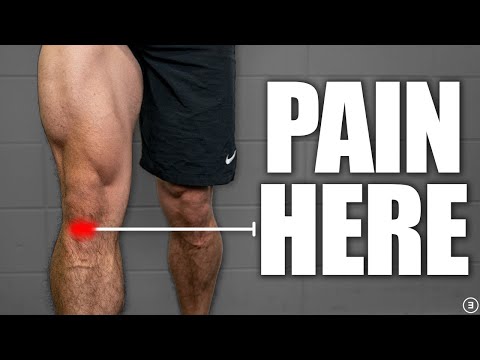
- Diagnosis requires localized pain at the inferior pole of the patella with a dose-dependent relationship between pain intensity and loading magnitude (e.g., single-leg squat vs. double-leg squat).
Rehabilitation Goals
- Rehabilitation aims to improve tolerance for various loads while restoring overall function in both the knee extensor mechanism and kinetic chain.
- Many interventions focus on altering tendon structure; however, structural changes may not correlate with symptom improvement.
Key Research Insights
- Sean Docking emphasizes treating healthy portions ("the donut") rather than focusing solely on disorganized areas ("the hole") seen in imaging studies.
- Abnormal patellar tendons can still maintain organized structures compensating for homeostasis without significant structural changes during rehabilitation.
Pain Monitoring During Rehabilitation
- Understanding pain levels during exercise is critical; most research supports using tolerable pain levels as criteria for progressing exercises.
Strategies for Pain Assessment:
- Tolerability: Rate your pain from 0–10 during exercise; determine your highest acceptable level (e.g., some therapists suggest staying below a 3 or 5 out of 10).
- Post-exercise Symptoms: Assess if symptoms improve or worsen immediately after exercising—patellar tendinopathy may exhibit a warm-up phenomenon where symptoms improve with activity.
- Next Day Response: Evaluate how you feel after exercising compared to normal activities—significant worsening indicates overexertion requiring adjustment in exercise dosage.
Understanding Patellar Tendinopathy Management
Pain and Exercise Considerations
- During a decline squat, pain is rated as 6 out of 10, indicating that while symptoms are tolerable, the intensity or volume may need to be reduced for recovery.
- It's essential to discuss load management; patellar tendinopathy arises when tendon loading exceeds recovery capacity, often due to doing too much too soon.
The Boom-Bust Cycle in Rehabilitation
- The boom-bust cycle involves spikes in activity leading to flare-ups, followed by rest until symptoms subside. This cycle can severely limit activity levels over time.
- Many individuals mistakenly believe that pain is inherently bad and rest is always beneficial, which can hinder effective rehabilitation strategies.
Focus on Function Over Pain
- Rehabilitation for patellar tendinopathy can take months or longer; thus, the focus should be on improving function rather than solely reducing pain.
- An increase in functional ability does not always correlate with a decrease in pain; significant progress can occur even if pain levels remain constant.
Activity Modification Strategies
- To maintain fitness while managing symptoms, reduce aggravating activities (e.g., basketball or volleyball), and replace them with less stressful alternatives.
Isometric Exercises as Initial Steps
- Isometrics are introduced at stage 0 of rehabilitation because they provide analgesic effects without requiring significant movement.
- Five examples of isometric exercises include double leg wall sit, single leg wall sit variations, Spanish squat with a strap, and single leg seated knee extension.
Incorporating Resistance Training
- Resistance training should focus on heavy slow resistance (stage 1), emphasizing gradual increases in load over time through various squat progressions and other exercises.
- Recommended exercises include split squats and step downs; aim for slow repetitions to ensure proper loading of the patellar tendon.
Advanced Loading Techniques
- Recent research suggests moderate resistance may be equally effective as heavy slow resistance. Consistency and gradual progression are key components of successful rehabilitation strategies.
Plyometric Exercises Introduction
Understanding Patellar Tendinopathy Rehabilitation
Key Exercises for Rehabilitation
- The rehabilitation process includes various exercises such as counter movement jumps to a box, bilateral depth drops, single leg depth drops, and forward lunges with step backs.
- Emphasis is placed on intentionally loading the knee extensor mechanism to avoid offloading the affected knee in individuals with patellar tendinopathy.
Gradual Return to Activity
- There are no specific exercises mandated; instead, the focus is on gradually returning to preferred sports or activities over time.
- Athletes must build up their activity levels progressively; for instance, marathon runners should train over several months rather than jumping back into full training immediately.
Individualized Approach to Stages of Recovery
- The stages of recovery are not rigid categories but rather an overlapping continuum; not everyone will need to go through all stages based on their individual goals.
Efficacy of Surgical and Adjunct Treatments
- Many adjunct treatments like surgery and injections lack strong research support; a 2006 trial found no advantages of surgery over strength training.
- Studies indicate that platelet-rich plasma (PRP) is no more effective than saline when combined with exercise programs.
Limitations of Common Interventions
- Research shows corticosteroid injections have poor long-term effects and may be less beneficial than a wait-and-see approach after one year.
- A systematic review highlights significant long-term harms associated with glucocorticoid injections on tendon tissue.
Understanding Patellar Tendinopathy
- Patellar tendinopathy is characterized by localized pain at the inferior pole of the patella related to loading intensity and frequency.
- The primary goal in rehab is finding an optimal level of loading that keeps symptoms manageable during activities while focusing on improving function over three or more months.
Conclusion: Commitment Required for Recovery