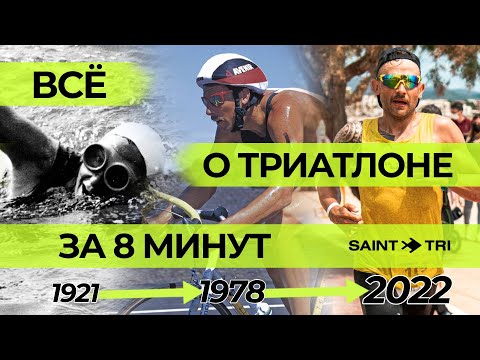
От каноэ до Ironman - самое важное о триатлоне за 8 минут!
What is Triathlon?
Understanding the Term "Triathlon"
- The word "triathlon" consists of two parts: "tri," meaning three in Greek, and "athlon," which translates to competition.
- Similar sports include biathlon (two events) and pentathlon (five events), emphasizing the importance of versatility in athleticism.
Historical Context
- Triathlon originated in France, linked to a race called "three sports," which included running, cycling, and canoeing.
- By June 1921, the format evolved to replace canoeing with swimming, consisting of a 3 km run, a 12 km bike ride, and swimming across the Marne River.
Evolution of Competitions
- In California during 1974, a new race called "patriotlon" was organized as an alternative for intense track training; it included running on grass and sand barefoot.
- The first Ironman event combined swimming (3.8 km), cycling (180 km), and running (marathon) into one competition in Hawaii. This marked a significant shift towards modern triathlons.
Growth of Triathlon
Expansion and Popularity
- The first Ironman had only 15 participants; by 1984, this number grew to 580 competitors at the Hawaii event. Major U.S. sports networks began covering these races extensively.
- The International Triathlon Union was established in 1989, leading to triathlons being featured in the Olympics by the year 2000—an unprecedented rapid rise for any sport from inception to Olympic status.
Triathlon Training Course Announcement
Online Course Details
- An online course led by expert coach Joe Spindler covers essential topics such as training techniques, physiology, nutrition strategies for races, and seasonal tactics. Two live webinars will also be held for participant questions.
Course Accessibility
- The course is designed for all levels of athletes regardless of their competitive distance; shorter formats like sprint triathlons are available for beginners or youth competitions.
Types of Triathlons
Distances Explained
- Sprint triathlons consist of a 750 m swim, a 20 km bike ride, and a 5 km run—often serving as an entry point for novice triathletes; super sprints are even shorter at half those distances.
Standard Formats
- Olympic distance includes a swim of 1.5 km followed by a bike stage of 40 km and finishing with a run of 10 km—typically completed within two hours during competitions like the Olympics.
Ironman Events
Full Ironman Specifications
- A full Ironman comprises swimming (3.8 km), cycling (180 km), and running (42 km); participants have up to 17 hours to complete this challenging race format known as one of the toughest single-day competitions globally.
Ultra Triathlons
- Events longer than Ironman distances are categorized as ultra-triathlons; they often span multiple days due to their extensive lengths exceeding standard limits like those seen in CyberMan's total distance of over 500 kilometers across various disciplines including swimming and running stages.
Why Swimming Comes First?
Safety Considerations
- Swimming is prioritized at the start because if athletes mismanage their energy during later stages like biking or running, they risk exhaustion while swimming—a dangerous scenario that could lead to drowning risks during open water events.
Energy Expenditure Insights
- Long-distance triathletes can burn up to approximately 10 thousand calories during races; Olympic-level competitors typically expend between 2 thousand to 3 thousand calories over three hours while racing at championship levels like Ironman where weight loss averages around 4% per athlete's body weight throughout competition duration.
Participation Age and Achievements in Ironman Championships
Age Requirements and Historical Context
- The minimum age requirement to participate in the Ironman World Championship is 18 years. However, a notable exception occurred in 1982 when the youngest athlete, aged 14, completed the race with a finishing time of 13 hours, 36 minutes, and 17 seconds.
- There are also discussions about older triathletes, including teams competing in the 60+ category. A dedicated episode on this topic is available on their channel.
Starting Your Triathlon Journey
- Aspiring athletes should not feel pressured to immediately qualify for the championship in Hawaii; instead, they can prepare gradually.
- Both full-distance events and shorter formats like Olympic distances or sprint triathlons are viable starting points for newcomers to gauge their interest and suitability for triathlon.