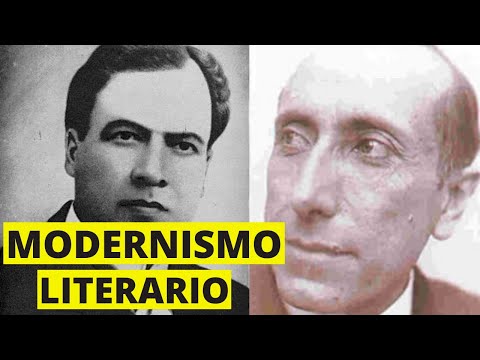
El MODERNISMO LITERARIO explicado: autores, obras y características✍️
Literary Modernism
This section provides an overview of literary modernism, its characteristics, and historical context.
Literary Modernism
- Literary modernism developed in the late 19th and early 20th centuries.
- It was characterized by precious aesthetics, exaltation of the senses, and use of exotic images and places.
- Modernist works focused on language perfection and the creation of magical worlds.
- Human feelings and passions were also explored in modernist literature.
Birth of Modernism
- The book "Azul" by Rubén Darío is considered a significant influence on modernism.
- Modernism emerged as a rejection of dominant positivism, which emphasized scientific and pragmatic approaches.
Significance of Literary Modernism
- Literary modernism brought about a change in language perception, beauty, and metrics. It had a profound impact on Ibero-American culture.
- It is still studied today by critics and forms an essential part of literature education in schools and universities.
Historical Context
- Modernism arose as a response to positivism's emphasis on scientific knowledge above all else. Artists felt suffocated by industrial processes and excessive pragmatism at the time.
- Unlike other aesthetic currents, modernist literature detached itself from political and social themes to create a magical atmosphere inspired by nature and the countryside.
Characteristics of Literary Modernism
- Break with previous rules: Modernists rejected traditional rhyme schemes and meters prevalent during Spanish colonization, allowing for greater expressiveness known as "anti-poetry".
- Opposition to centralization of thought: Modernism embraced a global perspective, opposing regionalism and considering poets as citizens of the world.
- Advocacy for poetic independence: Each poet had a unique style, reflecting the language of the human soul. Passion was a common theme among modernist writers.
- Rejection of reality: Modernist works often evaded social and political events, focusing on creating an idealized world.
- Use of precious style: Inspired by French literature, modernists sought beauty and refinement in their expressions.
The transcript provided does not include specific timestamps for each bullet point. I have associated them based on the information provided in the transcript.
New Section
This section discusses the characteristics and themes of literary modernism, including musicality in poetry, the use of exotic places and images, competition with Romanticism, religious syncretization, and common themes such as loneliness and melancholy.
Musicality in Poetry
- Modernist poets like Rubén Darío emphasized musicality in their verses.
- The use of rhythm and sound created a unique aesthetic experience.
- Example: "Youth, divine treasure, you left never to return! When I want to cry, I don't cry and sometimes I cry without meaning to." (Rubén Darío)
Exotic Places and Images
- Modernist texts drew inspiration from exotic places and ancient cultures.
- Descriptions of landscapes from the East (e.g., India) were common.
- Jungles with exuberant nature and mythological places were also depicted.
Competition with Romanticism
- Modernist writers saw themselves in competition with Romanticism.
- They viewed romantic poetry as overly logical and rational, limiting imagination.
- Romanticism was seen as a hindrance to true poetic expression.
Religious Syncretization
- Modernist poets incorporated elements from various world religions (Hinduism, Christianity, Buddhism).
- They aimed to create a harmonious coexistence of beliefs through literature.
- The goal was to unite humanity through shared values.
Common Themes in Literary Modernism
Loneliness and Melancholy
- Despite seeking beauty and escape, modernist writers often expressed sadness and loneliness in their works.
- Disappointment with reality and society influenced their portrayal of these emotions.
Mythological Stories
- Modernism incorporated references to mythological narratives from Greco-Latin culture.
- Characters from ancient myths were frequently mentioned or alluded to.
Love and Eroticism
- Love and eroticism were recurring themes in modernist texts.
- Women were often depicted as symbols of these elements.
Exotic and Distant Places
- Nature and strange places played a significant role in modernist literature.
- Oriental civilizations, luxurious palaces, princesses, and sultans were commonly referenced.
Exuberant Nature and Indigenous Themes
- Modernist writers drew inspiration from American fauna and flora.
- Local landscapes and pre-Hispanic civilizations were preferred over foreign influences.
- The figure of the indigenous native of America was defended and celebrated.
Notable Authors
- Rubén Darío: Considered the father of modernism. Works include "Azul," "Songs of Life and Hope," and "The Rare."
- Amado Nervo: Mexican writer known for poetry, novels, and essays. Notable work is "The Interior Gardens."
- Manuel Díaz Rodríguez: Venezuelan writer who sympathized with modernism. Wrote "Broken Idols."
- José Asunción Silva: Colombian poet considered a forerunner of modernism. Known for "The Book of Verses."
- Antonio Machado: Spanish poet associated with the Generation of '98. Some poems influenced by modernism, such as those in "Soledades."
- José Martí: Cuban journalist, poet, and thinker considered a forerunner of modernism. Notable essay is yet to be mentioned.
New Section
This section continues discussing notable authors associated with literary modernism, including their works and contributions to the movement.
José Martí (1853-1895)
- Cuban journalist, poet, and thinker considered one of the forerunners of modernism.
- Notable work includes an acclaimed essay that is yet to be mentioned.
Conclusion
This section provides an overview of key characteristics and themes in literary modernism. It also highlights notable authors and their contributions to the movement.
Modernist Literature Overview
This section provides an overview of modernist literature, including its characteristics and themes.
Characteristics of Modernist Literature
- Modernist writers evaded historical context and reality, focusing on developing their own style.
- Musicality was introduced in modernist literature through marked rhythms and musical phrases.
- Modernist writers used sensations or images with different meanings to create a musical effect.
- Exotic places and images were commonly used in modernist texts, inspired by ancient cultures and landscapes from the East.
- Modernism competed with Romanticism, considering it as an overloaded manifestation of logic and reason that imprisoned imagination.
- Religious syncretization was present in modernist literature, combining elements from various world religions to promote coexistence.
Themes in Modernist Literature
- Loneliness and melancholy were recurring themes, reflecting the disappointment of artists with reality and society.
- Mythological stories were incorporated into modernist texts, often drawing references from Greco-Latin culture.
- Love and eroticism were common themes expressed through the image of women in modernist literature.
- Exotic and distant places, such as oriental civilizations and luxurious palaces, were frequently depicted in modernist works.
- Nature played a significant role in modernist literature, particularly American fauna and flora. Indigenous themes were also explored.
Notable Authors
Rubén Darío (1867-1916)
Considered the father of modernism. His works include "Azul," "Songs of Life and Hope," and "The Rare."
Amado Nervo (1870-1919)
A Mexican writer known for his poetry, novels, and essays. His notable work is "The Interior Gardens."
Manuel Díaz Rodríguez (1871-1927)
A Venezuelan writer who sympathized with the modernist style. His work "Broken Idols" addresses the challenges faced by intellectuals in a capitalist society.
José Asunción Silva (1865-1896)
A Colombian poet and one of the pioneers of modernism. His famous text is "The Book of Verses," characterized by its precious yet melancholic tone.
The transcript provided does not include timestamps for all bullet points.
New Section
This section discusses the influence of modernist style on some of the texts.
Influence of Modernist Style
- Some of the texts written by the individual were influenced by the modernist style.