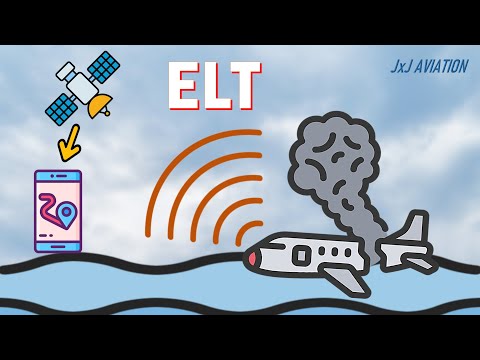
What is an EMERGENCY LOCATOR TRANSMITTER? | Types of ELTs | Why is ELT mandatory?
What is an Emergency Locator Transmitter (ELT)?
Definition and Purpose of ELTs
- An Emergency Locator Transmitter (ELT) is a vital safety device installed in most aircraft, designed to send distress signals on specific frequencies when activated.
- These distress signals are detected by satellites and ground-based receivers, facilitating search and rescue operations for missing aircraft.
Activation Mechanisms
- ELTs can be activated automatically upon impact based on G-loads or manually by someone on board the aircraft.
Types of Emergency Locator Transmitters
Different Types of ELTs
- Automatic Fixed ELT: Permanently fixed to the aircraft; activates upon impact to send distress signals.
- Automatic Portable ELT: Similar activation as fixed but can be removed from the aircraft after activation.
- Automatic Deployable ELT: Activates automatically either upon impact or when its sensor contacts water.
- Manual ELT: Can be activated by anyone onboard as a backup if automatic activation fails.
Importance of Emergency Locator Transmitters
Necessity and Regulations
- Most modern aircraft are equipped with one or multiple ELTs, which transmit distress signals primarily on 406 MHz frequency, enhancing location precision compared to older models that operated on 1 to 1.5 MHz.
- The precise location information provided by modern ELTs significantly aids search and rescue teams in reaching crash sites faster, improving chances for survivor assistance.
Turn any video into a summary like this
YouTube links, meetings, lectures. With transcripts, search, and chat.