Mark Ritson on how Snickers turned around declining market share
The Evolution of Snickers: From Crisis to Comeback
The Brand's Historical Context
- Snickers has been a globally successful brand for 90 years, available almost everywhere.
- In 2009, the brand faced a crisis, losing market share and struggling with inconsistent advertising strategies across different countries.
Advertising Challenges
- A 2007 ad exemplified the confusion in messaging; it lacked clarity on what Snickers represented and failed to distinguish itself from competitors.
- The ad was not distinctive enough, making it hard for consumers to associate it with the Snickers brand.
Key Marketing Concepts
- Two critical concepts in marketing effectiveness are differentiation (positioning against competitors) and distinctiveness (recognizability).
- Positioning is about creating an intended brand image, while distinctiveness relies on "brand codes" or "distinctive assets" that help a brand stand out.
Insights for Brand Recovery
- In 2010, insights revealed that Snickers genuinely relieves hunger and that hunger alters people's behavior.
- This understanding allowed Snickers to position itself as a solution that helps consumers be their true selves again.
Distinctive Assets Utilization
- Over its history, Snickers developed powerful distinctive assets like its logo, color scheme, and visual cues (e.g., the rippin' chew shot).
- These assets were underutilized prior to the new campaign launched in 2010.
Successful Campaign Launch
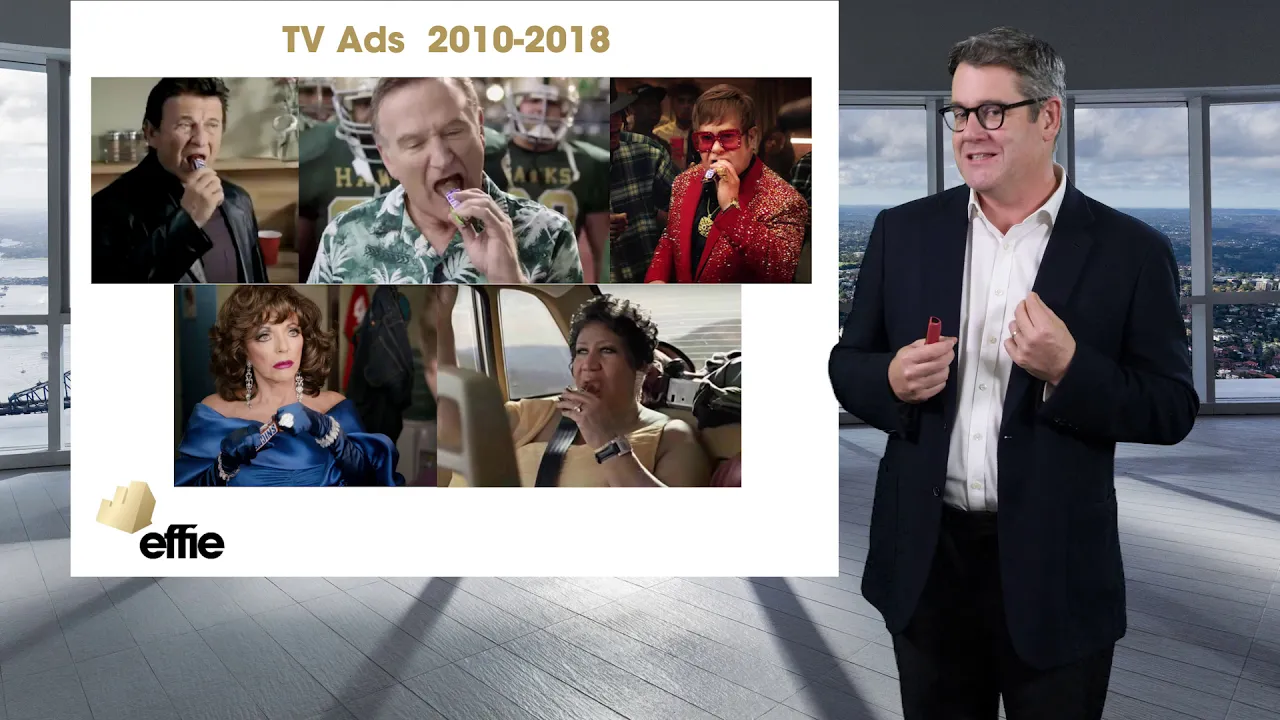
- The Super Bowl ad marked a turning point by effectively communicating the message: "You're not you when you're hungry."
- The campaign's flexibility allowed adaptation across various markets using different celebrities while maintaining core messaging.
Interactive Engagement Strategies
- The campaign extended into interactive formats through apps and social media engagements that encouraged consumer participation.
Playing with Brand Codes
- Effective brand management involves using established codes creatively—altering them can signal freshness while retaining heritage.
Marketing Effectiveness: The Role of Differentiation and Distinctiveness
Innovative Branding Strategies
- The Russian team creatively rebranded Snickers by dressing the sneakers in brown packaging similar to Twix, showcasing how brands can leverage sister brand identities for differentiation.
- This approach highlights the dual engine of marketing effectiveness—differentiation and distinctiveness—which is crucial for driving sales growth.
- Within two years, Snickers not only halted a decline in sales but also achieved a 15% global increase by 2011, demonstrating the success of their innovative campaign across 58 markets.
Key Lessons from Successful Campaigns
- A critical takeaway is that differentiation and distinctiveness should coexist; they are not mutually exclusive. Effective branding requires both a strong brand position and recognizable brand codes.
- Marketers often overestimate brand salience; consumers engage with brands with minimal attention. Thus, clear signaling through established brand codes is essential for recognition.
Practical Applications of Brand Codes
- Brands should compile a concise list of their unique codes and apply them consistently across all creative outputs to enhance visibility and recall among consumers.