La ciencia, su método y su filosofía según Mario Bunge (resumen)
Understanding Science: Method and Philosophy According to Mario Bunge
The Distinction Between Formal and Factual Sciences
- Mario Bunge categorizes science into two types: formal (e.g., mathematics, logic) which deals with ideal entities and follows rational consistency, and factual (e.g., physics, chemistry) which focuses on material entities based on empirical facts.
Characteristics of Factual Science
- Factual science is defined by its reliance on empirical data derived from reality. It emphasizes analytical study of objects through their composition and internal relationships.
- This branch of science is specialized, aiming for clarity and precision in explanations while seeking simplicity and communicable accuracy.
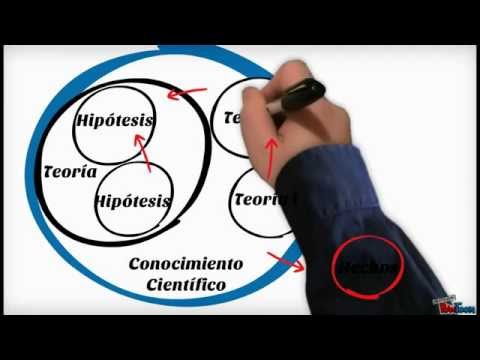
- Factual science is systematic; it forms a logically connected system of ideas where changes in hypotheses can affect related theories. It also aims to establish general laws or invariants in phenomena.
Predictive Nature and Utility of Science
- Scientific knowledge is predictive, allowing for detailed future predictions that are subject to improvement. It remains open to revision, being fallible and refutable rather than dogmatic.
- The utility of science lies in its effectiveness at providing tools for manipulating reality, serving as a foundation for technology beneficial to humanity.
The Scientific Method
- Knowledge construction occurs through scientific research following the scientific method: identifying a problem, formulating a hypothesis, making predictions, testing the hypothesis, and drawing conclusions based on experimental results.
Philosophy of Science