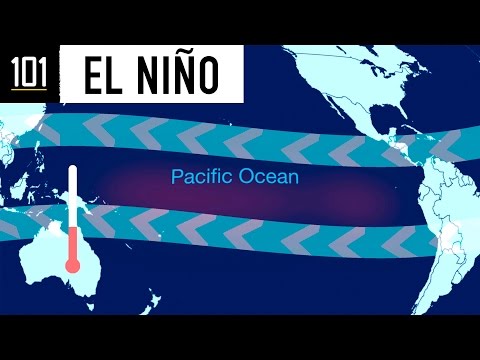
El Niño 101 | National Geographic
What is El Niño and Its Impact?
Understanding El Niño
- El Niño is described as a natural force of nature that causes significant climate changes and natural disasters, affecting regions from Alaska to South America.
- The phenomenon occurs when surface water temperatures in the Pacific Ocean rise, leading to complex weather patterns. The term "El Niño," meaning "the Blessed Child" in Spanish, was coined by 19th-century South American fishermen who noticed warmer waters during Christmas time.
- An El Niño event typically happens every 2 to 7 years when normal East-to-West trade winds weaken, causing warm water to move eastward instead of westward.
Effects on Marine Life and Fisheries
- The warming of ocean waters during an El Niño event blocks the upwelling of nutrient-rich waters, which negatively impacts marine life. Fish migrate to cooler waters, leading to decreased fish populations and suffering fisheries in Central and South America.
Land Impacts During El Niño Events
- The most noticeable effects of El Niño are felt on land, particularly in the Western United States and Central/South America. Increased storms, rainfall, floods, loss of life and property occur alongside a rise in vector-borne diseases like malaria.
Global Consequences