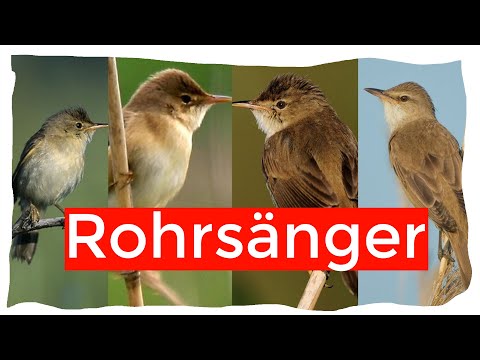
Alle Rohrsängerarten Deutschlands und Mitteleuropas | Ornithologie für Anfänger
Introduction to Reed Warblers
Overview of the Video
- The presenter, Kalle from "Ideologie für Anfänger," welcomes viewers and introduces the topic of reed warblers during the COVID-19 period.
- The video will cover four common and four rare species of reed warblers found in Germany, focusing on their distribution, physical characteristics, and vocalizations.
Common Reed Warbler Species
1. Schilfrohrsänger (Reed Warbler)
- This bird measures 11.5 to 13 cm and breeds in dense wetlands among reeds or tall sedges.
- It is characterized by an olive-green base color with a prominent light eyebrow stripe; its crown is diffusely brown.
- The long hand-wing projection distinguishes it from the rarer marsh warbler.
2. Teichrohrsänger (Sedge Warbler)
- Measuring 12.5 to 14 cm, this species prefers dense reeds standing in water for nesting.
- It has a warm beige underside and a brown upper side that becomes reddish-brown towards the bottom; notable for its flat head shape.
3. Sumpfrohrsänger (Marsh Warbler)
- This bird ranges from 13 to 15 cm and nests in dense vegetation like nettles near water bodies.
- It is less conspicuous than the sedge warbler but can be identified by its shorter bill and rounder head.
4. Drosselrohrsänger (Thrush Warbler)
- Ranging from 16 to 20 cm, this species is more commonly found in eastern Germany but should not be solely identified by location.
- Its appearance resembles a larger version of the sedge warbler with similar habitat preferences; it also winters in tropical Africa.
Rare Reed Warbler Species
Overview of Rare Species
- There are four additional rare reed warblers in Germany that are important to recognize despite their infrequent sightings.
1. Mariskinrohrsänger (Marsh Reed Warbler)
- Similar to the common reed warbler but primarily found in Southern Europe; identifiable by its distinct white throat patch.
2. Seggenrohrsänger (Reed Bunting)
- Breeds only in open wet meadows, making it very rare; often seen climbing between two stems.
Additional Rare Species
Feldrohrsänger (Field Reed Warbler)
- Breeds similarly to sedge warblers but has a broader range extending eastward towards India.
Buschvorsänger (Bush Warbler)
- Prefers overgrown forest clearings instead of reeds; very rarely observed or heard in northern Eastern Europe.
Conclusion
Understanding Common and Less Common Reed Warblers
Overview of the Video Content
- The video discusses four common and four less common species of reed warblers, highlighting the speaker's personal struggle with expertise in this area.
- The aim is to improve recognition of both gulls and reed warblers in terms of their song and appearance for better identification in the future.
Key Takeaways
- The speaker emphasizes that while they are not an expert yet, there is a commitment to learning more about these bird species.