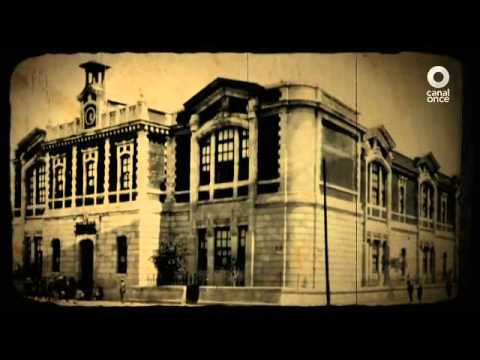
La educación en México - El siglo XX, primera parte (10/06/2014)
The Mexican Revolution and Its Impact on Education
Background of the Mexican Revolution
- The Mexican Revolution was driven by urgent social demands that could no longer be postponed, leading to various groups and leaders fighting from 1910 onwards.
- The Constitution of 1917 emerged as a response to these demands, establishing free and compulsory education in Article 3.
Post-Revolutionary Educational Reforms
- Following the Constitution's promulgation, President Carranza initiated educational reforms by dismantling the Secretaría de Instrucción Pública, transferring responsibilities to local governments.
- Carranza's experience as governor led him to believe that local municipalities could effectively manage education; however, this resulted in significant challenges in the Distrito Federal due to funding issues and teacher strikes.
Challenges Faced in Education
- The restructuring caused negative repercussions, including school closures and unpaid teachers, highlighting Mexico's struggle to modernize its educational directives post-revolution.
- High illiteracy rates (over 80%) among a predominantly rural population complicated efforts for educational reform during the late 19th century.
Changes Under Basconcelos' Leadership
- After Carranza's assassination in May 1920, José Vasconcelos became rector of the Universidad Nacional de México and later established the Secretaría de Educación Pública (SEP) in October 1921.
- Vasconcelos aimed for a more inclusive education system by reinstating previous functions of schools and promoting practical studies over elitist approaches. This included incorporating technical fields like petroleum engineering into curricula.
Literacy Campaign Initiatives
- The SEP launched extensive literacy campaigns addressing vast gaps in education; however, many communities remained skeptical due to historical fears associated with federal initiatives.
- Teachers faced numerous obstacles while conducting literacy classes at night due to lack of resources such as lighting and community engagement challenges amidst ongoing labor commitments from farmers.
Cultural Policies and Artistic Contributions
- Vasconcelos' vision for education extended beyond academics; he promoted cultural policies encompassing music, theater, and visual arts by collaborating with prominent artists like Diego Rivera for public murals at educational institutions.
Educational Policies and Indigenous Populations in Mexico
The Impact of Asep on Indigenous Education
- A government official stated that the creation of Asep would allow indigenous populations to finally integrate into mainstream culture, highlighting a significant shift in educational policy.
Critique of Revolutionary Educational Projects
- The educational project during the revolution failed to consider Mexico's vast ethnic, regional, and social differences, attempting to unify diverse groups under a single strategy which proved ineffective.
Changes Under Calles' Administration
New Pedagogical Approaches
- Between 1924 and 1928, President Plutarco Elías Calles modified educational policies by increasing manual and physical activities in primary schools, promoting learning through practical engagement.
Continuation of Basconcelos' Work
- Calles preserved many initiatives from José Vasconcelos’ tenure; however, his editorial work focused more on popular education through instructive pamphlets aimed at rural workers.
Focus on Rural Education
- Calles prioritized rural education with an emphasis on training peasants to foster economic independence from the United States. He expanded agricultural schools initiated by Basconcelos.
Psychological Health and Alternative Education Paths
- During Calles' administration, psychological assessments for students were introduced alongside the establishment of the Indigenous Student House. Secondary and technical schools became alternatives for primary school graduates.
Autonomy of National University
- In 1929, the National University gained autonomy as Universidad Nacional Autónoma de México (UNAM), marking a significant development in higher education governance.
Socialism in Mexican Education
Political Tensions Around Socialist Ideals
- Under President Abelardo Rodríguez’s administration (1933), public demonstrations called for socialist reforms within education during the second ordinary convention of the National Revolutionary Party.
Nature of Proposed Socialism
- The proposed socialism was described as vague yet progressive; it aimed for secular education that encouraged rational understanding rather than dogmatic teachings prevalent over centuries.
Cárdenas' Cultural Shift
Emphasis on Rural Schools
- When Lázaro Cárdenas assumed presidency in 1934, he significantly increased rural school establishments across Mexico, addressing the needs of a predominantly agrarian society.
Curriculum Reforms
- School curricula began incorporating scientific socialism and labor movement history while fostering connections between students and labor organizations to promote nationalistic efforts.
Establishment of Technical Institutions
The Foundation and Evolution of the Instituto Politécnico Nacional (IPN)
Context and Purpose of IPN
- The IPN was established with a focus on high-level education, particularly in technical fields, amidst a backdrop of optimism for national development.
- It integrated various independent schools, such as the Escuela Superior de Comercio y Administración (1890) and Escuela Nacional de Medicina Homeopática (1895), to create a comprehensive educational institution.
Historical Development
- Additional schools were incorporated into the IPN over time, including those focused on engineering and bacteriology, reflecting an expanding educational mandate.
- The government aimed to align education with the legitimate needs and aspirations of the Mexican populace, especially following significant events like the oil expropriation.
Impact of Oil Expropriation
- The departure of foreign technicians post-expropriation created unprecedented opportunities for developing local engineering expertise in Mexico.
- This situation highlighted two key factors: state control over resources and the necessity to promote technical professions to meet national demands.
Political Landscape and Educational Reform
- The National University did not cover certain disciplines effectively addressed by the IPN, leading to increased exploration activities involving its graduates.
- In March 1938, political restructuring occurred with the transformation of Partido Nacional Revolucionario into PRM, integrating various social sectors including workers and agrarians.
Educational Advancements Under Cárdenas
- Efforts were made to unify fragmented teacher organizations under one union during General Cárdenas' administration but faced challenges in implementation.
- By Cárdenas' term end, there was a notable increase in federal primary schools and secondary institutions; illiteracy rates dropped significantly from 69% in 1910 to 51%.
Ideological Shifts in Education
- Educational materials began emphasizing social justice themes while promoting values like cooperation amid changing political climates leading up to World War II.
- Cárdenas initiated socialist educational reforms that contrasted with traditional Catholic influences on Mexican education.
Institutional Developments Post-Cárdenas