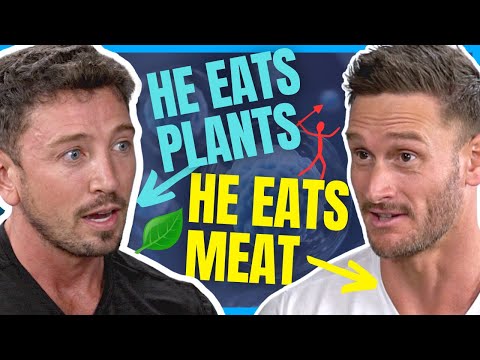
Protein is the Most Important Thing for Longevity | Plant Protein vs Animal Protein
Introduction and Protein for Longevity
In this section, Simon Hill discusses the importance of protein for longevity and addresses common misconceptions.
The Importance of Protein for Longevity
- Protein is a topic that many people are confused about in terms of its impact on longevity.
- There is a misconception that too much protein can be harmful to health, while others believe that insufficient protein intake can lead to negative outcomes.
- Strength and muscle mass are good predictors of longevity, with strength being a better predictor than muscle mass.
- Increasing protein intake has shown to have a positive effect on strength, especially when combined with resistance training.
Protein Intake and Strength
- A meta-analysis revealed that increasing protein intake from 0.8 grams per kilogram (RDA) to around 1.5 grams per kilogram resulted in a significant increase in strength.
- However, simply increasing protein intake without engaging in resistance training does not lead to substantial improvements in strength.
- Consuming protein above the RDA (0.8 grams per kilogram) can optimize strength gains, with the optimal range being around 1.5 grams per kilogram.
Average Protein Consumption
- Studies indicate that the average adult consumes between one gram per kilogram to 1.2 grams per kilogram of protein.
- Vegetarians or individuals following plant-based diets may consume slightly less protein compared to those who include animal products in their diet.
Unpacking the Research on Protein and Longevity
In this section, Simon Hill delves into different research studies examining the relationship between protein intake and longevity.
Animal Studies on Protein Intake and Longevity
- Animal studies have explored the impact of protein intake or specific amino acids on longevity.
- These studies provide valuable insights but may not directly translate to human outcomes.
Human Observational Data
- Some observational studies have examined the association between protein intake and longevity in humans.
- However, observational data cannot establish causation and are subject to confounding factors.
Strength, Muscle Mass, and Longevity
- Strength and muscle mass are positively correlated with longevity.
- Consuming adequate protein, especially in combination with resistance training, can enhance strength and potentially contribute to a longer lifespan.
Conclusion
In this section, Simon Hill concludes the discussion on protein and longevity.
Key Takeaways
- Protein is important for both strength and longevity.
- Increasing protein intake above the recommended daily allowance (RDA) can optimize strength gains.
- Strength is a better predictor of longevity than muscle mass.
- The average adult consumes around one gram per kilogram to 1.2 grams per kilogram of protein.
- Vegetarians or individuals following plant-based diets may consume slightly less protein.
Timestamps provided are approximate.
New Section
In this section, the speaker discusses the relationship between intensity of strength training and protein demands. They also mention the importance of considering individual differences in protein requirements.
Protein Demands and Strength Training Intensity
- The speaker mentions that there is no data suggesting that more intensity of strength training demands more protein.
- They highlight that the stimulus for muscle growth can be achieved through different rep ranges (e.g., 20 reps, 12 reps, 10 reps).
- The speaker raises a hypothetical question about whether trained individuals have higher protein demands compared to untrained individuals.
- They emphasize the need to consider individual differences in perceived exertion and efficiency in utilizing protein.
New Section
In this section, the speaker discusses the relationship between protein intake, strength, and longevity. They address concerns about higher protein intake and its impact on lifespan and cancer risk.
Protein Intake for Longevity
- The speaker states that strength is a great predictor of longevity.
- To optimize full strength, they suggest having a protein intake above the recommended dietary allowance (RDA), typically around 1.5 grams per kilogram.
- They acknowledge concerns about higher protein intake affecting lifespan and increasing cancer risk.
- The speaker mentions discussions related to methionine and IGF (insulin-like growth factor) as factors influencing these concerns.
New Section
In this section, the speaker addresses misconceptions regarding mTOR (mammalian target of rapamycin) activation through protein intake. They discuss the balance between growth and repair processes in relation to longevity.
Balancing mTOR Activation
- The speaker explains that mTOR activation is not a simple on/off switch but rather a dimmer switch with varying degrees of activation.
- They highlight the importance of balancing growth, repair, recovery, and autophagy (cellular recycling) processes.
- The speaker mentions that acute increases in mTOR activation through exercise do not necessarily have negative long-term effects on health.
- They refer to a study by Valter Longo regarding protein intake and age-related recommendations.
Understanding the Relative Risk of Cancer
The speaker discusses the relative risk of cancer at different stages of life and emphasizes the importance of considering population characteristics and lifestyle factors.
Factors Affecting Relative Risk
- Even if there is an increased relative risk of cancer, it is very small during certain stages of life, such as early adulthood.
- As individuals age and reach over 65 years old, their absolute risk of cancer significantly increases.
- It is crucial to consider the population being studied and their lifestyle habits when assessing relative risk.
- Resistance training and exercise play a role in determining the effects on cancer risk.
Impact of Protein Consumption and Resistance Training
- Studies have shown that consuming protein without resistance training leads to an increase in IGF-1 levels that remain elevated even after 24 hours.
- However, when protein consumption is combined with resistance training, IGF-1 levels increase but return to baseline after 24 hours.
- The context in which protein consumption occurs, such as resistance training or lack thereof, can influence the effect on IGF-1 levels.
- In the US population, a significant percentage (60 to 70%) does not engage in resistance training regularly.
Considerations for Metabolic Health and Exercise
- Individuals who are metabolically unhealthy, overweight, and not engaging in resistance training may experience an increased cancer risk with higher protein intake.
- However, these findings may not be applicable to metabolically healthy individuals who are actively exercising through cardiovascular or resistance training.
- Different contexts can affect how proteins interact with physiology, particularly regarding IGF-1 levels.
Role of IGF-1 in Repair and Recovery
- When IGF-1 is directed towards repair and recovery through exercise and resistance training, it serves a beneficial purpose.
- Acute increases in inflammation markers like IL6 or IL1-beta during exercise indicate a normal response for repair and recovery.
- If IGF-1 or inflammation markers remain elevated for an extended period without proper direction, it may have negative implications.
- The analogy of directing energy in a specific way, like guiding a child's activities, helps understand the importance of context in protein and IGF-1 effects.
Contextualizing Protein and IGF-1 Effects
- It is unfair to categorize protein or IGF-1 as absolutely good or bad since their effects depend on various factors.
- In situations where there is an existing tumor, caution may be necessary to avoid excessive increases in IGF-1 or growth hormone levels.
- However, exercise, including resistance training, has shown to be beneficial during chemotherapy treatment for cancer patients.
Animal Studies and Protein Restriction
The speaker mentions the relevance of animal studies regarding protein restriction in rodents but does not provide further details.
This section does not contain enough information to create meaningful bullet points.
Calorie and Protein Restriction Studies in Animals
This section discusses the findings of calorie and protein restriction studies in animals, highlighting the increase in lifespan observed with calorie restriction and the smaller effect seen with protein restriction.
Calorie Restriction Studies
- Calorie restriction studies consistently show an increase in lifespan across different animals.
- A 50% decrease in calories leads to a 50% increase in lifespan.
- Different variations of calorie restriction have been studied, including calorie restriction with or without protein restriction.
- The effect of calorie restriction on lifespan is more significant than that of protein restriction.
Protein Restriction Studies
- Restricting specific amino acids or overall protein intake still has an effect on lifespan, but it is smaller compared to calorie restriction.
- Animals subjected to calorific or protein-restricted diets tend to have slower maturation and smaller body weight.
- These animals are not exposed to the same environmental factors as humans, such as the need for a robust immune system, wound healing, libido, mood, and psychological well-being.
Interpreting the Findings
- It is important to consider the context of these experiments when applying them to humans.
- Over-interpreting animal studies may lead to misconceptions about restricting protein intake in humans who require a robust immune system and overall well-being.
- While there is merit to caloric and protein restrictions for longevity, it is crucial to consider individual health status and specific settings.
Importance of Protein Intake for Body Composition
This section emphasizes the significance of adequate protein intake for body composition and overall well-being.
Impact on Body Composition
- Even during severe caloric deficits, meeting protein needs helps maintain muscle strength and mass.
- Anecdotal evidence suggests that increasing protein intake while restricting calories can improve energy levels, libido, and overall well-being.
- Observational and model data support the notion that protein intake plays a crucial role in body composition.
Leveraging Protein Intake
- If caloric restriction is effective for longevity, compensating with higher protein intake becomes essential.
- Restricting calories evenly across all macronutrients may not be optimal, as different ratios of macronutrient restriction could yield varying results.
- Baseline health status and individual factors influence the impact of calorie restriction on body composition.
Pragmatic Tips for Protein Intake
This section provides practical tips for optimizing protein intake based on individual needs and goals.
Recommended Protein Intake
- A suggested guideline is consuming 1.5 grams of protein per kilogram of body weight.
Individual Considerations
- The ideal ratio of calorie and macronutrient restriction varies depending on an individual's metabolic health, visceral fat levels, and specific goals.
- Calorie restriction may have more significant benefits for individuals with poorer metabolic health or higher visceral fat levels.
Importance of Context
- It is crucial to consider the broader context when making dietary choices, taking into account individual needs, preferences, and overall well-being.
The transcript provided does not cover the entire video.
Importance of Increasing Protein Intake with Age
The speaker discusses the importance of increasing protein intake as we age, similar to Walter Longo's perspective. However, the speaker emphasizes the need to keep protein intake high throughout life due to the natural deterioration of our bodies.
- As we age, it is important to aggressively increase protein intake.
- Stress and other environmental factors make it necessary to add more protein over the age of 40.
- Protein plays a crucial role in overall health, metabolic health, insulin resistance, visceral fat reduction, and lipid management.
- Optimize protein intake to support muscle adaptation and trigger muscle protein synthesis.
- Building muscle mass earlier in life helps preserve it as we age.
Sources and Quality of Proteins
The speaker discusses the sources and quality of proteins that should be consumed for optimal health benefits.
- Choose proteins that come with unsaturated fats and fiber for better overall health.
- Lean cuts of meat or fatty fish are good options for those who consume animal-based proteins.
- Plant-based options include legumes, tofu, tempeh, seitan, nuts, seeds, and protein powders.
- Nuts and seeds provide some protein but are primarily sources of healthy fats.
- Aim for proteins that come packaged with fiber or unsaturated fats for ideal cardiometabolic health.
Benefits of Tofu and Fermented Soy
The speaker highlights the benefits of tofu and fermented soy as viable plant-based protein sources.
- Tofu and fermented soy have strong scientific evidence supporting their nutritional value.
- Non-GMO soy is preferable due to concerns about genetically modified crops used in animal feed production.
- Fermented soy products like natto are popular staples in Japanese cuisine.
- Despite being an acquired taste, natto is a viable low-carb protein source.
- Phytoestrogen discussion related to soy consumption is left for another day.
Importance of Protein Package
The speaker emphasizes the importance of considering the overall nutritional package that comes with proteins.
- It's not just about protein content; other compounds in protein sources affect health.
- Prefer proteins that come with unsaturated fats and fiber for optimal cardiometabolic health.
- Fatty fish, lean meats, legumes, tofu, tempeh, seitan, nuts, and seeds are good options.
- Nuts and seeds primarily provide healthy fats rather than significant protein content.
Validating Soy Consumption
The speaker discusses the validity of consuming soy products and addresses misconceptions surrounding their safety.
- Meta-analysis from 2021 supports soy food consumption in males based on 37 clinical trials.
- Moderate consumption of non-GMO soy is beneficial regardless of being plant-based or not.
- Phytoestrogen discussion related to soy consumption is left for another day.
Timestamps have been associated with relevant sections.
New Section
In this section, the speaker discusses the recommended intake of soy and the importance of diversity in food consumption.
Intake of Soy
- It is not recommended to consume more than three or four servings of soy per day.
- Diversity in food consumption is important, so it is not advisable to focus on consuming excessive amounts of any specific food.
- A study has shown that women who consume more soy, particularly early in life, have a lower risk of breast cancer.
- Fermented soy products may have even stronger benefits due to their impact on gut biome.
New Section
The speaker explains how phytoestrogens in flax can bind to estrogen receptors and potentially decrease the binding of harmful estrogens.
Phytoestrogens and Flax
- Phytoestrogens found in flax can bind to estrogen receptors.
- This binding may reduce the binding capacity of harmful estrogens such as 16-hydroxyestrone (16H) and 11-hydroxyestrone (11H).
- Breast cancer patients have been observed to have decreased levels of bad estrogens when consuming foods rich in phytoestrogens like flax.
- Adding natto (fermented soybeans) to the diet may also provide similar benefits.
New Section
The speaker discusses one hypothesis explaining why women in certain Asian countries who consume more soy have a lower risk of breast cancer. The role of fermented soy products and gut biome link is mentioned.
Lower Risk of Breast Cancer with Soy Consumption
- Women who consume more soy, especially early in life, have a lower risk of breast cancer according to one hypothesis.
- This association seems to be stronger for fermented soy products.
- The gut biome may play a role in this relationship.
New Section
The speaker shares their preference for animal protein sources and provides recommendations for consuming red meat and saturated fats.
Animal Protein Sources
- Eggs, lean chicken, lean fish, and shellfish are recommended as animal protein sources.
- Red meat can be consumed but opting for leaner cuts is advised.
- Saturated fat intake should be limited to around 20 grams per day.
- Consuming excessive saturated fat does not provide additional benefits and may lead to unnecessary calorie intake.
New Section
The speaker emphasizes the importance of not exceeding the recommended intake of saturated fat and discusses its impact on brain function and nerves.
Limiting Saturated Fat Intake
- It is important to limit saturated fat intake to avoid detrimental effects.
- Once the body has sufficient amounts for functions like myelination and nerve health, additional intake does not provide extra benefits.
- Excessive saturated fat consumption may result in unnecessary calorie intake without added advantages.
New Section
The speaker explains how they obtain protein from plant-based sources while following a relatively low-carb diet. Creative options for plant-based protein are discussed.
Obtaining Protein from Plants
- Tofu is mentioned as a low-carb option high in fat and protein.
- Seitan is another protein-dense plant food, but it contains gluten so it may not be suitable for those with celiac disease or gluten intolerance.
- Mycoprotein, a fungi-based product produced through biomass fermentation, is highlighted as a high-protein option that also provides fiber, iron, and B12.
Getting Protein from Plant-Based Sources
In this section, the speaker discusses the importance of incorporating plant-based protein sources into one's diet and breaks down misconceptions about the quality of plant proteins.
Benefits of Ancillary Protein Sources
- Incorporating ancillary protein sources like beans and chickpeas alongside seitan and tofu provides a more enjoyable and diverse diet.
- There is a tribalistic attitude that disregards the protein content from plant foods for those who consume meat. The speaker aims to break down these barriers and emphasize the benefits of getting protein from all sources.
- Different nutrients are obtained from plant-based and animal-based proteins, so there are advantages to including both in one's diet.
- Adding additional protein sources with different ancillary benefits can only be beneficial for overall health. For example, if chicken breast is consumed, it can be complemented with other plant-based proteins like tofu or tempeh.
Importance of Blood Work and Biomarkers
- It is important to be aware of one's own blood work and biomarkers when considering dietary choices.
- Studies have shown that individuals following plant-rich diets have lower levels of APO B, which is associated with cardiovascular disease risk. Understanding biomarkers can help optimize health outcomes by adjusting food choices accordingly.
Clarifying Protein Quality in Plant Foods
- All plants contain all nine essential amino acids, contrary to previous misconceptions that certain plants were lacking in essential amino acids. The term "complete" or "incomplete" refers to whether specific amino acids are present in sufficient amounts within a single food source consumed exclusively throughout the day. In diverse diets, this is not an issue as various foods contribute to the overall amino acid profile.
- Apps like Chronometer can help track essential amino acids and ensure that protein needs are met through plant-based sources. The speaker personally found that their essential amino acid intake from plants alone exceeded daily requirements.
Protein Quality and Consumption
- Protein quality becomes more significant when someone is under-consuming protein or lacks dietary diversity. In such cases, optimizing protein intake and focusing on quality becomes crucial.
- Once protein intake is optimized, the discussion around protein quality becomes less relevant as plant-based sources provide more than enough essential amino acids for absorption.
Timestamps have been associated with the corresponding parts of the transcript to facilitate studying the content effectively.
The Advantages of Including Different Foods
In this section, the speaker discusses the advantages of including different foods in one's diet, specifically focusing on pea protein and NATO.
Benefits of Including Pea Protein and NATO
- Including ounces of pea protein or NATO in one's diet can be advantageous.
- This combination of foods provides additional benefits without taking away from other dietary choices.
- Encourages inclusivity and flexibility in food choices rather than drawing strict boundaries.
Where to Find Simon Hill
In this section, the speaker shares where to find Simon Hill online.
Social Media Channels
- Simon Hill can be found on Twitter at @theperf.
- He also has a podcast called "The Proof."
- Find him on Instagram at @SimonHillPerfect.
Timestamps are not available for this section.