Juízes || Bible Project Português ||
Introduction to the Book of Judges
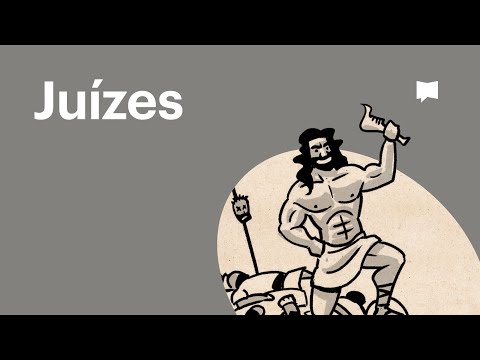
The Book of Judges focuses on the period after Joshua led the tribes of Israel into the Promised Land. It tells the story of Israel's failure and their leaders, known as judges, who governed them before they had kings. The book highlights the moral corruption and poor leadership in Israel, but also offers hope for the future.
The Role of Judges in Ancient Israel
- Before having kings, Israel was governed by regional leaders called judges.
- These judges were more like tribal chiefs than courtroom judges.
- The Book of Judges is named after these leaders.
Themes and Structure of the Book
- The Book of Judges is disturbing and violent, depicting Israel's moral corruption and similarity to their Canaanite neighbors.
- However, it also provides hope for the future through a cycle of sin, oppression, repentance, and deliverance.
- The book is divided into three main sections: an introduction highlighting Israel's failure (chapters 1-2), stories about individual judges (chapters 3-16), and a concluding section showing widespread corruption (chapters 17-21).
Opening Section: Failure to Expel Canaanites
- After Joshua's death, there were still Canaanite cities remaining in the Promised Land.
- Chapter 1 lists various groups and cities that Israel failed to drive out completely.
- Expelling the Canaanites was crucial to avoid moral corruption and idolatry.
Narrative Structure: Cycles of Sin and Deliverance
- The narrator describes a pattern or cycle that repeats throughout the book:
- Israel falls into sin by adopting Canaanite practices.
- God allows them to be conquered by their enemies as punishment.
- When they repent, God raises up a judge who delivers them from oppression.
- However, the cycle repeats as Israel falls back into sin.
Stories of the Judges
- The book focuses on six main judges: Othniel, Ehud, Deborah, Gideon, Jephthah, and Samson.
- The stories of the first three judges are epic adventures but also extremely violent.
- The later judges' stories highlight their character flaws and moral failures.
Themes of Corruption and Violence
- Each judge's story shows a progression from good to bad leadership.
- Gideon starts well but becomes arrogant and leads Israel into idolatry.
- Jephthah makes a rash vow that results in sacrificing his own daughter.
- Samson is promiscuous, violent, and ultimately brings about his own downfall.
God's Use of Flawed Leaders
- Despite their flaws, God empowers these flawed individuals to deliver His people.
- This does not mean that God endorses or approves of their actions.
- The book emphasizes how bad things become when people abandon God's ways.
Final Section: Widespread Corruption
- The last section of the book contains two particularly disturbing stories:
- The story of Micah building a private shrine and being plundered by the tribe of Dan.
- A shocking tale of sexual abuse leading to civil war within Israel.
Conclusion: Warning against Self-Destruction
- These tragic stories serve as a warning about Israel's descent into self-destruction.
New Section
In this section, the speaker discusses the need for Israel to be liberated from itself, highlighting a glimmer of hope found in the last part of the book. This sets the stage for subsequent books that delve into the origins of King David's family and the reign of Israel.
The Tragedy and Explanation of Human Condition
- The story of Judges holds value as a tragedy and provides a serious explanation of the human condition.
- It eventually reveals the necessity for Israel to be liberated from itself.
- This understanding sets the foundation for further exploration in subsequent books.
Turn any video into a summary like this
YouTube links, meetings, lectures. With transcripts, search, and chat.