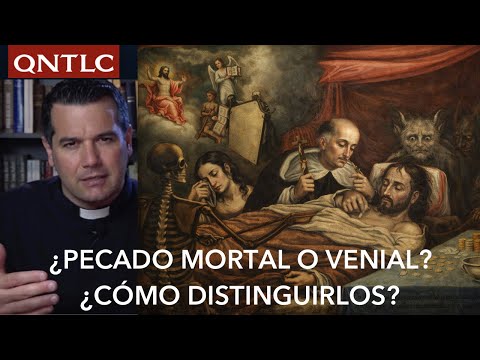
¿Pecado mortal o pecado venial? ¿cómo distinguirlos?
Introduction to the Discussion
Context and Purpose
- The speaker greets the audience, acknowledging the unusual timing of the session at 11:44 AM in San Francisco, California.
- The speaker mentions a recent article that served as a sermon intended for their parish, highlighting its positive reception among many people.
- Emphasizes the importance of wisdom in understanding faith, referencing a biblical quote about the consequences of lacking knowledge.
Importance of Doctrine
- The speaker shares experiences with clergy who appreciate returning to traditional teachings and doctrines within Catholicism.
- Introduces a catechetical approach aimed at clarifying concepts for better understanding among Catholics.
Understanding Mortal and Venial Sins
Key Concepts
- The discussion centers around an article titled "How to Know When Something is Mortal or Venial Sin," which challenges modern perceptions that these distinctions are outdated.
- The speaker identifies themselves as adhering to a 2000-year-old doctrine, emphasizing continuity in teaching despite contemporary views.
Catechism Reference
- References the Catechism of the Catholic Church regarding mortal and venial sins, asserting their historical significance within church tradition.
- Cites scripture (1 John 5), indicating that there are indeed sins leading to death versus those that do not.
Clarifying Sin Definitions
Distinctions Between Sins
- Explains that sin is defined as any voluntary act against God's law, specifically referencing the Ten Commandments.
- Discusses common confusion between mortal and venial sins, aiming for clarity without inducing scrupulosity or laxity in moral judgment.
Original Sin Concept
- Describes original sin as inherited from Adam and Eve rather than personally committed by individuals.
- Reinforces humanity's shared lineage through this original sin narrative while maintaining focus on personal accountability in moral actions.
Understanding Sin and Confession
The Ten Commandments and Their Importance
- The speaker emphasizes the significance of the Ten Commandments, stating that they were given by God to Moses as a guide for moral living.
- The first commandment is to love God above all things, followed by prohibitions against taking God's name in vain, keeping the Sabbath holy, and honoring one's parents.
Definition of Sin
- Sin is defined as a voluntary act against God's law. There are two types: mortal sin and venial sin.
- Mortal sin is described as something that "kills" the life of grace within the soul, affecting one's relationship with God.
Conditions for Mortal Sin
- Three conditions must be met for an act to be considered mortal sin:
- Serious matter (grave matter)
- Full knowledge of its sinful nature
- Full consent of the will
Distinction Between Mortal and Venial Sins
- If any one of the three conditions is missing, it may still be a sin but not classified as mortal; such sins can be forgiven through acts of contrition.
- It’s emphasized that confession is mandatory only for mortal sins to maintain grace after receiving communion.
Understanding Grave Matter
- The speaker discusses what constitutes grave matter in terms of sin, explaining that certain actions inherently separate individuals from God.
- Examples include sacrilege, heresy, apostasy, and sexual immorality which are always considered serious offenses if committed with full knowledge and consent.
Specific Examples of Grave Matter
- Actions like hatred (not mere irritation), significant lies causing harm to others, or theft involving substantial amounts are categorized under grave matter.
- Impure acts such as adultery or viewing someone lustfully are also highlighted as serious sins according to Christian teachings.
Understanding Mortal Sin and Its Conditions
The Concept of Mortal Sin
- Discusses the conscious absence from Sunday Mass, emphasizing that it is not due to illness or lack of access to a proper service.
- Introduces the idea that consuming alcohol or drugs to the point of losing reason constitutes serious matter but does not automatically equate to mortal sin without full consent and knowledge.
- Clarifies that minor offenses, such as small lies or fleeting negative thoughts, may not constitute grave matter unless they cause significant harm.
Conditions for Mortal Sin
- Explains the classic moral rule: if one is unsure whether their actions are gravely sinful, they likely lack the necessary awareness or consent for it to be considered a mortal sin.
- Highlights that ignorance can sometimes absolve individuals from guilt; many confessors refer to this as "the eighth sacrament."
Grave Matter and Knowledge
- Identifies certain actions as inherently constitutive of mortal sin due to their grave nature, requiring both full knowledge and consent for them to be classified as such.
- Addresses common misconceptions about sins like premarital sex versus more severe sins like apostasy or hatred towards God, asserting that while all are serious, some are graver than others.
The Role of Impurity in Mortal Sin
- Discusses why the Church emphasizes purity; impure actions lead individuals away from rational thought and into base passions.
- Cites St. Thomas Aquinas on impurity being a grave sin because it can drag individuals down into lower desires despite higher intellectual pursuits.
Ignorance and Its Implications
- Emphasizes that knowing something is wrong is crucial for it being a mortal sin; mere wrongdoing without awareness may only be venial.
- Defines "invincible ignorance" where an individual genuinely cannot know their action is sinful due to lack of teaching or understanding, which affects culpability significantly.
Understanding Invincible Ignorance
Concept of Invincible Ignorance
- Invincible ignorance refers to a sincere lack of knowledge about a subject, where an individual is unaware and has no means to know. The speaker emphasizes that if they had known, they likely would not have acted in a certain way.
Implications of Ignorance in Moral Actions
- The speaker illustrates the concept by discussing the obligation to attend Mass on Sundays, highlighting that ignorance can absolve one from sin if they genuinely did not know it was required.
Distinction Between Types of Ignorance
- There is a distinction made between invincible ignorance and affected ignorance, where the latter involves willful avoidance of knowledge. Affected ignorance implies a conscious choice to remain uninformed.
Conditions for Mortal Sin
- For an action to be considered a mortal sin, three conditions must be met: grave matter, full knowledge, and full consent. If someone is unaware that their action is gravely sinful, they do not commit a mortal sin.
Understanding Consent in Sinful Actions
- Full consent requires that the person acts with complete freedom and deliberation. External pressures or diminished capacity can reduce culpability for actions deemed sinful.
Exploring Examples of Consent and Knowledge
Scenarios Affecting Consent
- The speaker discusses scenarios such as dreams or semi-conscious states where individuals may engage in actions without full consent due to lack of awareness or control over their actions.
Impact of External Pressures on Culpability
- Situations involving sudden passions or fear can diminish one's culpability when committing sins. This highlights how emotional states can influence moral decision-making.
Confession Insights on Sinfulness
- The importance of having a good confessor is emphasized; they help individuals navigate doubts regarding whether an action constitutes grave matter or if it was done with full knowledge and consent.
Criteria for Determining Mortal Sin
Self-Inquiry for Moral Clarity
- Individuals are encouraged to ask themselves critical questions about their actions: Is it objectively grave? Did I know it was wrong? Did I act with total freedom?
Consequences of Deliberate Choices
- If someone knowingly chooses to commit an act against God’s commandments out of preference for worldly desires over divine will, this constitutes mortal sin—described as "killing" the soul's grace rather than physical harm.
This structured approach provides clarity on complex theological concepts while ensuring easy navigation through timestamps linked directly to relevant discussions within the transcript.
Understanding Sin: Mortal vs. Venial
Theoretical Framework of Sin
- The speaker emphasizes the importance of practical examples over theoretical discussions, indicating that understanding sin requires real-life applications.
- Introduces the concept of "ira súbita" (sudden anger), explaining how impulsive reactions can lead to different classifications of sin.
Classification of Sins
- Discusses how a sudden outburst, such as swearing in anger, is generally considered a venial sin unless it severely humiliates someone.
- Failing to attend Mass without valid reasons is classified as a mortal sin due to the conscious choice to disregard God.
Living in Concubinage
- Highlights that living together without marriage constitutes a grave matter against the sixth commandment, emphasizing the need for sacramental marriage.
- Explains that sexual relations outside marriage are sinful and many individuals may lack full knowledge or consent regarding their actions.
Temptations and Consent
- Describes brief sexual temptations where one might not fully consent; these situations often result in venial sins rather than mortal ones.
- Illustrates scenarios like rejecting inappropriate thoughts as virtuous acts rather than sinful ones.
Consequences of Lies
- Discusses telling harmless lies for courtesy but acknowledges they still go against truth, categorizing them as minor sins.
- Contrasts this with harmful lies that have serious consequences, which are classified as mortal sins due to their impact on others.
Conclusion on Mortal and Venial Sins
- Summarizes that a mortal sin requires grave matter, full knowledge, and deliberate consent; otherwise, it may be categorized as venial.
- Advises those uncertain about committing a mortal sin typically have not done so since true mortal sins require conscious intent.
How to Distinguish Mortal Sin from Venial Sin
Introduction to the Topic
- The speaker introduces a simple and fundamental explanation on how to differentiate between mortal sin and venial sin, indicating that this is a common question among viewers.
- Encourages sharing the video and subscribing to the channel, emphasizing the importance of engaging with the content for better understanding.
Conclusion and Blessing
- The speaker concludes with a blessing, invoking God's presence and blessings upon the audience.
- Reminds viewers to subscribe, activate notifications, and comment on the video for further engagement.
- Mentions a link in the video description for Patreon support, highlighting an effort towards a counter-revolutionary apostolate.