Art of Eternity - The Glory of Byzantium - BBC Documentary
The Vibrant Art of Byzantium
Introduction to Byzantine Art
- The art historian Giorgio Vasari criticized Byzantine art as "crude" and "primitive," raising questions about the validity of this perspective over 500 years later.
- Despite its often simplified portrayal in art histories, Byzantine art is characterized by vibrancy, color, and energy.
Historical Context
- The narrative of Byzantine art begins in Istanbul (formerly Constantinople), a city that was once the heart of a powerful dynasty.
- Emperor Constantine established the city in 324 AD, marking it as a significant center for Christianity and culture.
Architectural Marvel: Hagia Sophia
- The Hagia Sophia, built during Emperor Justinian's reign in the early 6th century, symbolizes the grandeur of Byzantine civilization.
- Constructed in just five years, it became a prestigious building representing Orthodox Christianity.
Engineering Feats
- The architectural design features massive domes that appear to defy gravity; notably, the dome spans 32 meters across.
- Unlike Rome's Pantheon with its continuous wall support, Hagia Sophia’s dome is visually supported by veiled colonnades.
Symbolism and Power
- The construction of such an impressive cathedral served to reinforce Justinian's divine right to rule as God's representative on Earth.
- At its height under Justinian I, the Byzantine Empire extended from modern-day Turkey to Spain, influencing European art significantly.
Regional Influence: Thessaloniki
- Thessaloniki emerged as a key center for Byzantine culture and trade during the fifth and sixth centuries due to its strategic location.
- A monastery dedicated to St. David houses a sixth-century mosaic that reflects strong Greco-Roman artistic traditions rather than typical Byzantine styles.
Artistic Characteristics
- The mosaic within St. David’s Church showcases muted colors instead of gold typically associated with Byzantine mosaics.
The Vision of Ezekiel and the Role of St. Demetrius in Byzantine Art
The Vision of Ezekiel
- The subject is derived from The Book of Revelations, depicting Ezekiel experiencing a vision of Christ, surrounded by symbols representing the four evangelists: Mark (lion), Matthew (angel), John (eagle), and Luke (ox).
- This theme was relatively new for artists in the 6th Century Byzantine Empire, as The Book of Revelations had only recently been accepted into Christian canon; its message urged viewers to pray and repent.
Rediscovery and Pilgrimage
- By the 9th century, the monastery housing this image fell into disrepair until an earthquake revealed it again, leading to a story where an old monk died from shock upon seeing it.
- This event transformed the site into a pilgrimage destination, with thousands believing they could connect with divinity through viewing the image.
St. Demetrius: Patron Saint of Thessaloniki
- St. Demetrius became a central figure in Byzantine culture, often seen as more significant than Christ himself for Thessalonians; his church dates back to the 5th century.
- Mosaics from the 6th and 7th centuries emphasize Demetrius as a Warrior Saint whose life is steeped in myth but felt real by local people.
Divine Intercession
- In Byzantine belief, emperors were viewed as intermediaries between God and people; thus, they prayed to saints like St. Demetrius for divine assistance.
- Mosaics illustrate community devotion to their saints; during sieges or plagues, locals believed St. Demetrius provided miraculous aid.
Miraculous Tales
- Numerous stories depict St. Demetrius saving Thessaloniki from disasters; one tale recounts how he alerted citizens during an invasion by igniting his church on fire.
- A humorous anecdote involves a deacon caught stealing candles who hears St. Demetrius's voice reprimanding him—illustrating that he watches over everyone at all times.
Artistic Expression in Ravenna: Imperial Might
Historical Context
- Ravenna served as the capital of Western Byzantine Empire for two centuries under Ostrogoth control until Justinian I reclaimed it in 540 AD.
Architectural Marvel: Church of San Vitale
- The Church of San Vitale stands out among eight world heritage sites in Ravenna; its mosaics are considered some of the finest examples from early Byzantine art.
Mosaic Significance
- Unlike other regions' art focused on martyrdom or supplication, San Vitale's mosaics assert imperial power with confidence that God supports their rule.
Depictions within Mosaics
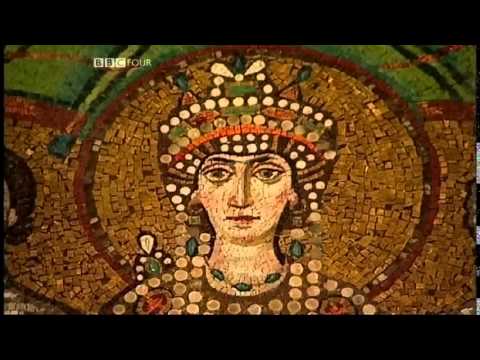
- One prominent mosaic features Emperor Justinian surrounded by his retinue opposite Empress Theodora with her court ladies—symbolizing unity between church and state.
Transitioning Realms
Mosaic Decoration and Byzantine Art
The Significance of Materials and Imagery
- The mosaic decoration features a striking use of gold, mother of pearl, and silver, highlighting the grandeur of the Byzantine Empire.
- Empress Theodora is depicted with an image of the three Magi in her cloak, symbolizing the elite's connection to divinity as they process towards God.
- These mosaics are among the only surviving portraits from Justinian's time, showcasing 6th-century Byzantine fashion and opulence.
- The images predict a future where the emperor and empress will be absorbed into Paradise alongside Christ, emphasizing their divine status.
- The enduring beauty of these mosaics continues to bring good fortune to Rena and the Eastern Empire.
Iconoclast Controversy and Its Impact
- Following Justinian's reign, centuries were marked by war and internal strife; Rena was seized by Lombard invaders in 751.
- A theological split known as the iconoclast controversy arose over religious imagery, leading to violent conflicts across the empire.
- This controversy lasted for 120 years until it was resolved in 843 when icons were officially authorized for use in worship.
- The victory for icon supporters led to a resurgence in religious art within Orthodox Christian worship throughout churches across the empire.
- Monastic life became crucial during this period as wealthy patrons funded rich works dedicated to God's glory.
Monastic Contributions to Byzantine Art
- The Church of Hosios Loukas represents significant post-iconoclast art, embodying spiritual aspiration through its architecture and mosaics.
- Mosaics feature austere styles with figures having wide eyes that suggest heightened spiritual awareness or ecstasy in contemplation.
- Despite their historical significance, many creators' names remain unknown; however, innovative techniques can still be observed in their work.
- For a millennium after their creation, these mosaics have been revered by generations of monks who maintained them with care.
The Emotional Depth of Byzantine Art
The Aesthetic and Emotional Qualities of Byzantine Art
- Byzantine art is characterized by austere, severe geometrical forms that paradoxically convey flashes of passion and emotional engagement. An example includes Christ washing the feet of his disciples, depicted with vivid realism akin to contemporary figures.
- The crucifixion scene in Byzantine art evokes deep emotion through its severe upright geometry, arguably more moving than later Western depictions where figures express overt agony.
- The portrayal of St. Peter as a human monument features extraordinary crystalline geometrical patterns in his robes, emphasizing both beauty and significance.
- A notable feature is the Christ Pantocrator over the door, which suggests that entering the sacred space is akin to finding salvation through Christ's body—a profound artistic concept.
- Despite their powerful imagery, Byzantine artists seem to lack spatial depth in their work; this raises questions about their understanding and technique regarding spatial representation.
Insights from Modern Iconography
- To explore these subtleties further, a discussion with modern iconographer George OS Cordis reveals insights into contemporary practices within Greek Orthodox icon painting.
- There are over 2,000 iconographers in Greece, primarily serving the Greek Orthodox Church; Cordis has significant experience and recently completed a commission for an entire church in Beirut.
- Cordis emphasizes that belief is essential for creating icons; without spiritual energy or conviction, it becomes challenging to authentically paint religious images.
- He describes icons as "alive" when they possess rhythm—an essential quality that allows them to communicate effectively with viewers.
Understanding Rhythm in Iconography
- Cordis explains rhythm through visual dynamics: contrasting perspectives create movement towards the viewer. This interaction draws spectators into the pictorial space of the icon.
- Unlike Renaissance art—which presents paintings as windows into another world—Byzantine icons invite participation from viewers within their own space.
The Role of Icons in Spiritual Connection
- In Byzantine tradition influenced by Orthodox theology, knowledge comes from participation. Icons facilitate this connection by representing divine realities and aiding prayerful engagement with God.
- Icons serve not only as artistic representations but also support personal prayer needs while fostering relationships between individuals and saints depicted within them.
Cultural Significance of Saints in Greek Orthodoxy
- Within Greek Orthodox faith, icons establish connections between saints and believers from early life stages (e.g., during baptism), encouraging followers to emulate saintly virtues inspired by Jesus Christ's teachings.
The Spiritual Warmth of Orthodox Churches
The Contrast Between Orthodox and Western Churches
- Orthodox Christians perceive their churches as spiritually warm due to the presence of icons and decorations, contrasting with the coldness they feel in Western churches. This ambiance provides strength to worshippers.
Historical Context of Icons in Greek Tradition
- The significance of icons within the Greek tradition dates back to 1054, coinciding with the Great Schism that severed ties between the Byzantine East and Rome. This event marked a pivotal moment for the Orthodox Church.
The Impact of the Crusaders on Constantinople
- In April 1204, Crusaders diverted to Constantinople during their journey to the Holy Land, leading to a violent takeover that resulted in significant destruction and trauma for its inhabitants. This invasion marked a critical point in Byzantine history.
Aftermath of Invasion and Restoration Efforts
- Following over fifty years under Western control, Constantinople was restored as the Byzantine capital in 1261, igniting an artistic resurgence centered around Hagia Sophia. This restoration symbolized hope for reclaiming lost glory.
Artistic Flourishing Post-Restoration
- A series of mosaics were commissioned post-restoration, showcasing sophisticated artistry such as "the dasis," which depicts Virgin Mary and St John pleading with Christ for humanity's salvation—an emblematic piece reflecting late Byzantine art's emotional depth.
The Evolution of Byzantine Art
Transition from Monumentality to Action in Mosaics
- Late Byzantine mosaics exhibit a shift towards dynamic action and emotion compared to earlier styles; scenes depict miracles performed by Christ with heightened urgency emphasizing salvation themes amidst societal turmoil.
Theodore Metochites: Patronage and Legacy
- Theodore Metochites funded these artistic endeavors despite his controversial reputation; he is depicted kneeling before Christ in gratitude, suggesting an attempt at redemption through his contributions to church art. His complex character adds depth to understanding this period's patronage dynamics.
This structured summary captures key insights from the transcript while providing timestamps for easy reference back to specific moments within the content.
The Harrowing of Hell: A Study of Byzantine Art
The Energy of the Anastasis
- The depiction of biblical figures in Byzantine art emphasizes a shift towards dynamic imagery, particularly in the representation of the anastasis, or harrowing of hell.
- Christ is portrayed with physical urgency as he pulls Adam and Eve from their tombs, symbolizing resurrection and salvation.
- The artwork illustrates Christ breaking the gates of hell, represented by debris and locks, signifying his triumph over death.
- Satan is depicted beneath Christ's feet, reinforcing the powerful message of salvation inherent in this image.
The Life and Legacy of Metes
- Metes faced significant personal turmoil; ousted from power in the 1320s during a palace coup, he lost wealth and status.
- By the end of his life, Metes had become a monk, focusing on eternal matters rather than earthly privileges.
- This artwork serves not only as Metes' final memorial but also symbolizes the decline of an entire empire.
Transition to Ottoman Rule
- Following Constantinople's fall to Turkish invaders in 1453, Christian art transformed under Ottoman influence; cathedrals became mosques and mosaics were altered or erased.
- Despite centuries of conflict and decline, Byzantine artistic traditions endure through powerful imagery that remains evocative today.