Electromagnetic Waves - IB Physics
Electromagnetic Waves Overview
This section introduces electromagnetic waves, defining them as periodic variations of electric and magnetic field intensity that move through space. The relationship between electric and magnetic fields in these waves is discussed.
Understanding Electromagnetic Waves
- Light fundamentally consists of electromagnetic waves, with microwaves, radio waves, infrared waves, and gamma rays being examples of such waves.
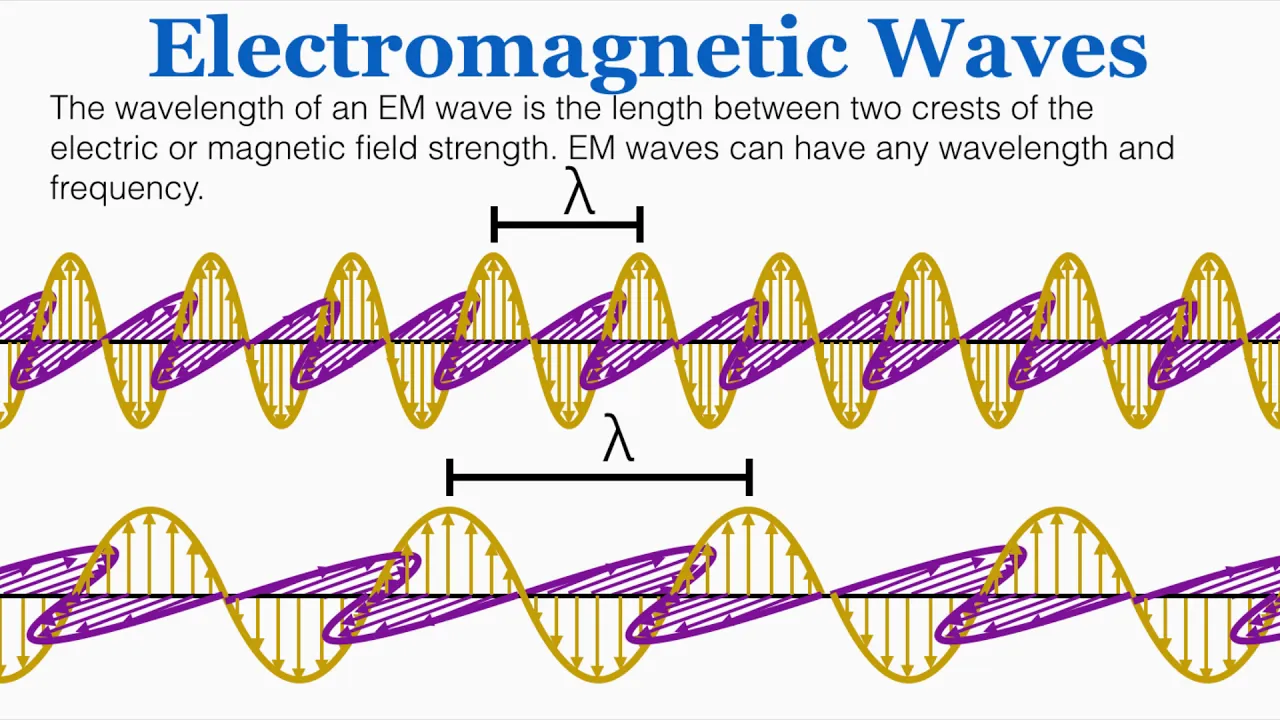
- Visualization of an e/m wave shows the varying electric field in yellow and the magnetic field in purple at 90-degree angles to each other.
- The representation of field strength along a one-dimensional path helps understand the varying strengths of electric and magnetic fields in an e/m wave.
- Points along the path where electric or magnetic fields are large or zero indicate variations in field strength rather than a three-dimensional shape.
- Examination of field strengths at different times along the wave's movement illustrates changes in electric and magnetic fields.
Characteristics of Electromagnetic Waves
- Electromagnetic waves are traveling transverse waves where oscillations are perpendicular to the velocity of the wave.
- Unlike other types of waves, e/m waves can travel through empty space without requiring a medium due to changes in electric and magnetic fields.
Properties and Behavior of Electromagnetic Waves
This section delves into properties like wavelength, frequency, speed, energy delivery, and how electromagnetic waves differ from other types of waves.
Wavelength, Frequency, and Speed
- E/M waves can have any wavelength and frequency while moving at the speed of light (C), which is approximately 3.00 x 10^8 meters per second.
Energy Delivery
- Relationship between frequency, wavelength, energy delivery: Higher frequencies deliver more energy per time; shorter wavelengths carry more energy compared to longer wavelengths.
- Impact on objects: More crests impacting an object result in higher energy delivery; shorter wavelengths with higher frequencies deliver more energy per time.
Different Types of Electromagnetic Waves
In this section, the speaker discusses the various types of electromagnetic waves based on their wavelength, frequency, and energy. The organization of these waves on the electromagnetic spectrum is explained.
Exploring the Electromagnetic Spectrum
- As we move from right to left on the spectrum, frequencies decrease and wavelengths increase, indicating lower energy levels.
- Radio waves have the longest wavelength and smallest frequency among e/m waves. They are utilized for radio, TV signals, cell phone signals, and Wi-Fi.
- Microwaves cover a range of wavelengths and frequencies used in microwave ovens, radar systems, GPS satellites, and telescopes.
- Infrared waves are associated with heat sensors and have slightly lower frequencies than red light.
Understanding Optical Waves
- Optical waves represent visible light that humans can see. Different colors correspond to varying wavelengths and frequencies.
- Ultraviolet (UV) light has higher frequencies than violet light and is often known for its harmful effects from the sun.
Delving into Higher Energy Waves
- X-rays are used in medical imaging to visualize internal structures like bones or tissues due to their high energy levels.
- Gamma rays possess the highest frequency and lowest wavelength among e/m waves. They originate from nuclear reactions and radioactive materials.
Production of Electromagnetic Waves
This segment focuses on how electromagnetic waves are generated through changes in electric or magnetic fields by accelerating electric charges or transitioning electrons between energy states within atoms.
Generating Electromagnetic Waves
- Two primary methods for producing e/m waves: accelerating an electric charge or moving an electron between energy states in an atom.
- Accelerating an electric charge induces a changing magnetic field due to current variation caused by charge movement.
- Transitioning electrons within atoms release lost energy as electromagnetic waves when moving from higher to lower energy states.