"Diaphragmatic Breathing" is Wrong. Seriously.
Understanding Diaphragmatic Breathing: A New Perspective
Common Misconceptions About Diaphragmatic Breathing
- The video challenges the traditional understanding of diaphragmatic breathing, asserting that common beliefs about its mechanics are fundamentally flawed.
- It introduces a new perspective based on Jean Domas Muero's insights, suggesting that the diaphragm's role in breathing is often misrepresented.
- Many instructional methods incorrectly advise keeping the chest still while focusing on abdominal movement during inhalation and exhalation.
The Role of Accessory Muscles
- Current medical views suggest that improper diaphragm use leads to reliance on accessory muscles in the neck and chest for breathing.
- Engaging the diaphragm correctly is believed to enhance breathing efficiency by reducing dependence on these accessory muscles.
Rethinking Diaphragm Mechanics
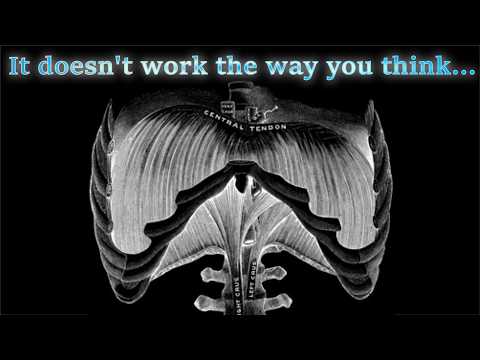
- The diaphragm is located below the heart and lungs, contrary to popular belief that it resides in the abdomen; this anatomical detail is crucial for understanding its function.
- Tendons must remain taut for optimal muscle function; if the diaphragm descends as traditionally taught, it could reduce tension in its tendon.
Exploring Alternative Mechanisms
- The speaker poses a question regarding how to maintain tendon tension while engaging the diaphragm during breathing.
- Two primary mechanisms are proposed: either pulling down towards the lower rib cage or lifting up towards the tendon.
A Revolutionary Concept in Breathing Mechanics
- For effective engagement without displacement, it's suggested that maintaining an elevated abdomen allows for rib cage expansion instead of abdominal movement during inhalation.
- This concept contradicts established teachings found in medical literature and observed behaviors in newborn babies regarding abdominal movement during breath intake.
Evidence and Exploration Ahead
- The speaker invites viewers to consider what evidence might support this unconventional idea about abdominal positioning during inhalation.
- Emphasizing a shift from traditional understanding, they hint at further exploration of benefits related to this new approach throughout upcoming videos.
Practical Application of New Techniques
- Viewers are encouraged to practice keeping their abdomen elevated while allowing rib cage expansion during both inhalation and exhalation.
- Suggestions include using tactile feedback (placing hands on abdomen/chest), which may help individuals adjust their breathing technique effectively.
Conclusion and Future Insights
- The speaker concludes with an invitation to explore more about mastering abdominal control in breathing techniques over subsequent sessions.
Turn any video into a summary like this
YouTube links, meetings, lectures. With transcripts, search, and chat.