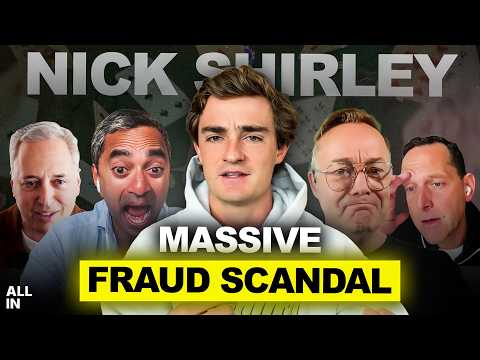
Massive Somali Fraud in Minnesota with Nick Shirley, California Asset Seizure, $20B Groq-Nvidia Deal
Investigative Journalism Uncovers $110 Million Fraud in Minnesota
Overview of the Show
- The show introduces a significant story involving investigative journalist Nick Shirley, who has uncovered $110 million in potential fraud in Minnesota, part of a larger $9 billion fraud issue.
- Predictions for future events will be discussed next week due to the pressing nature of current news stories.
Background on Fraud Investigation
- The entitlement fraud issues in Minnesota have persisted for over a decade, initially investigated by Jeff Bailon in 2013.
- A notable case involved a Somali woman running daycare and home health care services that were allegedly scams to collect public subsidies, leading to her arrest after an investigation revealed she defrauded the state of approximately $4 million.
Scale of Fraud
- Since 2018, federal prosecutors estimate around $9 billion has been lost to entitlement fraud in Minnesota, equating to half the total spent on 14 entitlement programs statewide.
- A federal prosecutor described the situation as "staggering" industrial-scale fraud with over 90 convictions totaling more than $800 million since 2022.
Specific Cases Highlighted
- In 2022 alone, there were charges against 47 defendants linked to a $250 million scheme called "Feeding Our Future," which was intended to provide meals for hungry children but resulted in substantial theft.
- Additional funds were misappropriated from Medicaid meant for individuals with disabilities and autism support.
Introduction of Nick Shirley
- Nick Shirley joins the program as an investigative journalist who has recently focused on these fraudulent activities.
- He shares his background starting from YouTube content creation at a young age and transitioning into serious journalism focusing on political topics and immigration.
Journey into Investigative Journalism
- Shirley discusses how his experiences led him toward investigative journalism after initially creating light-hearted content like prank videos during high school.
- He highlights challenges faced when trying to create political content on platforms like YouTube due to monetization issues but notes recent changes allowing independent creators more freedom.
Funding and Independence
- Shirley confirms he operates independently without backing from special interest groups or wealthy sponsors; his funding comes primarily from YouTube revenue and brand deals.
Origin of Current Investigation
- His investigation into Minnesota's fraud began last June while exploring demographic changes within the Somali community.
- Local insights about ongoing fraudulent activities prompted him to seek evidence rather than make unfounded claims about widespread corruption.
Investigation into Daycare Fraud
Discovery of Funding and Conditions
- The speaker investigates funding received by daycares from CCAP, revealing millions in tax-exempt dollars.
- Observations show that many daycares are involved in massive welfare fraud, opening businesses to exploit welfare systems.
- The conditions at these facilities raise red flags; for example, one daycare had blacked-out windows and locked doors.
Mechanics of the Fraud
- The fraud involves setting up various types of businesses (daycares, healthcare clinics) to siphon off government funds without proper oversight.
- Signs outside some facilities indicate a lack of genuine educational intent, with phrases like "leering instead of learning."
Credibility and Investigative Process
- Questions arise about the credibility of the investigation; traditional journalism processes involve checks for accuracy and legal protections.
- Acknowledgment that while fraud is widely known, few have witnessed it firsthand or reported on it effectively.
Legal Considerations
- Concerns about potential attacks on the investigation's credibility lead to discussions about necessary legal precautions.
- The speaker reflects on needing legal support as investigations expand beyond Minnesota due to the scale of uncovered fraud.
Future Investigations
- Plans for continued investigations in Minnesota are confirmed, with mentions of expanding focus to other states like Ohio and California.
- A second episode is planned to delve deeper into ongoing fraudulent activities within Minnesota.
Fraud and Media Coverage: A Young American's Perspective
The Impact of Fraud on Young Americans
- The speaker expresses frustration about the perceived fraud affecting young Americans, highlighting that many are working hard just to get by.
- There is a stark contrast between the current generation's struggles to own homes at 23 compared to their grandparents' experiences, emphasizing economic disparity.
- The speaker points out that while they pay significant taxes, others benefit from tax-exempt funding (CCAP), leading to feelings of unfairness among hardworking individuals.
Local vs. National Media Coverage
- Despite local news covering the story for over a decade, national outlets like CNN have largely ignored it, creating a gap in awareness.
- The discussion highlights the value of long-form content in journalism, which captures raw experiences better than short segments typical in mainstream media.
Citizen Journalism and Personal Experience
- The conversation shifts to the importance of citizen journalism and how it provides a more authentic view of events compared to traditional news coverage.
- The speaker reflects on their background as a Mormon missionary and how it prepared them for engaging with people during journalistic endeavors.
Overcoming Fear in Journalism
- The speaker attributes their fearlessness in approaching people for interviews to both their upbringing as the youngest sibling and experiences from missionary work.
- They discuss how door-to-door interactions during their mission helped them develop resilience against rejection and understand migration issues firsthand.
Media's Role in Exposing Fraud
- Acknowledgment that major press outlets have failed to cover significant fraud stories despite viral videos showcasing evidence of wrongdoing.
- Discussion centers around fraudulent daycare centers receiving millions based on fictitious enrollments, illustrating systemic issues within government funding.
The Viral Story of Fraud and Political Corruption
Overview of the Dysfunctional System
- The story's virality stems from multiple dysfunctions, including illegal immigration and judicial failures that voided fraud convictions, illustrating a phenomenon described as "suicidal empathy."
- The narrative highlights systemic political corruption rather than isolated incidents, with funds from fraudulent activities returning to politicians, indicating a broader issue at play.
Political Clout and Community Influence
- An extreme example of community influence is noted with Tim Walz changing Minnesota's flag to resemble the Somali flag, showcasing the political power of this community which may lead politicians to overlook ongoing issues.
- The combination of flawed immigration policies, government fraud, incompetence, and political corruption contributes to the story's widespread attention and engagement.
Media Response and Accusations
- In response to scrutiny over fraud allegations within the Somali community, media outlets often deflect criticism by labeling critics as racists or white supremacists.
- This tactic serves as a defense mechanism for those in power when confronted with evidence of corruption or wrongdoing.
Personal Reactions and Public Perception
- Nick expresses frustration over being labeled a white supremacist while highlighting significant financial fraud affecting hardworking Minnesotans.
- He emphasizes that his investigation merely sheds light on existing issues rather than promoting any personal agenda or animosity towards specific communities.
Broader Implications of Fraud
- Nick discusses the Minnesota Child Care Assistance Program (CCAP), funded largely by federal dollars, indicating that taxpayers nationwide are affected by local fraud schemes.
- Observations from other states reveal similar patterns of suspicious behavior in Somali-owned daycare centers, suggesting a wider trend beyond Minnesota.
National Concerns Over Government Programs
- The discussion expands to include concerns about entitlement programs across the U.S., such as California’s homeless initiatives failing audits despite substantial funding—pointing towards systemic inefficiencies and potential fraud.
- There is growing public awareness regarding entitlement fraud contributing significantly to national debt and deficits; Nick’s video resonates because it exposes these underlying issues.
Call for Action Against Corruption
- The conversation suggests that exposing these corrupt practices could inspire others across the country to investigate similar situations in their areas—potentially leading to widespread accountability efforts.
- Connections between financial misconduct and electoral integrity are raised; stolen funds may correlate with compromised elections—a critical concern for democratic processes.
By structuring these notes chronologically with timestamps linked directly to key insights from the transcript, readers can easily navigate through complex discussions surrounding systemic dysfunction in government programs.
Discussion on Fraud in Healthcare
The Impact of Visual Evidence
- The conversation highlights how visual evidence, as opposed to mere contracts, can spark significant public interest and discussion. This is particularly relevant in the context of fraud exposure.
Concerns About Fraudsters Adapting
- A question arises regarding whether exposed fraudsters will improve their methods to evade detection. Observations include fraudulent daycares with glaring errors, such as misspellings in their names.
Persistence of Fraudulent Operations
- It’s noted that some fraudulent businesses have continued operating under new names at the same locations for years without any intervention or scrutiny from authorities.
Government Oversight and Funding Issues
- There is a critique of government agencies for continuing to fund these operations despite clear signs of fraud, raising questions about accountability and oversight.
Questioning Statistical Integrity
- The discussion raises doubts about the reliability of statistics related to autism claims, suggesting that financial incentives may lead to inflated numbers and questioning the validity of reported cases.
Exploring Medicaid Claims Trends
Dramatic Increase in Claims
- In Minnesota, Medicaid claims for autism surged by 130 times over five years, prompting disbelief and concern over potential underlying issues contributing to this spike.
Speculation on Causes
- Various speculative causes are mentioned for the increase in autism cases, including environmental factors like water quality or vaccines, but also hinting at possible fraudulent activities within healthcare centers.
The Role of Investigative Journalism
Importance of Basic Journalistic Practices
- Nick's approach is praised as fundamental journalism—simply asking straightforward questions at locations suspected of fraud. This method emphasizes transparency and direct engagement with subjects.
Challenges Faced by Journalists
- The risks associated with investigative journalism are acknowledged; journalists often face backlash or danger when confronting powerful entities or exposing wrongdoing.
Potential for Future Investigations
- There’s encouragement for Nick to continue his work in investigative journalism while recognizing that impactful stories often require sustained effort over many years.
Public Sentiment Towards Taxpayer Money
Common Ground Among Taxpayers
- A consensus among taxpayers against wasteful spending is suggested; most Americans likely oppose seeing their tax dollars misused due to fraud or inefficiency.
Possibility of Unifying Issues
- The discussion posits that tackling fraud could serve as a unifying issue across political divides, potentially bringing together diverse groups who share a common interest in preventing wasteful expenditure.
Discussion on Fraud and Waste in Government Spending
The Importance of Addressing Fraud
- The speaker emphasizes that regardless of political or religious affiliations, the focus should be on uncovering the truth about waste, fraud, and abuse in government spending. Elon Musk's claims regarding these issues are highlighted as valid despite criticism.
Consequences of Fraud
- It is argued that rampant fraud prevents funds from being allocated to beneficial programs like universal healthcare, which could unite the country. The need for rooting out waste is underscored.
Opportunities for New Media Ventures
- There is a suggestion to create new publications that can investigate these issues more thoroughly by forming teams with individuals like Nick. This could lead to sustainable funding sources through donations.
Building a Supportive Community
- Nick is encouraged to establish a subscription service similar to platforms like Substack to leverage current momentum and potentially raise significant recurring donations.
Taking Initiative
- The discussion highlights how many people hesitate to take action due to fear. The speaker shares their own experience of taking initiative without seeking guidance, encouraging others to do the same.
California's Financial Mismanagement
Visualizing Government Waste
- An analogy is made comparing government spending mismanagement to a ship (USS Taxpayer) colliding with an iceberg representing California’s financial issues, illustrating the scale of hidden problems beneath surface-level awareness.
Specific Examples of Fraudulent Activities
- Several alarming statistics are shared:
- A third of college applicants were found fraudulent.
- $17 billion spent on high-speed rail yielded no tracks.
- $24 billion in homelessness funds went missing.
- $32 billion lost due to unemployment fraud.
Scale of Financial Losses
- It’s estimated that California loses around $100 billion annually due to various forms of fraud, exacerbating existing social issues such as homelessness despite increased funding.
Legal Framework for Whistleblowers
Potential Legal Actions Against Fraud
- Discussion arises about "Quitan," a framework allowing individuals to sue on behalf of taxpayers. Nick expresses interest in exploring this avenue based on information he has gathered.
Rewards for Whistleblowers
- It's noted that whistleblower laws can reward informants with up to 50% of recovered amounts from fines or recaptured funds, presenting an opportunity for significant financial gain while exposing corruption.
Establishing Communication Channels
Creating a Tip Line for Reporting Fraud
- Suggestions are made for Nick to set up his own tip line and website where people can report fraud and donate directly, enhancing his ability to gather information and support his work.
Social Media as a Platform for Donations
- Nick mentions using social media platforms like X (formerly Twitter), where he has opened sections for tips and donations via various methods including Venmo and Cash App.
Balancing Content Creation with Advocacy
Ongoing Content Production Plans
- Despite focusing on exposing fraud, Nick also needs to maintain his YouTube channel where he consistently posts content every week. He plans international trips while balancing these responsibilities.
Discussion on Profit and Community Funding
Making Money and Community Support
- The speaker emphasizes the importance of making money for profit, indicating that there is no shame in seeking financial gain.
- They mention receiving unexpected funding from crypto communities while working late at night, highlighting a supportive network.
Merchandising and Content Creation
- A discussion about merchandise arises, with the speaker showing off a sweatshirt and planning to promote it on their YouTube channel.
- The speaker plans to do a video outside the merch location, indicating an active engagement with their audience.
Investigation into Daycare Fraud
Allegations of Mismanagement
- The conversation shifts to allegations regarding a daycare center's closure, which contradicts claims made by its owner during a live feed.
- There are questions raised about evidence linking government agencies to fraudulent activities within these daycares.
Financial Irregularities
- The speaker discusses the significant increase in net worth of certain Congress members as potential indicators of corruption or fraud.
- They note that Congress members can report varying ranges of income, suggesting possible manipulation in reporting.
Complicity in Economic Fraud
Government Agency Involvement
- The speaker asserts that many daycares continue receiving funding despite multiple violations, implying complicity from government officials.
- They recount attending meetings where individuals repeatedly opened fraudulent businesses without consequence from authorities.
Possible Explanations for Inaction
- Speculation arises regarding whether incompetence or willful ignorance is behind the government's failure to act against fraud.
Welfare Abuse and Money Laundering
Welfare System Exploitation
- Discussion includes how welfare funds are mismanaged; workers are not paid properly while funds are collected fraudulently.
Cash Flow Issues
- The conversation highlights issues with grocery stores acting as fronts for money laundering operations linked to international transfers.
Terrorism Financing Concerns
Links to Al Shabaab
- Mention is made of cash being transported internationally potentially funding terrorist organizations like Al Shabaab through lax regulations at TSA checkpoints.
Political Response to Fraud Allegations
Leadership's Defensive Stance
- Questions arise about why local leaders aren't taking stronger action against evident fraud; speculation suggests they may be protecting voter bases or engaging in electoral manipulation.
Voting Dynamics and Community Influence
The Role of Community Leaders in Voting
- Discussion on how community leaders, particularly mosque leaders, influence voting behavior among Muslims in the UK.
- Observations about the contradiction between Islamic values and voting patterns, where individuals vote for financial incentives rather than personal beliefs.
Allegations of Terrorism Funding
- Inquiry into allegations regarding social programs potentially funding terrorism; request for clarification on firsthand knowledge versus hearsay.
- Reference to reports from 2017 indicating ongoing discussions about corruption and money transfers to Africa from local grocery shops.
Investigative Challenges
- Clarification that there is no direct evidence linking Somali businesses to terrorism funding but acknowledgment of systemic corruption.
- Emphasis on the need for thorough investigation and reliance on government sources for credible information.
Implications of Financial Misconduct
- Warning that any funds linked to terrorist networks would escalate the issue beyond domestic fraud to international terrorism, involving multiple U.S. agencies.
- Concerns raised about government complicity in allowing capital flow that could fund campaigns or support corrupt practices.
Patronage System Analysis
- Identification of a patronage system where politicians benefit financially from community ties while enabling fraudulent activities.
- Description of how welfare states create predictable cash flows that can be exploited through bureaucratic inefficiencies and cultural barriers.
Community Organization and Political Strategy
- Explanation of how non-Somali politicians adapt their strategies to gain votes by aligning with community interests without facing accusations of racism or Islamophobia.
- Mention of Tim Walz's actions as an example of political alignment with organized communities, specifically referencing changes in state symbols.
Political Allegations and Community Influence
Allegations of Vote Buying
- Attorney General Keith Ellison claims the Somali community played a significant role in his election due to their political organization, suggesting that financial incentives may be used to secure votes.
Discussion on Fraud and Accountability
- The conversation emphasizes that allowing electoral fraud is a known issue, with participants debating the need for careful language around allegations versus facts.
- There’s a call for caution in making definitive statements about corruption without evidence, highlighting the legal implications of such claims.
Political Patronage and Corruption
- The discussion shifts to political patronage, where funds are allegedly misused for personal gain, raising concerns about accountability among officials.
- Acknowledgment that ignoring these issues could alienate key voter demographics who have historically supported certain politicians.
Investigative Calls and Judicial Concerns
- A strong push for investigation into why judges have not held individuals accountable despite overwhelming evidence of fraud within the Somali community.
- Mention of specific judges setting aside convictions raises questions about judicial integrity and accountability.
Future Predictions on Political Outcomes
- Participants express hope for serious investigations leading to indictments and deportations related to electoral fraud in Minnesota.
Broader Implications of Government Mismanagement
- The conversation reflects on systemic issues within government spending, suggesting widespread theft of public funds as part of a larger pattern of corruption.
- Critique of how politicians prioritize rewarding supporters over responsible governance, leading to inefficiencies and increased homelessness despite substantial funding.
Scapegoating in Politics
- Discussion on how politicians deflect blame onto productive sectors like tech instead of addressing their own failures, indicating a cycle of corruption perpetuated by scapegoating.
Government Spending and Fraud: A Deep Dive
The Nature of Government Spending Bubbles
- Discussion on the existence of a bubble in government spending, leading to fraudulent behavior. Elon Musk estimates that 20% of federal spending may fall under this category, hinting at potentially larger figures when including state and local expenditures.
- The speaker suggests that a significant portion of GDP could be attributed to theft via government agencies, predicting a major revelation regarding trillions lost to such activities by 2026.
Legal vs. Illegal Theft
- A distinction is made between legal and illegal theft, using examples like Somali daycare fraud versus funding for NGOs created during the Biden administration. This raises questions about ethical boundaries in financial practices.
- Introduction of the "common sense vomit in the mouth test" as a measure for identifying unacceptable practices, regardless of their legality.
Implications for American Society
- The conversation shifts to societal implications; if such theft becomes normalized, it could signify the decline of American values and governance.
- Emphasis on political opportunities for the Republican Party to address waste and fraud across states, suggesting that this issue transcends party lines but is particularly pronounced in Democratic states.
Political Calculations and Future Prospects
- Urging Republicans to leverage these issues strategically ahead of midterm elections as a means to recalibrate national priorities and governance standards.
- Speculation on potential responses from Democratic leaders if they acknowledge systemic corruption while proposing reforms aimed at reducing government inefficiencies.
Optimism Amidst Challenges
- A hopeful perspective emerges where both parties could unite under a message of accountability and reform, addressing widespread fraud as an opportunity for economic recovery.
- Discussion on how exposing fraud can lead to significant reductions in government spending, potentially alleviating debt burdens at various levels (federal, state, local).
Market Reactions and External Pressures
- Insights into how bond markets might react negatively upon realizing the extent of financial mismanagement within California's economy, indicating broader implications for municipal bonds.
- Anticipation that external stakeholders will demand accountability due to their investments in U.S. debt; this pressure may catalyze necessary reforms despite domestic reluctance.
- Concluding thoughts on how increased scrutiny from outside investors could force changes within U.S. fiscal policies as they seek assurance regarding their financial interests.
Infrastructure and Muni Bonds: The Political Landscape
The Role of Muni Bonds in Infrastructure
- Discussion on the importance of municipal bonds (munis) for funding infrastructure projects like bridges and schools, emphasizing that their effectiveness is crucial for development.
- Acknowledgment that Democrats may struggle to openly criticize government waste, likening it to a fictional scenario where Don Corleone denounces the mafia.
Government Spending and Political Patronage
- Assertion that the Democratic Party is characterized by government spending and inefficiency, with a tendency to overlook fraud as long as it benefits political donors.
- Mention of Rokana's call for an investigation into government inefficiency, but skepticism about genuine commitment from Democrats due to their historical ties to government expansion.
Republican Party Dynamics
- Commentary on the Republican Party's potential role in representing populist sentiments, contrasting it with perceptions of tax cuts favoring the wealthy.
- Concerns about systemic fraud in states like California or Minnesota being ignored while deficits continue to grow unchecked.
Consequences of Ignoring Fraud
- Warning that failure to address fraud will lead to shrinking tax rolls as residents leave high-tax states, exacerbating fiscal issues.
- Description of how financial markets will react negatively if politicians do not take action against fraud, leading to severe consequences for state finances.
California's Fiscal Challenges
- Overview of California's significant bond obligations and projected $30 billion deficit, highlighting its reliance on muni bonds for operational continuity.
- Discussion on looming pension obligations requiring substantial borrowing from the federal government, raising questions about sustainability.
Federal Bailouts and State Bankruptcy Issues
- Insight into how states typically seek federal bailouts rather than addressing underlying fiscal problems directly; bankruptcy options are limited.
- Speculation on upcoming legislation (Billionaire Tax Act), which could trigger further financial distress for already struggling states like California and Illinois.
Future Implications for States' Financial Health
- Emphasis on the inevitability of financial reckoning; states cannot indefinitely defer fiscal responsibilities without facing consequences.
- Importance of upcoming elections in 2028 as pivotal moments that could determine whether states will be forced to confront their financial realities or continue seeking federal assistance.
The Future of U.S. Bond Markets and State Fiscal Responsibility
The Impending Crisis in the Bond Market
- A significant portion (20-30%) of bond buyers may exit the U.S. bond market, leading to failed auctions and a fiscal crisis for states.
- Criticism arises regarding state budget management; if states had cut budgets by 20-30% over the last decade, they could have alleviated $25-$30 trillion in debt.
The Deteriorating Value of the Dollar
- Predictions suggest that the dollar's value could decline by 90%, leaving federal officials powerless to address economic issues.
- If states seek federal assistance during bankruptcy, it will strain the U.S. balance sheet and challenge debt sales.
The Need for Fiscal Responsibility
- There is an urgent need for elected officials who prioritize austerity and fiscal responsibility; current programs are ineffective due to mismanagement.
- Emphasis on accountability: funds should be spent as promised before requesting more, highlighting a lack of trust in government spending.
Political Accountability and Election Issues
- Candidates must focus on tackling fraud and balancing budgets; these issues are critical for future elections.
- Without addressing fraud and budget concerns, political candidates risk losing relevance in governance discussions.
Immigration Policy Impact on Employment
- The border situation has worsened economic conditions; some states provide entitlements to undocumented immigrants, affecting job availability.
- Immigration was a pivotal issue in Trump's election victory, overshadowing other factors like candidate competency.
California's New Tax Initiative: Besties to Austin Act
- California proposes a tax targeting billionaires with over $1 billion net worth through direct democratic ballot measures.
- This initiative allows citizens to bypass traditional legislative processes, reflecting growing discontent with state governance.
This structured summary captures key insights from the transcript while providing timestamps for easy reference.
Billionaire Tax Act: A New Proposal in California
Overview of the Filing Process
- Anyone can file for a ballot measure in California, which costs $2,000. After filing, approximately 900,000 signatures must be collected to place it on the ballot. The state attorney general reviews it for legal compliance before voting occurs.
Details of the Billionaire Tax Act
- The proposed Billionaire Tax Act is a 5% tax on assets owned by individuals with a net worth exceeding one billion dollars. This act is likely to be retitled before public review.
Origin and Motivation Behind the Proposal
- Dave Regan, leader of SEIU (a union), proposed this act to address healthcare shortfalls faced by his members. It was not initiated by a broad coalition or state officials but rather by an individual union leader seeking specific financial solutions for his members.
Negotiation Strategy Implications
- The proposal serves as a negotiating tactic aimed at leveraging discussions with other parties to secure funding that would alleviate healthcare costs for union members. This indicates that while there may be momentum behind the proposal, its primary goal is negotiation rather than immediate implementation.
Conceptual Shift in Taxation
- This proposal marks a significant shift from traditional income taxation to taxing private property directly—something unprecedented in U.S. history. It raises concerns about taxing individuals based on their total assets rather than realized income from labor or asset sales, fundamentally altering how taxes are perceived and applied in America.
Unrealized Gains vs Asset Tax Clarification
- Critics argue that this is being mischaracterized as an unrealized gains tax; however, it targets all forms of wealth regardless of whether they have been converted into cash or not—essentially taxing individuals on their entire asset portfolio without regard for prior tax payments made on those assets.
Historical Context and Consequences
- Historical examples like France's millionaire tax illustrate potential pitfalls; despite raising initial revenue, such taxes led to significant capital flight and ultimately reduced overall tax revenues over time—raising questions about sustainability and effectiveness of similar proposals in the U.S..
Broader Implications for Property Rights
- The term "billionaire tax" simplifies complex issues surrounding property rights and government oversight into personal finances; if implemented, it could allow unprecedented government access to audit personal assets—including non-liquid items like jewelry or household goods—which poses serious implications for privacy and ownership rights in America.
Taxation of Billionaires: A Controversial Debate
The Nature of Taxation on Wealth
- The speaker argues against a proposed tax that allows the government to take a percentage of private property annually, contrasting it with traditional income taxes which are based on trackable transactions.
- It is acknowledged that billionaires and ultra-high-net-worth individuals often do not pay their fair share of taxes, primarily because they borrow against their assets instead of selling them.
- A suggested solution includes implementing a capital gains tax for borrowed assets that have not been taxed yet, addressing the loophole in current taxation practices.
Proposed Changes to Capital Gains Tax
- The speaker mentions raising the capital gains tax rate from 20% to 30%, likening it more closely to an income tax structure as another potential solution.
- In California, taxing billionaires could generate significant revenue; however, this approach does not address deeper systemic issues related to state spending and debt levels.
Limitations of Taxing Billionaires
- Even if all U.S. billionaires were taxed at 1% annually, it would only yield $80 billion—insufficient to cover even a fraction of national debt interest payments.
- The real wealth lies within the middle class and other demographics, totaling $170 trillion compared to the $8 trillion held by billionaires.
Concerns Over Asset Seizure Tax
- The underlying goal appears to be establishing a precedent for asset seizure through taxation rather than merely targeting billionaire wealth.
- Historical attempts at similar asset seizure taxes in countries like France and Norway have failed, raising concerns about repeating past mistakes in America.
Misleading Terminology in Tax Proposals
- There is skepticism regarding claims that such taxes are "one-time" events; the language used suggests ongoing taxation without guarantees against future increases.
- This initiative may set a dangerous precedent for defining groups for property confiscation based on political unpopularity rather than financial necessity.
Broader Implications and Conclusions
- The discussion emphasizes that this isn't just about taxing wealthy individuals but potentially creating systems for broader asset seizures under new definitions of taxation.
- If successful, this model could lead to further encroachments on private property rights beyond just billionaires' assets due to insufficient funds generated from taxing them alone.
- Ultimately, the focus should shift towards addressing middle-class wealth as the primary source for resolving fiscal challenges rather than solely targeting high-net-worth individuals.
Asset Seizures and Government Control
The Implications of Asset Seizures
- The discussion begins with a metaphor about using "the pinky" instead of "the fist," indicating a subtle approach to asset seizures, which are now being normalized as permissible by the government.
- A warning is issued that this could lead to the government effectively owning all property, contingent on public perception of individuals' worthiness to retain their assets.
Rights vs. Democracy
- Emphasizes the importance of individual rights within a democratic system, highlighting that certain rights cannot be taken away by majority vote (e.g., due process).
- Concerns are raised about potential legal challenges if new asset seizure laws pass, predicting lengthy litigation that may reach the Supreme Court.
Challenges for Ordinary Citizens
- It is noted that while wealthy individuals might contest asset valuations in tax court, ordinary citizens will struggle to challenge misvaluations imposed by new regulations.
- Examples illustrate how citizens may have no recourse against arbitrary asset valuations set by authorities, leading to widespread injustice.
Government Mismanagement and Corruption
- Criticism is directed at government inefficiency and corruption, suggesting that rather than improving fiscal management, there’s an inclination towards increasing revenue through confiscation.
- Reference is made to a California State Auditor report revealing over $70 billion in taxpayer funds unaccounted for, raising questions about governmental accountability.
Political Dynamics and Fiscal Solutions
- The speaker argues that political motivations often prevent genuine reform; instead of addressing inefficiencies directly, governments target unpopular groups for wealth confiscation.
- Discussion shifts towards state bankruptcy legislation as a potential solution for states facing financial crises but acknowledges the lack of current mechanisms for such actions.
Future Considerations
- The idea of allowing states to declare bankruptcy is presented as beneficial but complicated due to existing legal frameworks.
- There’s uncertainty regarding what happens when states go bankrupt; calls for legislative action suggest it should be prioritized in political discussions moving forward.
Healthcare and Housing: A Crisis in America?
The Fundamental Issues of Safety in Healthcare and Housing
- The speaker emphasizes a pervasive sense of insecurity regarding healthcare and housing in the U.S., highlighting that many individuals feel unsafe, particularly those without homes or facing student loan burdens.
Universal Healthcare: A Missed Opportunity
- The absence of universal healthcare in the United States is criticized as a significant failure, especially when compared to 80 other countries that have successfully implemented it.
- Despite being one of the world's largest economies, the U.S. struggles with polarization and fraud, preventing progress on basic issues like universal healthcare.
Fear Among Lower Classes
- There is a deep-seated fear among lower-income individuals about potential bankruptcy due to illness, which underscores the urgency for solutions to this problem.
- Political divisiveness hampers constructive dialogue around healthcare reform; current discussions often devolve into blame rather than collaborative solutions.
Critique of Obamacare
- The speaker questions what concrete plans exist for addressing these issues within the technology industry and government, pointing out that past efforts like Obamacare failed to reduce costs effectively.
- A critical flaw in Obamacare is identified: maintaining gross margin caps has led to increased costs without improving quality or access.
Global Comparisons and Solutions
- When asked about healthcare quality abroad, the speaker expresses skepticism about receiving care outside the U.S., despite acknowledging higher costs domestically for procedures compared to countries with universal systems.
- Data shows that procedures like bypass surgery are significantly more expensive in countries with universal healthcare compared to the U.S., raising questions about value versus cost.
Call for Creative Solutions
- While acknowledging their limitations, participants express hope that experts will devise innovative solutions for America's lack of universal healthcare amidst ongoing political challenges.
- A visual representation highlights political blame dynamics surrounding healthcare issues, suggesting deeper systemic problems exacerbated by government involvement.
What is the Role of Market Forces in Technology?
The Importance of Market Forces
- The speaker emphasizes that market forces are crucial for continual quality improvements and price decreases, particularly in technology.
Addressing Fraud and Corruption
- There is a call to action for the tech industry to innovate and leverage marketplace dynamics to combat fraud and corruption, suggesting that government intervention should be minimized.
Industry's Potential Impact
- The speaker believes the tech industry is uniquely positioned to lower costs and foster competition, encouraging a return to these principles despite challenges.
Celebrating Chamath Palihapitiya's Visionary Investment
NVIDIA Licensing Agreement
- Acknowledgment of Chamath Palihapitiya’s support for Brock’s technology as NVIDIA enters into a licensing agreement for inference chips.
Backstory of the Investment
- Chamath reflects on starting the business ten years ago, highlighting his foresight regarding patterns in AI development.
Understanding AI Model Processes: Pre-fill and Decode
Key Concepts in AI Processing
- Introduction of two critical terms: "pre-fill" (reading phase) and "decode" (writing phase), which describe how models process prompts and generate responses.
Technical Challenges in AI Models
- The pre-fill phase requires significant computational power, with NVIDIA GPUs excelling due to their architecture designed for parallel processing.
The Architecture Behind Effective AI Responses
Memory Constraints During Decoding
- In the decode phase, models generate responses one token at a time while needing to reference previous outputs, creating memory constraints.
Architectural Decisions Made by Companies
- Discussion on strategic architectural choices made by companies like NVIDIA and Google; emphasizing that competing directly would be unwise due to their resources.
Strategic Partnerships in Advancing Technology
Collaboration with NVIDIA
- By utilizing SRAM technology, companies can enhance their decoding capabilities effectively against larger competitors like NVIDIA.
Future Implications of Technological Advances
- Anticipation that improved infrastructure will lead to more applications being developed, increasing user engagement significantly.
The Evolution of Industry Insights
Insightful Leadership Observations
- Notable mention of Jensen Huang's exceptional insight into industry trends compared to other leaders like Elon Musk.
Mastery and Innovation in AI
The Significance of GROC and AI Development
- The speaker expresses gratitude for being part of a significant achievement, highlighting the impressive mastery and skill involved in the project related to GROC, which is valued at 20 billion.
- There is optimism about becoming a foundational layer for Nvidia's AI initiatives, aiming to make AI more accessible and affordable. The discussion touches on challenges faced during COVID and the resilience required to navigate them.
- Jonathan, described as a "volcano of technical creativity," is credited with inventing TPU at Google. His collaboration with Jensen is seen as crucial for advancing AI technology.
- The acquisition of Definitive two years prior allowed Sunny Madra to join as president, combining practical market strategies with Jonathan's visionary approach, which was essential for their success.
Celebrating Successes and Community Engagement
- Acknowledgment of achievements leads to celebratory remarks reminiscent of award ceremonies, emphasizing community support from various stakeholders including VCs and social media audiences.
- A humorous take on competitive spirit emerges as the speaker reflects on winning moments in games, contrasting it with how others handle losses. This adds a light-hearted tone amidst serious discussions about business successes.
Closing Remarks
- The episode concludes with an invitation for listeners to return next week for predictions, reinforcing community engagement while maintaining an upbeat atmosphere among participants.
- A playful exchange occurs towards the end involving personal anecdotes that highlight camaraderie among speakers, showcasing their dynamic interactions beyond professional topics.
Turn any video into a summary like this
YouTube links, meetings, lectures. With transcripts, search, and chat.