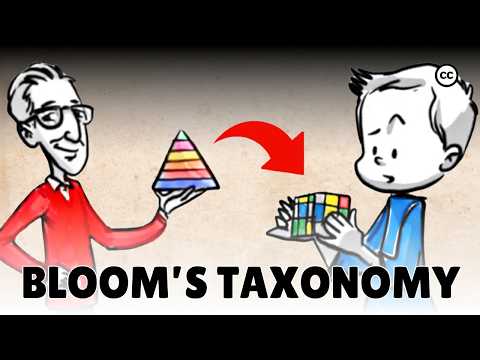
Bloom’s Taxonomy: Structuring The Learning Journey
Bloom's Taxonomy: Understanding Learning Objectives
Overview of Bloom's Taxonomy
- Bloom's Taxonomy is a framework for classifying and organizing learning objectives, primarily focusing on the cognitive domain.
- The taxonomy outlines six levels of learning, structured from simple to complex: Remember, Understand, Apply, Analyze, Evaluate, and Create.
Levels of Learning
Level 1: Remember
- At this foundational level, learners engage in rote memorization and recall basic facts about a subject (e.g., characteristics of lemons).
Level 2: Understand
- Learners begin to decode information; for instance, understanding that ripe lemons are yellow and sour while also recognizing their health benefits like high vitamin C content.
Level 3: Apply
- Application involves using knowledge in practical ways. An example includes making hot lemon water with honey as a remedy for illness.
Level 4: Analyze
- This level focuses on breaking down information into components. For example, analyzing the parts of a lemon to understand its nutritional value versus potential toxins in the skin.
Level 5: Evaluate
- Evaluation entails comparing and critiquing information. In this context, it involves assessing lemons against other vitamin sources based on various criteria such as taste and affordability.
Level 6: Create
- The final level encourages creativity by synthesizing knowledge to develop new ideas or products—like creating a lemonade business with an appealing brand identity.
Historical Context and Critique
- Originally developed by Benjamin Bloom in 1946, the revised version from 2001 underpins many teaching philosophies aimed at skill development.
- Critics question whether there is a strict hierarchical relationship between each level of learning within the taxonomy.