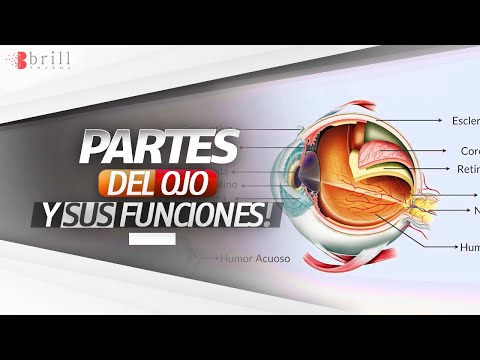
▶ Partes del Ojo Humano: Anatomía y Funcionamiento del Ojo para Niños👀📺
Eye Anatomy and Functions
Cornea
- The cornea acts as a shield for the eye, protecting it from dust, germs, and other risks.
- It plays a crucial role in focusing light and controlling its entry into the eye.
Lens (Cristalino)
- The lens allows the eye to focus on objects at varying distances.
Pupil
- The pupil regulates the amount of light entering the retina by changing size; it constricts (miosis) in bright light and dilates (mydriasis) in dim light.
Iris
- The iris functions like a camera diaphragm, controlling light entry through its sphincter and dilator muscles.
Conjunctiva
- This transparent mucous membrane covers the eyeball, protecting it from external agents and participating in tear formation.
Outer Eye Structure
Sclera
- The sclera is a white membrane that forms the outer layer of the eye, providing shape and protection to internal components.
Choroid
- Composed of blood vessels and connective tissue, the choroid prevents uncontrolled light reflection within the eye while supplying oxygen and nutrients to the retina.
Inner Eye Components
Retina
- Contains photoreceptor cells that convert images projected by the lens into electrical signals sent to the brain via the optic nerve.
Macula
- A region with high concentrations of photoreceptors responsible for central vision tasks such as recognizing faces and reading.
Optic Nerve
- This sensory nerve transmits visual information from the retina to the brain for processing.
Vitreous Humor
Functionality