Controlador PID
Introduction to PID Controllers
Overview of Control Systems
- The video introduces PID controllers, emphasizing their widespread use in control systems, applicable in 90% of cases.
- A control system is defined as a set of devices that manage the behavior of other devices to maintain desired values.
- Control systems can be applied to everyday tasks (e.g., refrigerator temperature) or large-scale industrial processes (e.g., chemical manufacturing).
Example: Home Oven Control
- An example illustrates how a home oven maintains a set temperature (e.g., 175°C for baking).
- The control process involves four steps: sensor, transmitter, controller, and actuator. Each plays a crucial role in maintaining the desired temperature.
Types of Controllers
On/Off Controllers
- On/Off controllers are simple and operate with two states: fully open (100%) or fully closed (0%), lacking intermediate values.
- They are suitable for systems where precision is not critical; they oscillate around the desired value quickly.
Example: Water Tank Control
- In controlling a water tank, an On/Off controller opens or closes the valve based on whether the water level is above or below 10 liters.
- This method results in oscillation around the target volume due to its binary nature.
Advantages and Disadvantages of On/Off Controllers
Advantages
- Simple operation with no complex parameters required; ideal for non-critical applications.
- Quick response time to reach desired values while minimizing wear on actuators by avoiding constant operation.
Disadvantages
- Tends to overshoot target values and does not maintain them consistently over time; lacks precision.
PID Controller Mechanics
Components of PID Control
- The PID controller adjusts actuators gradually using three parameters: proportional gain (Kp), integral gain (Ki), and derivative gain (Kd).
Functionality Breakdown:
- Proportional Control - Defined by Kp; causes oscillations based on error magnitude.
- Integral Control - Defined by Ki; corrects steady-state errors or offsets.
- Derivative Control - Defined by Kd; minimizes oscillations and smoothens response curves.
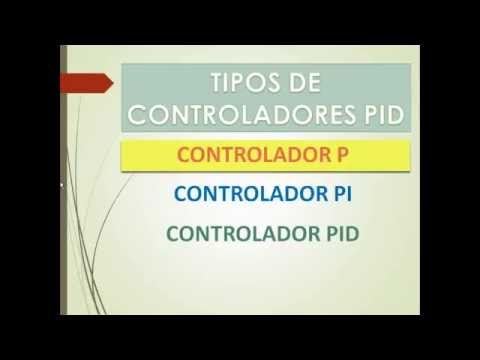
Types of PID Controllers
Classification Based on Parameters Used
- P Controller - Utilizes only proportional gain (Kp).
- PI Controller - Combines proportional gain (Kp) with integral gain (Ki).
- PID Controller - Incorporates all three parameters: Kp, Ki, and Kd for comprehensive control strategies.
PID Control and Oscillation Management
Understanding Oscillations in Control Systems
- The actuator's opening change can lead to significant oscillations; a small gain (K) will not cause oscillations but may fail to reach the desired value due to constant energy losses in the process, resulting in a steady-state error or offset.
- For instance, maintaining a temperature of 175°C with a 20°C error and a capacity of 10% means that for each degree of error, the actuator opens by 10%, causing many oscillations. A smaller gain would minimize oscillations but also fail to overcome heat loss, leading to an error.
PID Controller Functionality
- The PID controller addresses these issues by using its integral component to provide necessary energy to overcome constant errors. The integral part accumulates errors over time and compensates for energy losses, aiming for the desired setpoint. A small integral gain results in slower response correction while a large one causes excessive oscillation from minor errors.
- Proper selection of proportional and integral constants is crucial to avoid oscillation or steady-state errors (offset). The PID controller also includes a derivative component that helps linearize the process and reduce oscillations as much as possible. Graphical observations show reduced oscillation after implementing this control strategy.
Tuning Methods for PID Controllers
- Most PID controllers feature an auto-tuning system that automatically finds suitable parameters for specific processes; however, these are not always optimal and should be adjusted by knowledgeable personnel if needed. Key objectives include minimizing error, reducing oscillation size, and maximizing response time. There are three tuning methods: manual tuning through error analysis, Ziegler-Nichols method based on sustained oscillation periods, and response curve-based tuning methods like Ziegler-Nichols and Kp-Ki-Kd adjustments.
Manual Tuning Steps
- Set Ki (integral) and Kd (derivative) gains to zero; start with a small proportional gain (Kp) until continuous oscillation around the desired value occurs; then halve this value.
- Increase Ki gradually until consistent oscillation is achieved; once found, divide this value by three.
- Adjust Kd similarly until it induces consistent oscillation; again divide this final value by three for reference parameters—this method provides good initial settings though not always precise or optimal.
Ziegler-Nichols Tuning Method
- In this method, begin with both integral and derivative gains set to zero while incrementally increasing Kp until sustained amplitude oscilloscope readings are observed between cycles; use these measurements alongside tables for further calculations on optimal settings based on observed periods of constant amplitude fluctuations during testing phases of control systems implementation efforts.
Response Curve-Based Tuning Complexity