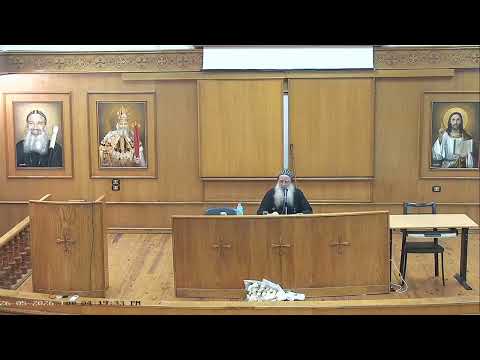
محاضرة الأحوال الشخصية الأولي لنيافة الأنبا بولا - للفرق الأربعة الثلاثاء 26-5-2026
Introduction and Context
Opening Remarks
- The speaker expresses gratitude for being present, acknowledging the absence of a previous instructor, William. They wish him good health and inquire about personal status updates from the audience.
Discussion on Personal Status
- The speaker notes they have not previously discussed personal matters with the audience, indicating a shift in focus to legal and church-related topics.
Historical Background of Personal Status Laws
Overview of Past Legal Framework
- The speaker references "Law 38," which was historically significant but lacked formal recognition as a law by ecclesiastical or national authorities. Instead, it was created by a lay council without deep ties to the church.
Legislative Authority
- Clarification is made that laws are issued by legislative bodies; in this context, both ecclesiastical (Holy Synod) and national (state parliament) authorities should be involved in creating personal status laws for Christians in Egypt.
Critique of Law 38
Limitations of Law 38
- The speaker highlights several criticisms regarding Law 38: it did not originate from the church and failed to accommodate various Christian denominations adequately. This led to inconsistencies in how different sects could navigate personal status issues like marriage and divorce.
Need for Unified Legislation
- Emphasis is placed on the necessity for unified legislation that respects both ecclesiastical principles and civil rights while addressing differences among denominations effectively. This would ensure all groups are treated fairly under one comprehensive law rather than piecemeal regulations.
Attempts at Reforming Personal Status Laws
Historical Efforts by Church Leaders
- The speaker recounts past attempts by Pope Kyrillos III to address these issues through committees that engaged with judicial authorities, aiming to amend existing laws based on feedback from church leaders regarding their inadequacies.
Constitutional Conflicts
- Current laws are said to conflict with Egypt's constitution, which mandates that Christians adhere to their religious principles concerning personal status matters; however, existing regulations allow Islamic law application during inter-denominational disputes, raising constitutional concerns about fairness and legality.
Recent Developments Under President Sisi
New Family Law Initiatives
- Under President Sisi's administration, significant advancements have been made including new family laws aimed at encompassing broader aspects beyond just personal status—termed "Family Law" for its inclusivity regarding inheritance and other familial matters rather than solely focusing on individual statuses like marriage or divorce.
Collaborative Legislative Process
- The development process involved collaboration across various recognized Christian denominations within Egypt, ensuring diverse perspectives were included in drafting proposals for new family legislation that aligns with both scriptural teachings and contemporary societal needs.
Scriptural Foundations for Marriage
Biblical References
- Key biblical texts are cited as foundational references guiding discussions around marriage and divorce within Christianity—specifically passages from Matthew (5:31–32; 19:9), Mark (10:11–12), Luke (16:18), emphasizing traditional views against polygamy or same-sex unions while advocating monogamous relationships as per divine design since creation narratives found in Genesis are referenced as well.
Principles Derived from Scripture
- Core principles derived include:
- Monogamy is emphasized throughout scripture.
- Marriage is viewed as a sacred union ordained by God.
- Divorce is only permissible under specific circumstances such as infidelity (adultery).
Understanding Divorce Within Christian Teachings
Conditions Permitting Divorce
- According to Jesus' teachings reiterated throughout scripture:
- Divorce should only occur due to adultery; any other reasons lead individuals into sin.
- Those who remarry after an unjustified divorce commit adultery themselves according to biblical standards outlined primarily in Matthew’s Gospel accounts.(5:32; 19:9).
Implications of Unjustified Divorces
- Engaging in remarriage post-divorce without valid grounds leads individuals away from God's intended plan for marital unity—reinforcing the notion that human emotions should not dictate spiritual truths established through scripture.(5:32).
Equality Between Genders
Equal Standards Applied
- Both men and women face identical expectations concerning marital fidelity—emphasizing equality before God regardless of gender roles traditionally assigned within society.(10:12).
Conclusion on Marital Union
The discussion concludes with affirmations surrounding marriage being divinely instituted—a sacred covenant between one man and one woman devoid of multiplicity or deviation towards same-sex unions while underscoring adherence strictly aligned with scriptural directives governing relationships amongst believers.
Legal and Religious Aspects of Marriage in the Christian Context
Introduction to Marriage Regulations
- The speaker discusses the complexities surrounding marriage regulations, particularly when a young woman (19 years old) seeks to marry without parental consent, highlighting the role of legal authorities.
- Emphasis is placed on the necessity for a priest's approval for conducting marriages, which must be sanctioned by religious authorities.
Consent and Age Requirements
- It is clarified that individuals reaching adulthood (age 18) do not require parental consent for marriage, but mutual agreement between partners is essential.
- In cases where engagement is broken off by a minor (under 18), legal proceedings may be necessary to determine the status of the engagement.
Role of Guardianship
- The importance of guardianship in marriage decisions is emphasized; guardians are responsible for ensuring that minors are protected during engagements.
- Situations arise where one partner may have undisclosed health issues, necessitating guardian involvement in decision-making.
Legal Implications of Engagement
- If a minor wishes to engage or marry, their guardian must be involved and provide consent; this highlights the critical nature of guardianship in protecting minors' interests.
- The absence of a guardian can invalidate an engagement or marriage; thus, proper procedures must be followed to ensure legality.
Documentation and Formalities
- A formal record must document engagements, prepared by an authorized religious figure. This ensures transparency and adherence to church laws.
- Specific details about both parties involved in the engagement must be included in official documents to prevent future disputes regarding identity or eligibility.
Witnesses and Verification
- Engaged couples are required to present witnesses who can verify their identities and confirm their willingness to enter into marriage.
- Witnesses should also provide personal information such as occupation and residence as part of the verification process.
Prohibitions on Marriages
- Certain familial relationships prohibit marriages due to potential conflicts arising from close kinship ties; these restrictions aim at preventing genetic complications.
- The need for clarity regarding family relations during engagements is stressed; misunderstandings can lead to invalid marriages if not properly addressed.
Handling Engagement Breakdowns
- Procedures are outlined for handling situations where one party wishes to break off an engagement. Clear communication through documented channels is essential.
- Both parties should acknowledge any agreements made during engagements formally; this helps mitigate disputes later on.
Conclusion: Importance of Adhering to Protocol
- Following established protocols ensures that all aspects related to engagements and marriages are legally binding within both civil law and church doctrine.
Overview of Marriage Legislation
Key Concepts in Marriage Law
- The discussion begins with the notion that the validity of marriage can be challenged until a person reaches adulthood.
- Emphasis on concluding previous discussions related to marriage laws and regulations.
- Introduction to the essential components of marriage, linking it to prior procedural discussions.
Legal Grounds for Annulment
- The text outlines legal grounds for annulment, indicating that if any prohibitive factors exist at the time of marriage, it renders the union void.
- A focus on procedures involved in formalizing a marriage contract is introduced.
Requirements for Marriage Contract
Essential Information in Marriage Contracts
- The first article specifies that a marriage must be documented by an authorized religious figure, including necessary details about both parties such as names, professions, and identification numbers.
- Additional information required includes parental details and confirmation of both parties' presence and consent during the ceremony.
Witnesses and Consent
- It is mandated that at least two adult Christian witnesses are present to validate the couple's consent to marry.
- Historical practices involving local leaders as witnesses are contrasted with current requirements for Christian witnesses.
Announcement Procedures
Legal Notification Process
- The announcement process involves notifying relevant church authorities about potential objections to the marriage before proceeding with ceremonies.
Documentation Changes
- New documentation processes are being implemented following recent legal changes affecting how marriages are recorded within church systems.
Completion of Religious Ceremonies
Verification of Ceremony Completion
- There is a requirement to confirm whether all religious rites were performed according to church traditions; failure could lead to annulment claims later on.
Personal Anecdote Highlighting Importance
- A personal story illustrates past challenges faced when proper wedding protocols were not followed, emphasizing the need for adherence to established procedures.
Documentation Requirements
Record Keeping Standards
- All marriages must be documented accurately in official records maintained by authorized religious figures. This includes ensuring all necessary paperwork is completed correctly.
Importance of Official Records
- Each document must be numbered and stamped by ecclesiastical authorities to prevent fraudulent activities or errors in record keeping.
Finalization Steps
Reading Contract Details
- Before finalizing contracts, there will be a public reading of terms during ceremonies allowing attendees an opportunity to voice concerns or objections last minute.
Signatures Required
- All parties involved—including spouses, witnesses, and guardians—must sign documents confirming their agreement and understanding of terms laid out in contracts.
Archival Practices
Church Record Management
- After completing documentation processes, records will be archived systematically within church databases for future reference.
Digital Integration Plans
- Future plans include integrating digital systems into record management for easier access and tracking across different parishes.
Civil Registration Obligations
Dual Registration Requirement
- Clergy members must also prepare civil registration documents alongside religious ones within specified timelines post-marriage ceremony.
Streamlined Processes
- Recent adjustments allow couples more flexibility regarding civil registration deadlines while ensuring compliance with legal standards set forth by governing bodies.
Turn any video into a summary like this
YouTube links, meetings, lectures — with transcripts, search, and chat.