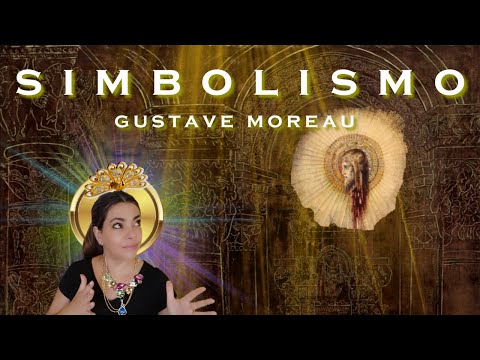
Gustave Moreau y el Simbolismo: ¿arcaico o adelantado?
The Symbolism Movement: An Introduction
Overview of the 19th Century Artistic Landscape
- The quote from Charles Baudelaire highlights the complexity of nature and its interpretation, setting the stage for discussions on symbolism.
- The second half of the 19th century is characterized by a bourgeois society that embraces liberal ideas and progress, influencing artistic expression.
- Realism and Impressionism emerge as dominant styles, reflecting both rural and urban life while focusing on everyday experiences.
Underlying Discontent with Modernity
- Beneath the surface of artistic trends lies a growing disillusionment with modernity, particularly regarding colonialism and societal issues.
- Artists begin to sense discomfort with modern life, prompting a spiritual quest that seeks to transcend rational thought and realism.
The Rise of Fantasy in Art
- A shift towards fantasy emerges as artists explore archaic themes that inspire creativity and imagination amidst cultural decay.
- This period sees an interest in supernatural elements such as spiritualism and hypnotism, contributing to a broader cultural atmosphere of pessimism.
Understanding Symbolism
Defining Symbolism in Literature
- Symbolism is primarily a literary movement that gained traction in the late 19th century, articulated through a manifesto published in 1885.
- Baudelaire's work exemplifies symbolic literature where poets decode deeper meanings behind nature rather than merely representing it.
Interconnection Between Literature and Visual Arts
- The influence of symbolism extends into visual arts; notable figures like Edgar Allan Poe are recognized for their contributions to this movement.
- Symbolist painters reject mundane representations found in Impressionism, seeking deeper significance beyond mere visual reproduction.
Critique of Contemporary Artistic Movements
Rejection of Realism and Impressionism
- Symbolist artists criticize contemporary movements for lacking depth; they argue that mere representation fails to convey true meaning or transcendence.
- There’s a call for art to embody poetic thought rather than just depict reality as seen through an ordinary lens.
Emergence Across Europe
- While often associated with France, symbolism also develops concurrently in Belgium and Austria, showcasing its widespread impact across Europe.
Key Figures Influencing Symbolist Art
Notable Artists
- Odilon Redon and Gustave Moreau are highlighted as precursors to symbolism who sought imaginative visions beyond reality.
Exploring Artistic Influences and Themes
The Unique Transformation of Influences
- The discussion begins with the exploration of various influences on an artist, emphasizing how these influences are transformed into something unique and incomparable.
- The artist is positioned between Romanticism and Symbolism, coming from a well-off bourgeois family that supported his artistic education.
Early Artistic Development
- His artistic interests intensified during adolescence, particularly after a formative trip to Italy at age 15, which he would revisit later.
- After leaving the Academy of Fine Arts in Paris without winning the Prix de Rome, he sought new mentorship.
Mentorship and Diverse Influences
- His new mentor was Théodore Chassériau, who had a significant impact on his work; Chassériau was known for his exotic themes and Orientalist paintings.
- He also studied under two contrasting figures: one focused on color while the other emphasized exoticism. This duality shaped his artistic vision.
Encountering Symbolism
- During this period, he met Puig de Sant Lluís, a lesser-known but influential Symbolist artist whose work featured timeless characters and stillness.
Italian Inspirations
- A deep admiration for Italian art emerged from his travels; he was particularly inspired by Quattrocento painters and Byzantine mosaics in Venice.
The Creation of "Oedipus and the Sphinx"
Mythological Foundations
- The narrative centers around Oedipus's abandonment at birth due to ominous prophecies predicting he would kill his father and marry his mother.
Dramatic Encounters
- Oedipus encounters the Sphinx, who poses riddles to travelers; those unable to answer face dire consequences. Oedipus successfully answers her riddle.
Visual Representation
- In the painting "Oedipus and the Sphinx," Oedipus is depicted with attributes like a mantle and staff while engaging intensely with the Sphinx—a creature symbolizing danger yet beauty.
Critical Reception
- Critics noted the original presentation of mythological themes amidst contemporary styles like Impressionism or Realism. The intense gaze shared between Oedipus and the Sphinx adds depth to their interaction.
Artistic Critique Over Time
Mixed Reviews
- Initial critiques were mixed; some praised its originality while others dismissed it as derivative or overly academic compared to prevailing trends in art at that time.
Lasting Impact
- Despite criticism, this work marked a significant departure from everyday life depictions common in contemporary art movements.
This structured summary captures key insights from the transcript while providing timestamps for easy reference.
Artistic Influences and Symbolism in Gustavo's Work
Unique Artistic Style
- Gustavo is described as a unique artist influenced by Mantegna and Leonardo, whose works feature princesses set against mysterious black and blue landscapes.
- Critics highlight the duality of perspectives on his work, referencing both Mantegna's Italian influence and the atmospheres created by Leonardo.
Philosophical Underpinnings
- Schopenhauer's philosophy plays a significant role in symbolism; his ideas about human essence being monstrous and happiness as an illusion are discussed.
- The text explores various religious cultures (Hinduism, Buddhism) that suggest ethical living or artistic creation as viable paths to liberation.
Literary Connections
- Huysmans is introduced as a critical figure in cultural life, with his book "A Rebours" recommended for its exploration of dandyism and cosmopolitan critique.
- The narrative discusses how Huysmans' character critiques societal values while seeking meaningful aspects within literature.
Artistic Techniques
- The visual richness of Gustavo’s paintings is emphasized, showcasing decorative elements reminiscent of Hindu iconography.
- His technique involves layering gold leaf with black paint, creating depth through scraping to reveal underlying colors.
Themes of Gender and Mythology
- The presence of mythological themes like Oedipus and the Sphinx highlights Gustavo's literary influences while asserting his desire not to be merely a narrative painter.
- He expresses concern over capturing pure images from his mind onto canvas without losing their essence, emphasizing fidelity to dreams over storytelling.
Symbolism in Female Representation
- The representation of women in Gustavo’s work varies significantly based on context—depicting them as desirable figures or guardians depending on the story being told.
- This complexity reflects broader themes within symbolism where female figures embody different roles across narratives.
Artistic Techniques and Symbolism in Watercolor
Exploration of Color and Technique
- The discussion begins with the evolution of color usage in watercolor, highlighting a shift towards more vibrant hues and mixed techniques.
- A specific artwork featuring Andromeda is analyzed, depicting her as a sensual figure awaiting rescue by Perseus, who carries the head of Medusa on his shield.
- A quote from Wissmann emphasizes the unprecedented brilliance achieved in watercolor art, likening its vibrancy to precious stones and illuminated crystals.
Themes of Desire and Sacrifice
- The narrative transitions to themes of desire through the depiction of Andromeda's vulnerability and Perseus's protective role.
- The work "Galatea" is introduced, showcasing a mythological theme that contrasts beauty with monstrosity, represented by Polyphemus's hidden presence.
Visual Elements and Atmosphere
- The painting features an unreal landscape filled with marine flora, creating an exotic atmosphere that enhances the emotional depth of Galatea’s portrayal.
- Vivid colors are noted for their striking impact; red tones evoke a sense of twilight while contributing to the overall lushness of the scene.
Symbolism in Salomé: Femme Fatale
Depictions of Power and Manipulation
- Transitioning to stronger female figures, Salomé emerges as a central character representing complex femininity—both powerful and dangerous.
- Two notable works depict Salomé’s dance leading to John the Baptist's beheading; these pieces encapsulate key characteristics of Symbolist art.
Artistic Composition and Detail
- In "The Apparition," Salomé envisions John's decapitated head floating amidst rich decorative elements that blend various cultural influences.
- The intricate details reflect a baroque style without being vulgar; they enhance the thematic richness surrounding Salomé’s character.
Emotional Resonance
- Salomé is portrayed both alluringly and hauntingly, emphasizing her dual nature as both desired object and manipulative force within her narrative context.
Artistic Symbolism and Mythology in Visual Arts
The Representation of Herod and Salomé
- The depiction of Herod is likened to a Persian king, with his wife present, emphasizing the dramatic imagery of violence as Herod's severed head is shown still bleeding.
- The artwork reflects meticulous precision in its design, showcasing calculated lines and golden embellishments that enhance the visual experience.
- Salomé is portrayed as a powerful yet deceptive figure, embodying beauty that leads others down a path of destruction while remaining an object of admiration.
Influences from Japanese Art and Impressionism
- The discussion highlights influences from Japanese art, particularly in the representation of decapitated heads, drawing parallels to Medusa's imagery.
- There’s an exploration of how European painting during this period was inspired by various styles including Impressionism and Post-Impressionism.
Salomé's Consciousness and Power Dynamics
- Salomé is depicted not merely as a victim but as a conscious agent aware of her sensuality and power, using it for malevolent purposes.
Degas' Artistic Philosophy
- A reference to Degas reveals his complex relationship with fellow artists; he questioned whether painting dancers could change the world compared to jewelry-making.
- Degas’ work is described metaphorically as akin to jewelry-making due to its intricate detail and craftsmanship.
Surrealism and Symbolic Representations
- The conversation shifts towards surrealist elements within artworks, highlighting subjective experiences represented through floating heads or dream-like scenarios.
Jupiter and CML: A Mythological Exploration
- Discussion on Jupiter’s romantic entanglement with CML illustrates themes of divine love intertwined with human emotion; CML seeks to understand Jupiter’s true nature.
Iconography in Artistic Depictions
- Jupiter transforms into various forms to interact with mortals; this transformation theme emphasizes the complexity of divine interactions with humanity.
Conclusion on Artistic Themes
- The artwork presents Jupiter not just as a god but also incorporates elements reminiscent of Christ-like figures surrounded by allegorical representations such as death and pain.
Symbolism in Art: An Exploration of Meaning
The Symbolism of Figures
- The presence of a lily, symbolizing purity, is juxtaposed with an eagle representing Jupiter, highlighting the contrast between celestial and earthly realms.
- Pan appears with goat legs, embodying the connection to nature and the struggle against constraints, while the queen of shadows represents darkness and contrasts with Jupiter's light.
Duality of Time and Space
- Two sphinxes symbolize past and future, acting as guardians over an infernal group in shadows; this imagery suggests a journey of the soul from darkness to enlightenment.
- The artwork presents a stark contrast to everyday life, filled with fantasy and complexity that defies normalcy.
Allegorical Interpretations
- The artist employs numerous allegories to create symbols that transcend mere historical representation, inviting deeper interpretation.
- A letter reveals the artist's frustration with being labeled "too literary," emphasizing that true art requires imagination beyond simple realism.
Artistic Legacy and Techniques
- The discussion raises questions about whether the artist was archaic or advanced; he drew from ancient sources but created unique works through innovative techniques.
- His later years involved transforming his workshop into a museum space, showcasing his creative environment.
Reflection on Symbolism
- Upon his death, all possessions were bequeathed to France as a testament to his artistic legacy; visiting his home offers insight into his creative atmosphere.
- Future artists are encouraged to seek color in their imagination rather than merely copying reality; this highlights the importance of creativity in producing beautiful art.