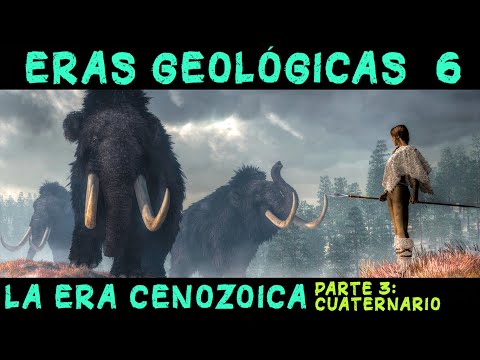
ERAS GEOLÓGICAS 6: Era Cenozoica (3ª parte): Periodo Cuaternario - PREHISTORIA Paleolítico Neolítico
The Prehistoric Era: From Monkeys to Humans
The transcript delves into the prehistoric era, spanning from 2.5 million years ago to 3,300 B.C., exploring the evolution of humanity from monkeys to humans through various stages and epochs.
Prehistory and Human Development
- The concept of Prehistory marks the period from the first hominids around 7 to 4 million years ago until the invention of writing circa 3,300 B.C., encompassing significant human developmental milestones.
- Prehistory is further subdivided into Paleolithic, Mesolithic, and Neolithic periods within the broader context of the Quaternary era, delineating distinct stages in human cultural and technological evolution.
Paleolithic Era: Evolution of Early Humans
- The Paleolithic era, synonymous with the Pleistocene epoch, spans nearly three million years and signifies a stage characterized by nomadic lifestyles and rudimentary stone tools among early humans.
- Early Homo species like Homo Habilis demonstrated cognitive advancements through tool-making abilities, evolving from simple stone tools in the Oldowan tradition to more sophisticated implements like bifacial tools in later periods.
Homo Erectus and Human Advancements
- Homo Ergaster emerged as a pivotal figure known for expanding across various regions globally while Homo Erectus showcased advanced hunting skills, tool craftsmanship using stone and bone materials, and organizational structures within communities.
- Homo Erectus' nomadic lifestyle facilitated migration to distant lands such as Indonesia and Beijing, with notable archaeological findings like the Java Man highlighting ancient human dispersal patterns during glacial periods.
Emergence of Homo Sapiens
- The evolutionary lineage leading to modern humans includes species like Homo Antecessor evolving into Homo Heidelbergensis before giving rise to distinct human species such as Homo Neanderthalensis in Europe and Western Asia.
- The advent of Homo Sapiens marked by complex tool usage including wooden spears and fire-making skills with flint rocks positioned them favorably against Neanderthals during climatic challenges like major glaciations.
Sapiens and Neanderthals
This section discusses the differences between Sapiens and Neanderthals, highlighting how language played a role in their survival.
Sapiens vs. Neanderthals
- Sapiens had superior language abilities, using it to their advantage, while Neanderthals struggled with communication.
- Homo Sapiens Sapiens emerged around 130,000 years ago, displaying advanced hunting strategies like ambushes alongside gathering practices.
- Predators like saber-toothed tigers posed threats to early humans, with some species going extinct due to changing climates.
- The onset of the last ice age around 100,000 years ago significantly impacted human survival and migration patterns.
- Environmental changes led to the development of different biomes such as tundras, taigas, temperate forests, deserts, and jungles.
Artistic Development in Early Humans
This part explores how early humans expressed themselves through art forms like cave paintings.
Early Human Artistry
- Early humans utilized caves as living spaces and artistic canvases, creating intricate cave paintings depicting scenes of hunting and wildlife.
- Notable prehistoric artworks include those found in Altamira (Cantabria), Atapuerca (Burgos), Lascaux (France), Niaux (France), and Cro-Magnon (France).
- The Venus of Willendorf sculpture from Austria symbolizes fertility or beauty standards of that era but retains mystery regarding its exact purpose.
Transition to Neolithic Era
This segment delves into the transition from the Paleolithic to the Neolithic period marked by significant environmental shifts.
Paleolithic Transition
- The end of the Paleolithic era around 10,000 B.C. saw Homo Sapiens Sapiens spreading globally as the ice age concluded.
- Climate change led to melting glaciers and rising sea levels, impacting landmasses and contributing to the extinction of various megafauna species.
Genetic Legacy and Speculations
Discussions on genetic legacies from ancient hominids and speculations about potential additional human species.
Genetic Inheritance
- Modern humans carry a small percentage of Neanderthal DNA except for Africans; this genetic legacy may influence traits like disease susceptibility or creativity.
Mesolithic Period
An overview of the Mesolithic era characterized by transitional developments post-Paleolithic age.
Mesolithic Insights
Domestication of Animals and Early Societies
The transcript discusses the domestication of various animals, the evolution of early societies, and advancements in tools and agriculture during ancient times.
Domestication of Animals
- Domestication involved a range of animals from goats, sheep, cows to horses, donkeys, and reindeer. Wolves were domesticated into dogs, wild boars into pigs, and wild bulls into oxen. Cats were domesticated around 7,500 years ago.
- Animal skins were used for clothing and shelter in primitive societies. Stones were primarily utilized for tool construction like hand mills. Obsidian tools were notable for their sharpness.
Advancements in Tools and Agriculture
- Early humans used large stones for various purposes including complex funeral rites involving shamans and priests.
- They developed tools such as plows, hand mills, and started storing cereals. Basket weaving using rye straw was an early craft followed by pottery making for vessels.
- Irrigation became crucial for agriculture as water significantly improved crop growth in Mesopotamian deserts.
Organizational Development in Early Societies
This section explores how early societies evolved structurally with the growth of population leading to the formation of villages and towns.
Evolution of Society
- With increased population came the need for more housing leading to the expansion of villages into towns. Jericho is cited as one of the earliest walled cities dating back to 8,000 BC.
- Catal Hoyuk was another ancient settlement that did not last long. However, Uruk in Mesopotamia with the Sumerians marked a significant development towards creating the first civilization recorded in history.
Social Organization
- As populations grew, families became central units within society. New professions emerged such as craftsmanship and masonry indicating societal diversification.
- The emergence of leisure time allowed humans to engage in activities like thinking, entertainment, and love fostering social organization beyond basic survival needs.
Transition to Written History
This part highlights the transition from prehistory to recorded history with Uruk marking a pivotal point in human civilization through advancements like writing systems.
Transition Period
- The shift from prehistory to recorded history occurred around 3,300 BC with evidence pointing towards written language development.