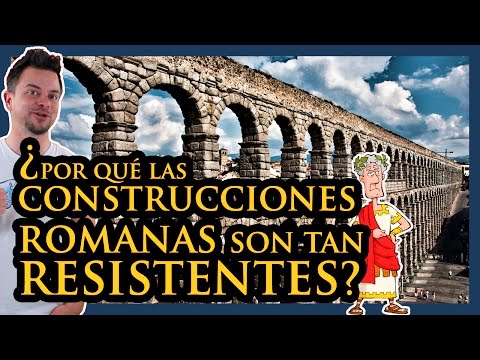
¿POR QUÉ LAS CONSTRUCCIONES ROMANAS SON TAN RESISTENTES?
What Makes Roman Structures Last for Over 2000 Years?
Introduction to Roman Architecture
- JJ introduces the topic of Roman architecture, highlighting the enduring nature of structures like bridges and aqueducts that have stood for over 2000 years.
- The secret behind their longevity is revealed to be Roman concrete, which, while not as strong as modern concrete, withstands time better due to its unique composition.
Composition of Roman Concrete
- A study conducted by Italian and American researchers in 2013 analyzed ancient structures in Italy, focusing on a fragment from a breakwater dating back to 37 BC.
- The analysis showed that this concrete was made from lime, water, sand, small brick fragments, rock pieces, and volcanic ash. This combination contributed significantly to its durability.
Unique Ingredients and Their Benefits
- Puzolanic ash from the area near Mount Vesuvius was particularly valuable; Vitruvius mentioned its benefits in the first century BC.
- This volcanic ash not only provided strength but also allowed construction underwater—an essential feature for maritime structures.
Comparison with Modern Concrete
- The main difference between Roman concrete and modern Portland cement lies in their binding agents; Romans used lime mixed with volcanic ash instead of Portland cement.
- Incorporating volcanic ash into modern cement production could reduce lime usage and lower carbon emissions during manufacturing.
Historical Context of Destruction
- JJ discusses how many ancient buildings were destroyed or repurposed after Christianity became the official religion under Emperor Theodosius in 380 AD.
- Pagan temples lost their significance and utility as Christianity favored basilicas over traditional temples.
Decline of Infrastructure
- Many aqueducts ceased functioning due to lack of maintenance; they required organization and funding that diminished post-Roman Empire.
- Iconic architectural types like massive public baths fell out of use as resources dwindled during medieval times.
Consequences of Abandonment
- The Cloaca Maxima suffered neglect leading to flooding; ironically, this helped preserve some ruins beneath layers of mud.
- Abandoned buildings were often dismantled for materials needed in new constructions—showing how past grandeur was repurposed rather than completely lost.
Conclusion: Layers of Rome's History
- JJ concludes by reflecting on Rome's complex history: it consists of visible structures today, hidden remnants beneath the surface, and those long gone.
Engagement and Feedback in Content Creation
Importance of Viewer Interaction
- The speaker encourages viewers to like the video and share it on social media, emphasizing that this helps significantly with visibility and engagement.
- The phrase "boca boca del Siglo 21" suggests that word-of-mouth remains a powerful tool for spreading content in the digital age.
- Viewers are invited to leave comments regarding the solidity of Roman constructions, indicating an interest in audience feedback and discussion.
- The speaker expresses openness to questions and suggestions about the channel, reinforcing a community-oriented approach to content creation.
- A key takeaway is that knowledge is portrayed as essential for survival, highlighting the educational aspect of the channel's content.