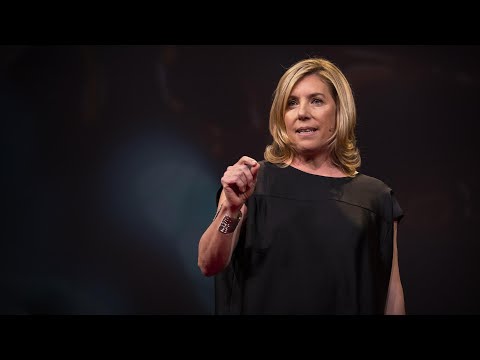
Is the US Headed Towards Another Civil War? | Barbara F. Walter | TED
New Section
In this section, the speaker introduces the topic of civil war as a threat that is often overlooked and discusses their experience studying civil wars for over 30 years.
Introduction to Civil War
- The speaker highlights that civil war is a threat that most people don't want to think about due to its frightening nature.
- Over 250 civil wars have occurred since 1946, with an increasing trend. There are now almost 50 percent more civil wars than in 2001.
Experience Studying Civil Wars
- The speaker shares their extensive experience studying civil wars for over 30 years.
- They have interviewed members of various groups involved in conflicts, such as Hamas, Sinn Féin, and FARC.
- The speaker has witnessed the Syrian civil war from the Golan Heights and traveled through Zimbabwe during a military coup planning.
- They have also been followed and interrogated by members of Myanmar's junta.
Predicting Civil Wars
- The speaker mentions being part of a task force called the Political Instability Task Force run by the CIA in 2017.
- The goal of the task force was to develop a model for predicting ethnic conflict and civil war in different countries.
- Solid data exists on where and when these conflicts are likely to break out, but most people are unaware of it.
Factors Predictive of Civil War
- Experts on civil war identified 38 factors that could potentially lead a country towards civil war.
- Surprisingly, only two factors were highly predictive:
- Anocracy: Countries with partial democracy or governments that are neither fully democratic nor fully autocratic are at high risk.
- Identity-based Political Parties: Countries where political parties form around identity rather than ideology are also at high risk.
The Watchlist and the United States
- The task force created a watchlist called "The Watchlist" to identify countries at high risk of political violence and civil war.
- However, the CIA is legally not allowed to monitor the United States or its citizens.
- The speaker mentions that they observed these predictive factors emerging in their own country, the United States.
Downgrading of US Democracy
- The US's democracy has been downgraded three times since 2016.
- In 2016, international election monitors considered the election free but not entirely fair.
- America's intelligence agencies confirmed Russian meddling in the election.
- Further downgrades occurred in 2019 when the White House refused to comply with Congress requests and in 2020 when President Trump contested his loss in the election.
Classification as an Anocracy
- Between December 2020 and early 2021, the United States was officially classified as an anocracy by the task force.
- If monitored, it would have been considered at high risk of political instability and violence before the January 6 insurrection.
Groups Starting Civil Wars
- Contrary to common belief, it is not always the poorest or most oppressed people who start civil wars.
- Groups that were once politically dominant but are now in decline tend to initiate civil wars, especially ethnically-based conflicts.
Timestamps are approximate and may vary slightly.
New Section
This section discusses the impact of democratization in Yugoslavia and the role of Serbs in starting the war.
Impact of Democratization in Yugoslavia
- The process of democratization in Yugoslavia had significant consequences for different ethnic groups.
- The Serbs were particularly affected and stood to lose the most during this transition.
Role of Serbs in Starting the War
- It is stated that the Serbs initiated the war during this period of democratization.
New Section
This section highlights how Iraq's Sunnis lost their positions after Saddam Hussein was toppled by the United States.
Position of Sunnis under Saddam Hussein
- Prior to Saddam Hussein's downfall, Iraq's Sunnis held key positions within the military and government.
Removal of Sunnis from Power
- After Saddam Hussein was overthrown, the United States also removed Sunnis from their positions.
- The removal of Sunnis from power contributed to further conflict and instability in Iraq.
New Section
This section explores how militias in the United States are primarily driven by white men who perceive threats to their status due to changing demographics.
Rise of Militias Driven by White Men
- The rise of militias in the United States is primarily attributed to white men who feel threatened by changes in America's identity.
- These individuals see demographic shifts as a direct threat to their social status.
New Section
This section delves into why these societal tensions are emerging at present.
Reasons for Current Societal Tensions
- Current societal tensions are attributed to demographic changes.
- The United States is undergoing a transition from a majority white population to a majority non-white population.
- Similar transitions are expected in other English-speaking countries like Canada, New Zealand, and the UK.
New Section
This section discusses the importance of how the United States manages its demographic shift as an example for other countries.
Importance of Managing Demographic Shift
- Other countries will look to the United States as a model for managing demographic change.
- Climate change may further accelerate migration patterns, making effective management even more crucial.
New Section
This section emphasizes the need for unity and proactive measures to navigate this transition successfully.
Unity and Proactive Measures
- Americans have two choices: allow this transition to divide them or use it as an opportunity to create a multiethnic, multi-religious democracy.
- Addressing risk factors such as anocracy and identity politics is essential.
New Section
This section outlines key steps in addressing risk factors for civil war.
Addressing Anocracy
- Improving the rule of law, ensuring equal access to voting rights, reducing corruption, and enhancing government services are crucial in addressing anocracy.
New Section
This section highlights how businesses can play a role in promoting stability and inclusivity.
Business Engagement in Promoting Stability
- The business community can contribute by advocating for real democracy, investing in marginalized communities affected by globalization, and supporting better healthcare, education, and wages.
- By creating hope for the future among vulnerable groups, businesses can help counter extremism.
New Section
This section suggests regulating social media algorithms to mitigate the spread of divisive content.
Regulating Social Media Algorithms
- The regulation of social media algorithms, without censoring free speech, can reduce the amplification of harmful content by bullies, hatemongers, conspiracy theorists, and enemies of democracy.
- Limiting their influence can contribute to a decline in their impact.
New Section
This section shares personal experiences from individuals who lived through civil wars.
Personal Experiences
- Individuals who experienced civil wars often express surprise at the outbreak of conflict.
- An example is given of Berina Kovac, a young mother living in Sarajevo during the Bosnian civil war, who described life seeming normal before the war began.
New Section Understanding the Playbook of Violence
In this section, the speaker discusses the reasons behind the start of terrible wars and emphasizes the importance of creating a playbook to prevent civil war.
The Playbook of Violence
- The speaker mentions that during a conversation, someone described hearing machine guns.
- It is stated that it doesn't have to be this way.
- The speaker highlights that there is a significant amount of knowledge about why these terrible wars start.
- There is an understanding that people intent on violence have a playbook.
- The speaker encourages democracy-loving people to create their own playbook to prevent civil war.
Timestamps are associated with each bullet point as requested.
Turn any video into a summary like this
YouTube links, meetings, lectures. With transcripts, search, and chat.