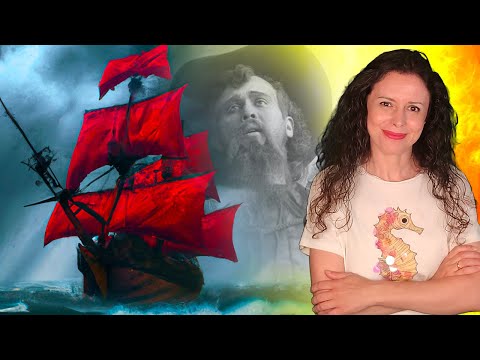
El Holandés Errante: La HISTORIA REAL tras la leyenda

El Holandés Errante: La HISTORIA REAL tras la leyenda

The Legend of the Flying Dutchman

Introduction to the Legend

  • The story begins with a sighting of the Flying Dutchman on July 11, 1881, off the coast of Australia, described as a ghost ship with a strange red light. Thirteen witnesses reported seeing it before it vanished without a trace.

Historical Context and Origins

  • The account of Prince George of Wales, who later became King George V, is highlighted as he documented his sighting while serving in the navy aboard HMS Inconstant. This adds credibility to the legend's historical roots.
  • The legend's origins trace back to the 17th century when Holland was a dominant maritime power with an extensive merchant fleet that surpassed those of England, France, Spain, and Portugal combined.

Maritime Routes and Dangers

  • Hendrik Brouwer established a new route between Cape of Good Hope and Java in 1611 that halved travel time but posed significant dangers due to navigational challenges at sea. Captains relied heavily on their experience for safe passage.
  • The British attempted this route but faced disaster; notably, the Tryall shipwrecked in 1622 off Australia's coast, leading them to avoid this path for two decades thereafter. This context sets up why such legends emerged during perilous voyages.

Evolution of the Legend

  • The earliest printed reference to the Flying Dutchman appears in John MacDonald's book from 1790 where it is depicted as a ship lost during a storm near Cape Town—an image that resonates with sailors facing treacherous conditions.
  • Frederick Marryat’s novel "The Ghost Ship" (1839) popularized another version featuring Captain Willem van der Decken who defied nature and fate while attempting to round Cape Horn—a tale filled with themes of hubris and divine retribution.

Themes and Cultural Impact

  • Van der Decken's relentless pursuit despite storms symbolizes human determination against insurmountable odds; his tragic end serves as a cautionary tale about overreaching ambition and its consequences within maritime folklore.

The Legend of the Flying Dutchman: Origins and Sightings

The Curse of Van der Decken

  • God acknowledged his oath, revealing the words "Until Judgment Day" on a cloud in fire, leading to Van der Decken and his crew's eternal curse aboard the Flying Dutchman.
  • Variations of the legend exist, including different names for the captain (e.g., Van der Staten) and alternate narratives involving pacts with the Devil or redemption through love.

Historical Inspirations

  • Some historians suggest that Willem van der Decken may have been inspired by Bernard Fokke, a captain from the Dutch East India Company who made an unusually fast journey from Amsterdam to Java in 1678.
  • Rumors circulated that Fokke had made a pact with the Devil after he disappeared at sea, leading to tales of misfortune associated with his ship adorned with red sails.

Alleged Sightings Through Time

  • Numerous sightings of the ghost ship were reported during the 19th and 20th centuries; however, these lacked graphic evidence and relied on personal testimonies. Some claimed to see it sailing against the wind despite all sails being unfurled.
  • A notable sighting involved Prince George of Wales and his brother during their travels, documented by their tutor John Neale Dalton in a book published later. Dalton did not refute their account but also did not clarify which prince witnessed it.

Details from Historical Accounts

  • The narrative included other ships signaling about strange lights seen alongside them and noted a tragic incident where a young sailor fell to his death during this encounter. This event was tied to subsequent misfortunes within their fleet upon reaching port.
  • Research by David Clarke revealed no mention of ghost ship sightings in HMS Inconstant's logbook for July 11, 1881; however, there was an entry regarding a sailor's fatal fall on that date.
Video description

La leyenda del Holandés Errante, el barco fantasma que aparece en medio de las tormentas para presagiar la desgracia de aquellos que lo ven, es una de las historias marineras más famosas. Pero ¿cuál es la historia real en que se basa el mito del Holandés Errante? En este vídeo documental en español os contamos las distintas versiones acerca de sus orígenes. #historia #documental #leyendas En el siglo XVII, Holanda era una de las mayores potencias europeas, y su industria naviera mantenía una actividad frenética: se estima que el tamaño de la flota mercante holandesa era mayor que el de la inglesa, la francesa, la española y la portuguesa... juntas. Los holandeses eran los mayores comerciantes marítimos y sus navegantes poseían una buena y merecida reputación. Uno de ellos, Hendrik Brouwer, estableció en 1611 una nueva ruta entre el Cabo de Buena Esperanza y la isla de Java, ambos territorios bajo control holandés por aquel entonces. La bautizada como ruta Brouwer reducía a la mitad el tiempo de la travesía gracias al impulso de los fuertes vientos llamados Rugientes Cuarenta o Rugientes Bramadores: se tardaba tan solo seis meses en completar un viaje que antes requería un año completo, cuando se seguía la ruta del monzón, empleada tradicionalmente por los árabes y los portugueses. El problema de la ruta Brouwer era que resultaba muy peligrosa, ya que, si un navío se pasaba de largo navegando hacia el este antes de virar rumbo norte, podía acabar encallando o naufragando en los arrecifes de la costa de Australia. Y como en aquella época no existía un modo fiable de establecer con exactitud la longitud en la que se hallaba un barco en alta mar –sin referencias visuales de la costa–, la experiencia y la pericia del capitán del navío eran lo único que marcaba la diferencia entre el éxito y la catástrofe. Tan solo cinco años después del descubrimiento de la ruta Brouwer, todos los capitanes de la Compañía Holandesa de las Indias Orientales la empleaban. Los británicos trataron de imitarlos, pero en 1622 el segundo barco inglés que intentó seguir esa ruta, el Tryall, naufragó en la costa australiana, y los británicos no volvieron a aventurarse por la ruta Brouwer durante las siguientes dos décadas. ¿Por qué os contamos todo esto? Porque fue en ese contexto en el que nació la leyenda del Holandés Errante. Aunque la primera referencia impresa que se conoce es la que aparece en un libro de 1790 titulado 'Viajes por varias partes de Europa, Asia y África durante treinta años o más', de John MacDonald, su origen oral es sin duda muy anterior. En la obra de MacDonald, el Holandés Errante es un barco que quería atracar en Ciudad del Cabo en medio de una tormenta, pero que no pudo conseguir un piloto que lo condujera a puerto y se perdió. Desde entonces, cuando se producía una fuerte tormenta en aquella zona, los marineros podían divisar el barco fantasma, vagando sin encontrar el puerto. Gracias por visitar nuestro canal. Somos Raquel de la Morena y Pedro Estrada, periodistas y escritores. En nuestros vídeos os contaremos historias destinadas especialmente a mentes curiosas. Biografías, leyendas, misterios, curiosidades históricas y literarias... Si os apetece escucharlas y verlas, ¡sois bienvenid@s! Como escritores, somos autores de novelas de romance histórico ('El corazón de la banshee' y '¿Quién diablos eres?', obra ganadora del V Premio Titania), libros juveniles (como la novela-espejo 'La maldición de Trefoil House') y también infantil-juveniles (como la colección 'Vinlandia', publicada también en Francia por la editorial Hachette). Consigue nuestros libros más recientes: '¿Quién diablos eres?': https://amz.run/5Bh9 'El corazón de la banshee': https://amz.run/5Bh6 'La maldición de Trefoil House': https://amz.run/5Bh4 'Zen': https://amzn.to/3fBzSYk Colección 'Vinlandia': https://amz.run/5CTK https://amz.run/5CTL https://amz.run/5CTN Sígueme en las redes sociales: Instagram 📸: https://www.instagram.com/raqueldlmorena Twitter: https://twitter.com/RaqueldlMorena Facebook: https://www.facebook.com/Raquel-de-la-Morena-423244607874154/ Goodreads: https://www.goodreads.com/author/show/5398610.Raquel_de_la_Morena Web: http://www.raqueldelamorena.com ----------- Guion: Pedro Estrada y Raquel de la Morena Edición, audio y vídeo: Pedro Estrada Música: 'Devil's Organ', Jimena Contreras