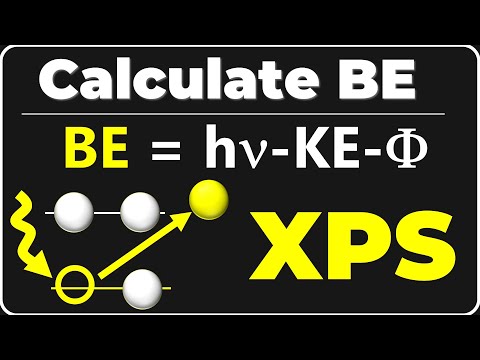
How to Calculate Binding Energy in XPS (X-ray Photoelectron Spectroscopy)
How to Calculate Binding Energy from XPS Spectra
Introduction to Binding Energy in XPS
- The binding energy can be calculated using specific equations derived from X-ray Photoelectron Spectroscopy (XPS) spectra, which is crucial for analyzing samples.
- The binding energy is determined by comparing the calculated values with a binding energy table to identify elements present in the sample.
Key Concepts of XPS Analysis
- In XPS, known energy x-rays bombard core electrons, resulting in photoelectrons that escape from the sample.
- The kinetic energies of these photoelectrons are detected by an XPS detector, which plays a vital role in calculating binding energy.
- The work function of the spectrometer (approximately 4.6 eV) is essential for determining the total binding energy.
Calculation Process
- Rearranging the equation allows for easy calculation of binding energies for core electrons, which serve as unique identifiers or "fingerprints" for different elements.
- Larger atoms exhibit higher binding energies compared to lighter elements; thus, peaks corresponding to heavier elements appear at higher binding energies.
Real-Life Example and Application
- A practical example involves using aluminum K-alpha radiation as a known source of x-ray energy while measuring kinetic energy provided by the XPS detector.
- By performing calculations with known values (e.g., work function), one can derive specific binding energies and compare them against online tables that list elemental binding energies (excluding hydrogen and helium).
Turn any video into a summary like this
YouTube links, meetings, lectures — with transcripts, search, and chat.