Cyclical Unemployment
Introduction to Cyclical Unemployment
In this section, the concept of cyclical unemployment and its correlation with the business cycle is introduced. The relationship between unemployment and economic growth during recessions is discussed.
Understanding Cyclical Unemployment
- During a recession, when the economy is shrinking or growing slowly, unemployment increases.
- Two reasons contribute to high unemployment during low growth periods:
- Firms lay off workers when GDP falls or grows slower than expected.
- Idle labor and capital result from high unemployment, hindering economic growth.
Debating the Reasons for Cyclical Unemployment
- Economists debate the exact reasons behind cyclical unemployment.
- Unemployment typically spikes quickly during a decline in growth but takes longer to return to normal levels.
- The delayed recovery of unemployment after a recession raises questions about how labor markets behave compared to other markets.
Sticky Wages and Adjustment Process
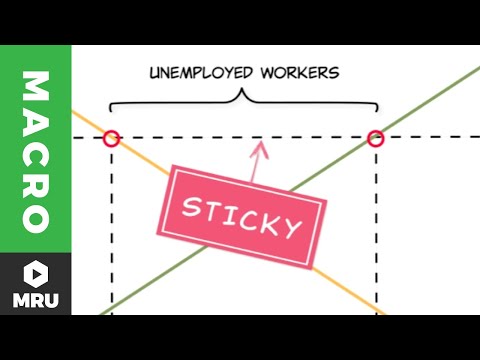
- Wages tend to fall more slowly than expected even when there are many unemployed workers.
- Sticky wages reduce incentives for hiring more workers and slow down the adjustment process.
- Fear of reducing morale leads employers to be reluctant in reducing nominal wages.
Factors Contributing to Sticky Wages
- Human beings react negatively when their wages fall, especially if it's caused by an easily identifiable person like an employer.
- Sticky wages can be attributed to various factors such as fear of retaliation, reduced morale, and concerns about being labeled as low-quality workers.
- Minimum wages and union contracts also limit how low wages can go, further slowing down wage adjustments.
Factors Affecting Unemployment Duration
This section explores additional factors that contribute to the duration of unemployment, including job search time, minimum wages, union contracts, and the concept of the natural rate of unemployment.
Prolonged Job Search and Wage Adjustments
- Workers may take a long time to search for a new job before accepting one.
- Minimum wages and union contracts can further slow down wage adjustments by imposing legal or contractual limits on wage reductions.
The Natural Rate of Unemployment
- The natural rate of unemployment is defined as the rate that would occur if there were no cyclical unemployment.
- It represents frictional plus structural unemployment.
- The natural rate is important because it helps determine the effectiveness of fiscal and monetary policies in reducing cyclical unemployment.
Conclusion and Future Topics
This section concludes the discussion on cyclical unemployment and highlights its connection to theories about business cycles. It also mentions future videos that will delve into related topics.
Connection to Business Cycles and Policy Implications
- Theories of cyclical unemployment are closely tied to theories about business cycles.
- Fiscal and monetary policies can potentially reduce cyclical unemployment but have limited impact on frictional or structural unemployment.
- When the actual unemployment rate approaches the natural rate, policy interventions become less effective.
Estimating the Natural Rate of Unemployment
- The natural rate of unemployment cannot be directly observed but can only be estimated using various methods.
- Different estimates may suggest different levels of room for policy interventions.
Future Videos