DCB: does coating morphology matter for distal embolisation and clinical outcomes? - EuroPCR 2026
Introduction to Drug Coated Balloons (DCB)
Overview of the Session
- Dariusz Dudek introduces the session on DCB, highlighting its significance in interventional cardiology and mentioning co-presenters Bernarda Cortese, Antonio Colombo, Aloke Finn, Alfonso Ielasi, and Ivo Petrov.
- The discussion will focus on new aspects of DCB technology and its implications for treatment without metal stents.
Historical Context
- Dudek reflects on his journey in interventional cardiology, starting with balloon angioplasty before transitioning to stenting technologies like bare metal and drug-eluting stents. He notes a resurgence in interest for non-metal interventions such as DCB.
Distal Embolization and Healing
Importance of Distal Embolization
- The session emphasizes distal embolization's relevance concerning plaque morphology and burden when using DCB technology. This aspect is crucial for understanding healing opportunities associated with DCB use.
Audience Engagement
Polling the Audience
- An interactive poll is introduced to gauge audience concerns regarding distal embolization when using DCB: options include "Yes," "No," or "Depends." This engagement aims to assess collective apprehensions about the topic discussed.
Preclinical Evidence on Distal Embolization
Presentation by Aloke Finn
- Aloke Finn discusses preclinical evaluations related to distal embolization risks associated with various drug-coated balloons (DCBs). He highlights differences between DCB, drug-eluting stents (DES), and bioresorbable scaffolds (BRS).
- Emphasizes that while DES/BRS are different from DCB, understanding these distinctions is vital for interventionalists. He notes that only 10-15% of the drug from a DCB reaches the arterial wall during inflation due to inefficiencies in coating transfer.
Particulate Debris from DCB
Concerns About Coating Flaking
- Finn explains that some coatings can flake off during inflation, potentially leading to particulate debris entering the bloodstream or arterial walls—this raises concerns about safety during procedures involving DCB usage.
Clinical Implications of Distal Embolization
Evidence of Clinical Occurrence
- There are hints in literature suggesting clinical occurrences of distal embolization linked to slow flow or impaired microcirculation after using certain types of DCB; however, detection remains challenging due to limitations in current methodologies.
Particle Size Variability
Impact on Outcomes
- Discussion around particle size variability among different types of coatings used in DCB indicates that larger particles (>100 microns) pose a higher risk for causing downstream complications through embolization events.
Healing Comparisons Between Treatments
Findings from Animal Studies
- In studies comparing paclitaxel-coated balloons with other treatments like plain old balloon angioplasty (POBA), results show significant differences in smooth muscle cell loss and injury levels post-treatment; paclitaxel balloons exhibited more adverse effects compared to others tested.
Conclusion on Safety and Efficacy
Summary Insights
- Conclusively, while all types of DCB cause some level of particulate emboli, their sizes differ based on design; preclinical models indicate superior healing outcomes with DCB compared to DES despite ongoing debates regarding clinical implications related to organ injury from embolic events occurring undetected during procedures involving these devices.
Amorphous vs Crystalline Formulations
Discussion by Bernarda Cortese
- Cortese presents insights into whether amorphous formulations can effectively deliver sufficient amounts of drugs compared to crystalline ones; initial findings suggest lower drug loss rates with amorphous formulations while still achieving effective delivery into arteries.
Study Analysis: Picoleto 6 Mira
Key Findings
- A sub-analysis study compares performance metrics between amorphous versus crystalline formulation DCBS focusing on acute microvascular resistance measurements post-intervention; results indicate amorphous formulations lead to lower increases in resistance than crystalline counterparts following treatment procedures across complex lesions treated globally at expert centers.
Future Directions
Need for Randomized Trials
- The need for randomized clinical trials is emphasized as essential for determining long-term clinical implications stemming from observed differences between crystalline and amorphous formulations concerning distal embolization risks during PCI interventions.
This structured markdown file provides an organized overview capturing key discussions surrounding Drug Coated Balloons within interventional cardiology as presented throughout the transcripted session.
Overview of the Iper Study on Coronary Artery Disease
Introduction to the Iper Study
- The Iper study investigates the use of drug-coated balloons (DCB) in conjunction with drug-eluting stents (DES) for treating diffuse coronary artery disease, particularly long lesions and true bifurcations.
Study Design and Methodology
- DES was deployed at the proximal segment or main branch of bifurcations, while DCB was used in distal segments or side branches. The primary endpoint focused on clinical outcomes, specifically a device-oriented composite endpoint at one year.
Results from One-Year Follow-Up
- At one-year follow-up, procedural success was reported at 96.2%, with a device-oriented composite endpoint of 3.7%, primarily due to target lesion revascularization (TLR). Most lesions were located in the left anterior descending artery (LAD).
Five-Year Follow-Up Insights
- Five-year results showed reassuring outcomes: a device-oriented composite endpoint of 4.7% overall, with specific rates of 1.9% for DES and 2.8% for DCB target segments; no thromboses were reported in either segment.
Transition to Iper 2 Study
Focus on Long Lesions
- The Iper 2 study aims to assess very long lesions (>38 mm), continuing the investigation into DES combined with DCB to minimize metal usage in complex cases; it plans to enroll up to 4,500 patients across multiple countries but has currently enrolled only 260 patients.
Case Example from Ongoing Research
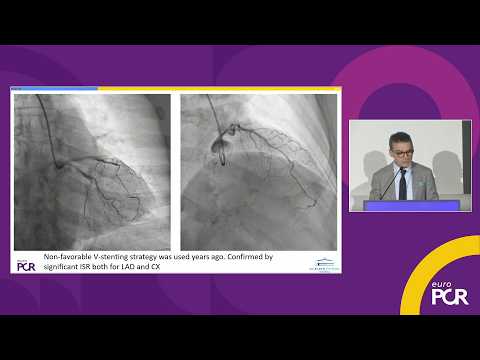
- A typical case involved an occluded LAD reopened using dedicated wires and multiple pre-dilatations; final results included successful placement of one DES and two inflated DCBs, supported by functional assessments showing good outcomes after nine months.
Conclusions from Initial Findings
Efficacy and Safety Outcomes
- Restore paclitaxel-eluting balloon demonstrated non-inferiority compared to DES in small vessel coronary artery disease; it proved effective and safe when used alongside DES for long and true bifurcation lesions, awaiting further results from the prospective HYPERQ study.
Discussion Points Raised During Q&A
Intracoronary Adenosine Use
- There is currently no data supporting intracoronary adenosine's effectiveness in reducing distal embolization effects during procedures involving DCB or DES combinations; its temporary effect remains uncertain regarding particulate matter presence distally.
Concerns About Blended Therapy
- Questions arose about potential harm from combining different drugs via DES and DCB; however, experts argue that since they treat different vessel segments, there is no evidence suggesting this combination is harmful despite some physician concerns over blended therapy approaches.
Addressing Complications Post-Procedure
Differentiating Between Dissection and Embolization
- Standard PCI protocols apply when distinguishing between dissection versus embolization post-procedure: inflating a balloon can reveal clot presence indicative of embolization versus dissection which does not show distal embolization but may necessitate stenting instead.
Antiplatelet Therapy Strategies
Approaches After DCB Procedures
- In acute coronary syndrome (ACS), dual antiplatelet therapy is typically employed for one week followed by clopidogrel alone due to gastrointestinal risks associated with aspirin; ongoing studies are evaluating optimal strategies based on patient risk profiles including bleeding risks among elderly populations.
Future Research Directions
Need for More Data
- Further research is necessary regarding how dissections affect healing processes related to various types of DCB; current methodologies like IMR may provide insights into microcirculation but require validation for reliability in clinical settings concerning distal embolization implications as well as blended therapies involving both devices discussed earlier throughout the session.