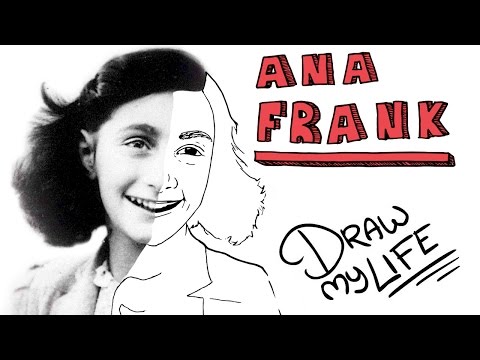
ANA FRANK | Draw My Life
New Section
This section introduces Anne Frank, detailing her background and early life before the events described in her diary.
Anne Frank's Early Life
- Anne Frank, born on June 12, 1929, in Frankfurt, Germany, gained worldwide recognition through "The Diary of Anne Frank," which was originally her intimate diary.
- Due to their Jewish origins and Hitler's rise to power, the Frank family relocated to Amsterdam, Netherlands.
- In Amsterdam, Anne attended a Montessori kindergarten while Otto Frank, her father, ran a business. Their peaceful life was disrupted by the Nazi invasion of Holland in 1939.
- As a result of Nazi orders, Anne had to leave her non-Jewish friends and adapt to a new life under German occupation. The family tried to maintain normalcy amidst the threat of concentration camps.
New Section
This section delves into the period when the Franks went into hiding and Anne started documenting her experiences in her diary.
Hiding from Gestapo
- On Anne's 13th birthday in 1942, she received a diary as a gift. A month later, Margot received a call-up notice for concentration camps prompting the family to go into hiding with Otto's plan.
- With assistance from trusted workers - Victor Kugler, Johannes Kleiman, Miep Gies, and Bep Voskuijl - the Franks disguised their escape as a move to Switzerland by leaving their home chaoticly and seeking refuge in the Secret Annex above Otto's office.
- Later joined by another family and dentist Fritz Pfeffer in hiding; Anne found solace in writing as an escape from confinement while narrating daily life struggles during two years of seclusion.
New Section
This section covers the discovery of those hidden leading to deportation and tragic events at Auschwitz.
Discovery and Deportation
- In August 1944, an informant exposed their hideout resulting in their arrest. The Franks were sent first to Westerbork transit camp then deported to Auschwitz where they faced separation.
- Despite harsh conditions at Auschwitz leading to Margot's death followed by Anne's due to typhus at Bergen-Belsen camp shortly before liberation; only Otto survived among his immediate family members.