ITIL4 - Four Dimensions of Service Management
Good Day and Introduction
In this section, the instructor introduces the topic of service management and outlines the key concepts discussed in previous classes.
Introduction to Service Management
- The instructor reiterates the importance of understanding service management and its relationship between service providers and consumers.
- Module 3 focuses on the four dimensions of service management, emphasizing the ability to manage service offerings between providers and consumers to create value.
- After completing this module, learners should be able to describe the four dimensions of IT service management comprehensively.
Four Dimensions of Service Management
This section delves into the four dimensions of service management and their significance in creating value for organizations.
Four Dimensions Explained
- The four dimensions include organizations and people, information technology, partners and suppliers, as well as value stream and processes.
- Factors such as political, environmental, economic, social factors can impact these dimensions significantly.
- Understanding how technological factors influence processes is crucial for seamless value delivery to consumers or organizations.
Factors Affecting Dimensions
This part discusses various factors that can affect each dimension within service management.
Impactful Factors
- Political factors can influence organizations and people dimension while environmental factors like climate change can also have a significant impact.
- Economic factors such as inflation can affect information technology systems' demand and cost.
- Social factors play a role in how people interact with technology within organizations.
Partnerships and Suppliers
This segment explores how legal and environmental factors affect partnerships with suppliers in delivering services effectively.
Legal Considerations
- Legal factors like contracts, memorandums of understanding, SLAs are essential for establishing partnerships with suppliers.
Meeting Business Needs through Organizational Growth
The discussion emphasizes the importance of organizational growth and how it impacts the structure, management, and scalability of an organization over time.
Understanding Organizational Growth
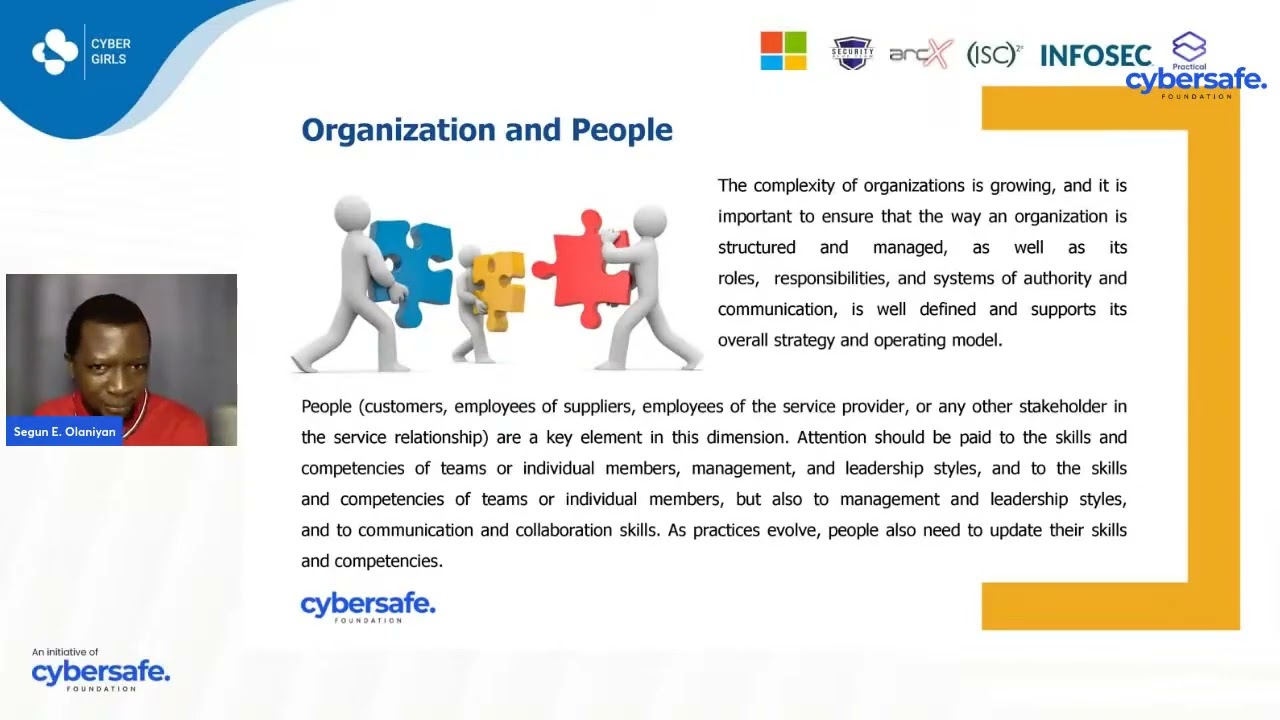
- Organizations need to ensure that their structure, management, responsibility, authority systems, and communication are well-defined to accommodate growth.
- Management and organizational structure must be clearly defined for scalability as complexity increases within the organization.
- The organization's structure should support its strategy and operating model to allow for growth, expansion, and scalability over time.
Role of People in Organizational Growth
- People such as customers, employees, suppliers' employees play a crucial role in scaling the organization to adapt to growth changes.
- Stakeholders like customers and employees are essential elements in facilitating organizational growth by embracing the vision for expansion.
Developing Skills for Organizational Evolution
- People's skills and competencies are vital for organizational evolution; attention should be given to team skills, individual competencies, management styles, leadership qualities, and communication skills.
- Continuous skill development is necessary as practices evolve within industries; individuals must update their competencies to align with industry best practices.
Importance of Information Technology in Service Management
- People play a significant role in service management by updating their skills according to industry standards like ISO 27001 certification.
- Knowledge required for managing services is encompassed within information technology components; leveraging technology aids in training people effectively.
Connecting Service Value System Elements through Technology
- Information technology facilitates connections between various service value system elements by considering inputs and outputs of practices and activities.
Glitches in Workflow Management
The discussion revolves around the importance of detecting glitches in workflow management and how standard operating procedures (SOPs) play a crucial role in maintaining operational standards within organizations.
Detecting Glitches and SOP Implementation
- Glitches serve as indicators of workflow issues, emphasizing the significance of SOPs for maintaining operational standards.
- Organizations implement workflow management systems based on SOPs to easily detect and correct glitches, ensuring smooth operations.
- Knowledge-based technology facilitates the creation of systems like call center agencies' knowledge bases, streamlining problem-solving processes for employees and stakeholders.
Technology Advancements in Service Management
This segment explores how technology advancements enhance service management by simplifying inventory systems, communication tools, analytical solutions, and overall service delivery to consumers.
Leveraging Technology for Service Management
- Technology streamlines asset management through inventory systems, ensuring efficient handling of organizational assets.
- Communication systems like telephones and video conferencing enhance seamless communication within organizations.
- Analytical tools aid in data analysis, providing valuable insights that contribute to delivering quality services to consumers.
Role of Information Management in Service Delivery
Delving into information management's role in service delivery, this part emphasizes the importance of classifying data and leveraging information effectively for optimal service provision.
Information Classification and Utilization
- Organizations must consider key questions regarding information management to enhance service delivery effectiveness.
- Data classification plays a vital role in identifying different types of information such as internal, restricted, confidential, and public data.
Protecting Information Assets
Focusing on safeguarding information assets is crucial for organizations. Understanding how to label data appropriately ensures protection against unauthorized access or exposure.
Safeguarding Information Assets
- Properly labeling information as public, confidential, internal, or restricted aids in protecting sensitive data from unauthorized use.
Protection and Information Management
This section discusses the importance of implementing technological controls for information protection, managing knowledge assets, archiving data, and ensuring secure disposal processes.
Technological Controls and Information Management
- Implementing technological controls is crucial for guaranteeing information protection.
- Managing information and knowledge assets involves archiving important data even when it's no longer needed.
- Properly disposing of information requires a well-documented formalized process to meet security standards.
Exceptions in Security Assessments
The discussion focuses on exceptions found during security assessments related to disposal procedures, archiving customer information, and inadequate technological controls.
Identified Exceptions
- Lack of well-documented procedures for disposing information and knowledge is noted as an exception.
- Absence of formalized procedures for archiving customer data is highlighted as another exception.
- Inadequate technological controls pose a risk to securing information and data assets.
Risk Assessment and Recommendations
Analyzing exceptions to calculate associated risks and provide recommendations based on security posture assessment.
Risk Assessment Process
- Evaluating identified exceptions helps in calculating associated risks.
- Providing recommendations based on risk assessment enhances organizational security posture analysis.
Partnerships with Suppliers
Exploring the significance of partnerships with suppliers in organizations for service creation, development, deployment, support, and ongoing improvement.
Partner Relationships
- Organizations rely on partnerships with suppliers for seamless service delivery.
- Managing relationships with partners ensures effective creation, development, deployment, support, and improvement of services.
Third Party Risk Analysis
Discussing the role of third-party risk analysts in managing relationships between organizations engaging in business partnerships.
Third Party Engagement
- Third-party risk analysts act as intermediaries between organizations engaging in business transactions.
- Managing relationships between organizations involves legal agreements such as contracts and non-disclosure agreements (NDAs).
New Section
This section discusses the importance of outsourcing core competencies to specialized organizations for effective service delivery.
Outsourcing Core Competencies
- Outsourcing to organizations specializing in payment gateway solutions ensures strategic focus on service delivery.
- Historical preferences and cultural biases in organizations can influence their approach to outsourcing.
- Corporate culture should be adaptable to accommodate growth without necessarily changing its core values.
New Section
Resource scarcity and cost concerns play a significant role in the decision-making process of engaging suppliers for services.
Resource Scarcity and Cost Concerns
- Organizations face challenges when essential resources or skill sets are scarce, leading them to seek external suppliers.
- Cost considerations heavily influence whether to outsource specific requirements to suppliers, especially when non-functional competencies are costly internally.
New Section
The impact of cost concerns on decision-making regarding outsourcing functional competencies is discussed here.
Cost Concerns and Functional Competencies
- Economic factors often drive organizations to outsource functional competencies that may be expensive to maintain internally.
- For example, banks outsource deposit insurance as it aligns with their core competency of providing financial solutions rather than managing insurance internally.
New Section
Subject matter expertise and risk mitigation through supplier selection are explored in this segment.
Supplier Selection Based on Expertise
- Service providers may opt for suppliers with existing expertise in a particular area due to lower perceived risks compared to developing expertise in-house.
- Utilizing external subject matter experts can reduce costs associated with internal development and maintenance of expertise.
New Section
External constraints such as government regulations and demand patterns impact an organization's supplier strategy.
Impact of External Constraints
- Government regulations, industry standards, and demand patterns significantly influence an organization's choice of suppliers.
Organizational Activities and Value Generation
The discussion revolves around the organization's activities, their structure, and how they ensure efficient value generation for stakeholders through value streams and processes.
Organization of Activities
- The organization's activities are meticulously organized to guarantee efficient and effective value generation for stakeholders.
Value Stream and Processes
- Emphasis is placed on the importance of value stream and processes in ensuring that the organization functions effectively in delivering value to stakeholders.
Importance of People in Service Management
This section concludes a module focusing on the four dimensions of service management, particularly highlighting the significance of people within organizations.
Role of People
- People play a crucial role in creating value within an organization and ensuring that services are delivered adequately.
Delivering Services
- The discussion underscores how people contribute to delivering services appropriately within an organization.
Information Technology Systems in Service Delivery
This segment delves into Information Technology systems' role in enhancing service delivery efficiency within organizations.
IT Systems for Seamless Service Delivery
- Various IT systems are explored as tools that can streamline service delivery processes, making them more efficient.
Partnerships and Suppliers