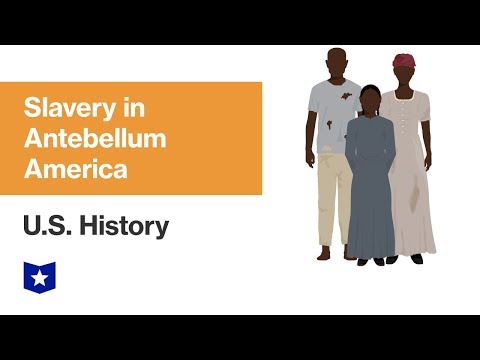
Most enslaved laborers worked on plantations, enduring long workdays from before sunrise until after sunset.
Living conditions were harsh; workers lived in small cabins with inadequate food and rampant diseases like cholera and hepatitis.
Resistance Among Enslaved Workers
Enslaved individuals resisted through various means, including destroying crops, slowing their work pace, and faking illnesses.
Some attempted to escape via the Underground Railroad, a network of safe houses aiding slaves seeking freedom.
Notable Rebellions
Nat Turner's 1831 rebellion in Virginia resulted in the deaths of 60 white individuals but was ultimately suppressed.
Following his arrest, Turner and several followers were executed; this led slaveholders to fear further uprisings.
Cultural Resilience and Identity
Enslaved Africans created a rich culture that blended African traditions with Euro-American influences despite being forced to abandon their native cultures.
Storytelling and music became vital parts of slave culture, preserving elements of African heritage through oral traditions.
Spiritual Songs as Resistance
Religious songs known as spirituals emerged within enslaved communities, often featuring call-and-response patterns.
Spiritual lyrics sometimes contained coded messages for escaping slavery; for example, "Follow the Drinking Gourd" provided directions for reaching freedom.
Turn any video into a summary like this
YouTube links, meetings, lectures. With transcripts, search, and chat.
Summarize videos instantly with our Course Assistant plugin, and enjoy AI-generated quizzes: https://bit.ly/ch-ai-asst Learn all about slavery in Antebellum America in just a few minutes! Professor Christopher E. Manning of Loyola University of Chicago details the harsh realities and conditions endured by enslaved African Americans, resistance efforts and rebellions, and the creation of a rich culture that rallied on families, religion, folklore, and music. .
This video is part of a condensed United States History series presented in short, digestible summaries.
Access the free study guides for U.S. History here: https://www.coursehero.com/sg/us-history/
Course Hero's U.S. History video series covers the essentials to understanding the history and development of the United States. Our short digest covers everything you need to know about first contact between indigenous peoples and Europeans, colonial development, the founding of the U.S. and the development of its political, economic, social, and religious institutions.
The video series begins with an examination of the European age of discovery and the development of European colonies in the western hemisphere. In this discussion of the colonization of America, we explore interactions between indigenous peoples and Europeans, and the development of colonial government and social structures.
Who founded America? Not an easy question to answer, so we cover a number of valuable perspectives on this question. Along the way, you'll learn about:
• Pre-history, including Vikings and Native Americans
• Early European discovery and conquest in the Western Hemisphere
• Establishment of Spanish colonies in central and western North America
• The development of British southern, northeastern, and middle colonies
• Early conflicts and colonial actions in Central and North America
• The development and growth of slavery in the Americas
Then the series provides a deeper understanding of our Founding Fathers and the founding of the United States of America, including:
• Colonial grievances against the British parliament and King George III, and the Declaration of Independence
• The Committees of Correspondence, the Continental Congress, and the Constitutional Convention
• Debates about and how America should be governed, including an examination of the Articles of Confederation and the U.S. Constitution
• Debates and discussions regarding economic goals, including the establishment of the American System and expansionist policies such as the Monroe Doctrine
• Federalist and Anti-Federalist political parties
• Leaders like Alexander Hamilton, John Adams, George Washington, Thomas Jefferson and others
The series examines war and U.S. armed conflicts throughout the 19th and early 20th century, including:
• Conflicts in the age of Jackson, including the Trail of Tears, the Plains Wars, the establishment of Native American Reservations, and the Dawes Act
• Manifest Destiny, the annexation of Texas, the Mexican-American War, and the Treaty of Guadalupe Hidalgo
• The rise of sectionalism, the abolitionist movement, and the American Civil War
• The Anaconda Plan, Bull Run, Gettysburg Address, General Robert E. Lee and General Ulysses S. Grant
• American imperialism, the Spanish-American War, conflicts in the Philippines, big stick diplomacy and dollar diplomacy
Finally, the U.S. crash course includes a primer on social justice movements and religious life in the U.S., including:
• The Second Great Awakening
• The abolitionist movement and the Civil War Amendments to the U.S. Constitution
• Social reforms and regulations of the Progressive Era, including the impact of muckrakers, food and safety inspection laws, settlement houses, and prohibition of alcohol
• Trust busting and the Standard Oil Company with John D. Rockefeller
• The women‘s suffrage movement and the 19th Amendment, including famous suffragettes like Judith Sargent Murray, Susan B. Anthony, Lucy Stone
Explore Course Hero’s collection of free Social Sciences Study Guides here: https://www.coursehero.com/sg/
About Course Hero: Course Hero helps empower students and educators to succeed! We’re fueled by a passionate community of students and educators who share their course-specific knowledge and resources to help others learn. Learn more at http://www.coursehero.com.
Master Your Classes™ with Course Hero!
Get the latest updates:
Facebook: https://www.facebook.com/coursehero
Twitter: https://twitter.com/coursehero