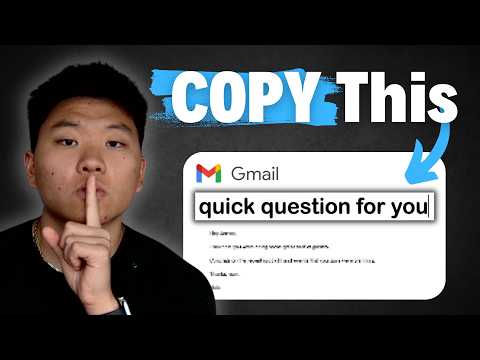
How a College Student Made $500k with Cold Email (Exact Framework)
Cold Email Strategies for Client Acquisition
Introduction to Cold Email and AI
- Cold email is highlighted as a powerful tool for client acquisition in the agency space, especially with the integration of AI by 2026.
- Sav shares his experience generating over half a million dollars in sales opportunities within six months, despite being a full-time student without prior sales experience.
Overview of Sav's Approach
- The discussion introduces Sav's resources aimed at guiding beginners through cold outreach theory and practice.
- Sav expresses excitement about sharing his strategy, which includes copywriting, infrastructure setup, and lead list building.
Background on Sav's Journey
- Sav began his business during the summer of 2025 while studying landscape architecture, indicating no direct relation to his current work.
- He balances university classes with business efforts, demonstrating commitment by working on his business after class hours.
Strategic Beginnings
- Initially motivated by financial needs during university summers, he engaged in outbound lead generation to learn about AI and automation.
- He strategically offered free work to friends and family to build trust and showcase his ability to deliver results.
Building Trust Through Case Studies
- Early projects included creating websites and automating bookings for local businesses; these experiences served as foundational case studies.
- Teaching clients how to use AI tools helped establish credibility; this was crucial since many were unfamiliar with advanced technologies beyond ChatGPT.
Importance of Proof in Cold Outreach
- The necessity of having proof or case studies is emphasized; potential clients often ask for evidence before engaging services.
- Having a diverse portfolio of case studies—even if not directly related—can help reduce friction when reaching out to new clients.
How to Get Your First Customer
Leveraging Personal Networks
- The speaker emphasizes the importance of starting with referrals from friends and family, as demonstrated in a popular YouTube short by Alex Herozie about acquiring initial customers.
- While it may feel awkward to approach personal connections for business, there are ways to present case studies that highlight value effectively.
Building Trust Through Results
- A specific example is shared where the speaker helped a beauty salon establish a digital presence, leading them to achieve $10,000 in monthly recurring revenue.
- Trust is identified as the most valuable currency in business; demonstrating successful outcomes builds credibility with potential clients.
Speed to Execution Framework
- The speaker advises focusing on selling outcomes before building products, allowing for testing different offers without getting bogged down by perfectionism.
- Many entrepreneurs fail because they spend too much time building instead of engaging with customers and selling their offerings.
Practical Offer Creation
- The speaker discusses creating offers based on existing systems rather than reinventing the wheel, leveraging proven methods from experienced individuals in the industry.
- By presenting compelling offers upfront and securing customer commitment first, one can later develop the necessary systems once trust is established.
Reducing Risk for Clients
- To build trust with cold leads, the speaker proposes offering services at no cost initially while requesting permission to reference their company for future outreach.
- This strategy aims to minimize perceived risk for potential clients while showcasing capabilities through tangible demonstrations.
How a Free Offer Led to Paid Clients
The Journey from Free to Paid Client
- The speaker shares their experience of landing their first client by offering a completely free service, which eventually led to them becoming a paying client due to the rapport built.
- This initial free work not only established trust but also resulted in ongoing collaboration, demonstrating the importance of investing time upfront for long-term gains.
- The speaker invested significant time (3-4 hours) training another agency on AI and automation, showcasing dedication that ultimately paid off with positive feedback and credibility.
- Leveraging this case study in outbound messaging nearly doubled reply rates and increased meeting opportunities, emphasizing how practical experience can enhance marketing efforts.
- The speaker reflects on the necessity of gaining experience over immediate financial returns, suggesting that building proof through work is crucial for future success.
Importance of Experience Over Immediate Profit
- Many newcomers expect quick financial results; however, prioritizing skill development and gaining experience is essential for sustainable growth in business.
- Trust is built through experience; even highly skilled individuals may struggle without practical exposure. Thus, gaining real-world insights is vital for establishing credibility.
Collaboration Between Skill Sets
- The speaker discusses interactions within school communities focused on AI and automation, noting that many skilled builders lack sales or marketing expertise.
- There’s a common gap where technically proficient individuals struggle with customer engagement; thus, partnerships between different skill sets can lead to better outcomes.
Outbound Campaign Strategies
- Transitioning into discussing outbound campaign strategies, the speaker emphasizes finding niche databases as an underutilized resource for lead generation.
- Instead of relying solely on popular tools like LinkedIn Sales Navigator or Apollo, exploring specialized databases can yield more targeted leads tailored to specific industries.
Niche Databases for Architecture Firms
Importance of Niche Databases
- Utilizing niche databases like the AIA (American Institute of Architects) can streamline the process of identifying architecture firms, ensuring that all listed companies are relevant and legitimate.
- This approach eliminates guesswork and allows for efficient lead generation by leveraging pre-filtered data from trusted sources.
Building a Lead List
- After identifying a suitable database, one can easily scrape company domains to create a targeted list of potential leads. This is crucial for effective outreach strategies.
- The process involves pulling decision-makers' information from these domains, resulting in a well-prepared lead list ready for engagement.
Email Deliverability Strategies
- To enhance email deliverability, it's recommended to set up multiple email accounts across different domains rather than relying on a single account to send mass emails. This reduces the risk of being marked as spam.
- For instance, sending 30 emails from each of 100 accounts is more effective than sending 3,000 emails from one account, maintaining high deliverability rates.
Crafting Effective Campaigns
- The success of outreach campaigns hinges on crafting compelling offers; leading with value—such as providing free resources—can increase engagement rates significantly.
- Offering something valuable upfront helps overcome initial hesitations potential clients may have about scheduling meetings or engaging further.
Scaling Cold Email Outreach
Understanding Volume in Cold Emailing
- Beginners often struggle with determining how many cold emails to send daily; anecdotal evidence suggests that higher volumes yield better results over time. A story illustrates this point through an example involving flyer distribution where increasing output led to greater success rates.
Initial Steps for Beginners
- Starting out with limited resources might involve purchasing one domain and creating multiple inboxes under it; however, scaling up quickly is essential for maximizing outreach efforts. Sending around 150 emails daily can be feasible if done correctly after warming up the accounts.
Scaling Up Outreach Efforts
- As experience grows, expanding to three domains with multiple inboxes can allow beginners to triple their outreach volume effectively—potentially reaching nearly 9,000 emails monthly if executed properly. This scale increases chances of receiving replies significantly based on typical response rates observed in cold emailing practices.
Measuring Success: Reply Rates
Evaluating Reply Rates
- A reply rate below 2% typically indicates issues either with the lead list quality or email deliverability; adjustments should be made accordingly if this threshold isn't met. Understanding your audience is critical—targeting architects but contacting unrelated contractors will yield poor results.
Optimizing Copy and Engagement
- If reply rates fall between 2% and 5%, it may signal that the copy used in outreach needs refinement; improving messaging could enhance engagement levels significantly among recipients who fit the target demographic better than those currently being contacted.
Understanding Email Reply Rates
Importance of Reply Rates
- A reply rate below 5% indicates that the email copy may not be engaging enough, leading to potential neglect by recipients.
- A reply rate between 5% and 10% is considered optimal for generating a meaningful pipeline volume from a substantial lead list (e.g., 3,000 leads).
- If the reply rate falls below 2%, it's crucial to reassess the lead list and infrastructure; rates above 2% but below 5% suggest a need to refine copy and offers.
Resources for Improvement
- The speaker offers a free resource guide compiled from the episode's content, available in their community, encouraging listeners not to worry about taking notes during the session.
Lead Generation Process
Data Acquisition and Cleaning
- Utilizing AI tools to find niche databases is essential for effective lead generation; Apollo can help find decision-maker emails.
- It's important to clean data using verification tools like Million Verifier or Mailinder to ensure email addresses are valid and reduce bounce rates.
Personalization at Scale
- Automation linked with Google Sheets allows for personalized outreach by feeding relevant data into AI systems like ChatGPT, which generates casual icebreakers.
- Setting up multiple email accounts across various domains enhances deliverability compared to using one domain extensively.
Crafting Effective Email Copy
Subject Lines and Opening Lines
- The subject line should intrigue recipients as if it were coming from someone within their team rather than a salesperson trying to sell something.
- Using cliffhanger subject lines can create curiosity, prompting recipients to open emails instead of marking them as unread.
Structuring Offers
- An effective offer includes a desired outcome within a specific timeframe along with risk reversal; this lowers barriers for engagement.
- For example, promising "10 meetings on the calendar in 30 days" with no payment required if unmet creates an appealing proposition.
How to Effectively Use Video in Client Outreach
The Power of Video in Client Communication
- Using a short video (5 minutes) to explain your offer increases the likelihood of getting a positive response from potential clients compared to asking for a 30-minute meeting.
- Once clients watch the video, they gain comprehensive knowledge about you and your services, making the selling process significantly easier.
Crafting Effective Cold Emails
- The initial email should pose an engaging question, such as whether the company is taking on more clients, which serves as a bait-and-switch tactic to pique interest.
- Personalization is key; mentioning local connections can create rapport. For example, referencing nearby businesses helps establish credibility and relevance.
Structuring Your Offer
- Clearly outline what you are offering—like an intent-based email scraping system that books discovery calls—and emphasize that there’s no cost unless results are achieved.
- Include social proof by mentioning past successes with similar businesses to build trust and demonstrate capability.
Risk Reversal Strategy
- Highlighting that clients won’t owe anything until results are delivered acts as a risk reversal strategy, encouraging them to engage without fear of financial loss.
- Presenting offers straightforwardly while maintaining humility can disrupt typical patterns in cold emails and make your approach feel refreshing.
Tone and Authenticity in Communication
- Avoid overly formal or corporate language; instead, write like a normal person. This personal touch can resonate better with potential clients than generic marketing jargon.
- Emphasizing sincerity over bravado can lead to more meaningful interactions and increase the chances of securing meetings or responses.
How to Validate Your Business Idea Through Outbound Sales
Starting a Project Without Initial Sales
- Begin projects even without sales; outbound efforts can quickly validate demand.
- If your outreach emails receive no responses, reassess your email framing or the value of your offer.
Effective Communication in Outreach
- Avoid technical jargon that may confuse potential clients; focus on clear benefits like increased sales cycles or closing rates.
- Offer free trials to demonstrate value and gain proof of concept before scaling operations.
Importance of Customer Feedback
- Engage with customers first to understand their needs before building products, preventing wasted resources on unwanted features.
- Expect harsh feedback during outreach; it’s a normal part of the process and doesn’t necessarily reflect the quality of your idea.
Handling Rejection and Learning from Data
- High reply rates can still include negative feedback; resilience is key in cold outreach.
- Understanding customer pain points is crucial for effective marketing strategies, as seen in successful impulse buys driven by targeted ads.
Adapting Based on Customer Insights
- Use conversations with customers to pivot towards solutions they find valuable, enhancing engagement and relevance.
- Track positive responses systematically to refine targeting strategies based on common characteristics among interested prospects.
Analyzing Metrics for Improvement
- Winners adapt their strategies based on data analysis while losers fail to change despite challenges.
Key Insights on Data Utilization in Cold Outreach
Importance of Data in Iteration
- Data is crucial for iteration; many focus only on positive or negative data, missing the full picture.
- Positive data serves as a market signal indicating the right direction to pursue, while negative data highlights areas needing improvement.
Metrics to Track
- Key metrics include reply rates and conversion rates from emails to meetings. Tracking these helps identify effective strategies.
- Understanding customer journey metrics is essential; analyzing drop-offs between email outreach and client acquisition can reveal necessary adjustments.
Practical Steps for Cold Outreach
- The discussion provides practical steps for those new to cold outreach or looking to improve their approach.
Resources and Learning Opportunities
- A Loom video detailing how $500,000 was generated through cold emailing is available, offering a step-by-step guide including scripts and infrastructure lists.
- Additional resources can be found at flowamation.co, with opportunities for community engagement via LinkedIn and Instagram.
Community Engagement
- An invitation to join a community focused on AI automation with over 3,500 members is extended, promoting collaboration among entrepreneurs interested in similar fields.