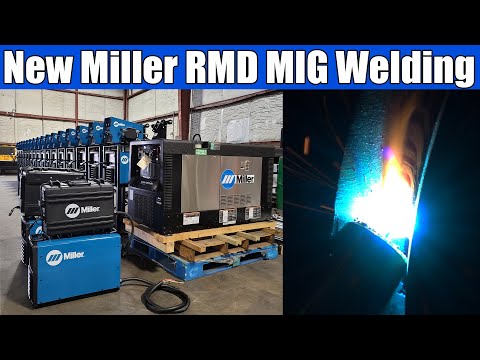
New Miller RMD Mig Welding on Pipe
Welding Techniques and Equipment Overview
Introduction to the Session
- The video features Rodriguez at South Coast Welding Academy in Houston, Texas, introducing a session with Miller representatives.
- Wiley from Miller is present to demonstrate RMD (Regulated Metal Deposition) on pipe welding, alongside Tony Sadavia, a specialty combo welder and designer fabricator.
Equipment Setup
- The academy has recently expanded its equipment inventory, including the Big Blue 400 Pipe Pro powered by a Mitsubishi diesel motor.
- The setup involves connecting the machine to a smart feeder for open root MIG pipe welding. The machine supports various welding processes: stick, MIG, carbon arc gouging, and TIG.
Welding Parameters Configuration
- For RMD setup, ER70S6 .035 solid wire is used with C25 gas. Settings are adjusted for carbon steel applications.
- Initial settings include wire feed speed at 175 and arc control set to zero. These factory settings provide a baseline for adjustments during welding.
Preparing for Welding
- A 1/8 inch root opening with a slight land of 1/16 inch is prepared for out-of-position welding starting from the top of the pipe downwards.
- Tapered consumables are utilized to ensure proper gas coverage in the bevel area of the pipe for optimal weld quality.
Execution of RMD Technique
- Antonio begins welding at 12 o'clock position on the pipe using a weaving technique initially to prevent puddle collapse before transitioning into straight dragging as he moves downwards.
- Observations indicate that RMD allows smooth transfer without needing a keyhole; this contrasts with traditional short circuit methods.
Key Considerations During Welding
- Maintaining proper stick-out distance is crucial; adjustments are made based on sound feedback from the weld puddle.
- A consistent sound indicates good control over the weld; if issues arise (like hearing an arc inside), it suggests being too far ahead in movement.
Discussion on Equipment Versatility
- Various machines can run RMD effectively; today’s demonstration uses Smart Feeder connected to Big Blue 400 Pipe Pro.
Understanding the Importance of R&D in Welding Training
Bridging the Gap for New Welders
- The discussion highlights the differences between traditional and modern welding techniques, emphasizing how new welders may struggle with older machines that have worn markings.
- There is a call to make training more accessible for newcomers in the welding trade, as there is a shortage of skilled welders. The importance of supporting students with updated equipment is acknowledged.
- Utilizing research and development (R&D) can significantly benefit new welders by helping them understand arc behavior and puddle dynamics, which enhances their skills and confidence.
- Industry feedback indicates a demand for new welders to be proficient in R&D processes before entering the workforce, reducing the need for additional training from employers.