How to use present tenses - 6 Minute Grammar
6 Minute Grunt: Understanding Present Tenses
Introduction to Present Tenses
- The program introduces the topic of present tenses, focusing on their usage in English.
- The present simple tense is primarily used for stating facts, habits, and truths.
Present Simple Tense
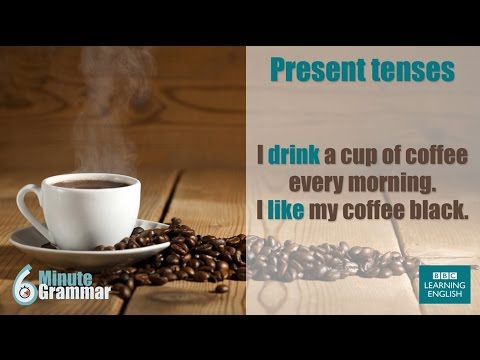
- Catherine shares a personal fact about her liking for gardening and mentions her habit of drinking coffee every morning.
- The structure of the present simple includes a subject followed by a base verb; an 'S' is added for third-person singular forms (he, she, it).
- Questions and negatives in the present simple are formed using "do" or "does."
Present Continuous Tense
- The present continuous tense describes activities happening now or around the current time using "am," "is," or "are" plus an "-ing" verb.
- Finn discusses his current activity of sitting in the studio while reading a novel. Catherine also shares that she is reading a comedy novel.
Future Arrangements with Present Continuous
- The present continuous can also indicate future arrangements; Finn mentions taking his wife to dinner tonight.
Present Perfect Tense
- The present perfect tense connects past actions to the present using "have" or "has" plus the past participle. It’s useful for discussing life experiences.
- Finn shares he has eaten insects in Cambodia as part of his life experiences. Catherine states she has never eaten insects.
Usage of Time Indicators with Present Perfect
- Words like "just," "already," and "yet" are commonly used with the present perfect to convey timing related to past events affecting the present.
- Example: “I’ve already had breakfast today” indicates something happened earlier than expected.
Duration Expressions in Present Perfect
- To express how long situations have continued until now, use “for” or “since.” Examples include living in London for five years and being married since 2003.
Giving News Using Present Perfect
- The present perfect can be used to share recent news that is relevant now. An example given involves winning the lottery (hypothetical).
Quiz on Understanding Tenses
- A quiz question asks which sentence best describes a habit; option B ("I smoke twenty cigarettes a day") is correct.