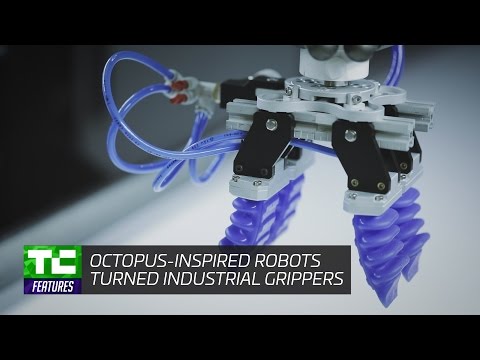
Soft Robotics' octopus-inspired robots industrial grippers
Soft Robotics: An Overview
Definition and Inspiration
- Soft robots are defined as robots made from non-rigid materials, primarily rubber, which allows for flexibility and adaptability.
- The design inspiration comes from natural organisms like octopuses, emphasizing the need for soft robotic actuators without traditional rigid components.
Technology Breakdown
- The technology utilizes elastomeric materials to create fluidic channels that enable movement through controlled pressurization.
- Unlike traditional robotic hands that require precise calculations and sensors for object manipulation, soft robots can conform to various shapes due to their flexible nature.
Advantages Over Traditional Robots
- Soft robotic hands do not need to know the exact location or shape of an object; they can simply grasp it due to their adaptable material properties.
- This approach reduces the complexity of programming and sensor integration typically required in hard robotic systems.
Development History
- The technology has been under development since 2008 at Harvard's George Whitesides Lab, with commercialization efforts beginning around 2013.
- By late 2015, soft robotics began being implemented in manufacturing environments across various industries.
Impact on Employment and Industry
- Soft robotics is addressing labor shortages in sectors like food packaging by providing solutions that maintain factory operations rather than replacing human workers.