86.
Understanding Trading Models and Key Levels
Identifying Highs and Lows
- The session focuses on completing a trading model by identifying key levels, starting from historical price points.
- Each pivot is analyzed as the price moves downwards, marking lower highs and lower lows to establish a trend.
Price Movement Analysis
- A significant observation occurs when the price begins to rise above previous candle lows, indicating potential bullish movement.
- Transitioning to a 4-hour chart reveals an intermediate term high, which is crucial for executing trades on a 15-minute timeframe.
Evidence of Manipulation
- Traders should look for signs of manipulation at key levels followed by changes in market delivery states.
- Accumulation patterns are identified before reaching key levels, with higher highs signaling potential entry points.
Order Blocks and Trade Execution
- A specific candle that closes below a key level is designated as an order block for trade entries.
- Entry strategies involve placing stop losses above recent highs while targeting nearby lows for favorable risk-reward ratios.
Divergence and Market Validation
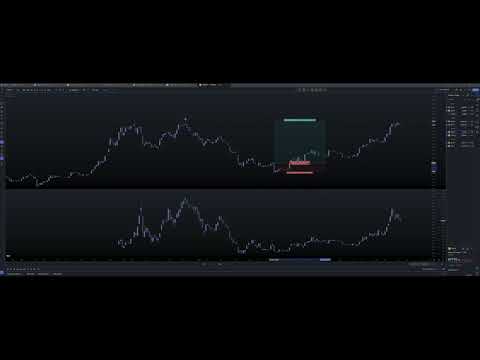
- The concept of bearish SMT divergence is introduced as validation of market manipulation during critical price movements.
- Observations across different assets (e.g., Bitcoin vs. Ethereum) highlight how similar patterns can indicate market behavior.
Analyzing Breaker Blocks and Liquidity
Understanding Breaker Blocks
- The discussion shifts to analyzing Bitcoin's price action from November 2022, emphasizing the importance of comparing multiple assets.
- Notable differences in candle bodies between Bitcoin and Ethereum illustrate varying market conditions at pivotal moments.
Liquidity Implications
- When liquidity is taken from below or above significant highs/lows, it creates breaker blocks that influence future price movements.
- Recognizing these dynamics allows traders to anticipate potential retests of order blocks versus breaker blocks.
Long Position Strategies
- Successful long positions can be executed after confirming breakouts above previous resistance levels with appropriate stop-loss placements.
- Targeting all-time highs based on established models provides opportunities for substantial returns with calculated risk management.
Understanding Trading Strategies and Market Dynamics
Key Trading Concepts
- The importance of identifying liquidity runs is emphasized, suggesting that traders should protect key lows to ensure safe entry points. A stop loss should be placed below these identified lows.
- A successful trade can yield significant returns; for instance, an initial 7:1 risk-to-reward ratio could escalate to an impressive 88:1 if the trader recognizes market manipulation through SMT Divergence.
- The concept of SMT Divergence is illustrated with a bullish example where higher highs and lower lows indicate potential upward movement, reinforcing the need for traders to monitor such divergences closely.
Current Market Analysis
- Analyzing current price action reveals that while all-time highs have been reached, no definitive lower low or higher high has formed, indicating a range-bound market condition.
- The discussion includes potential scenarios for future price movements, including possible consolidation before further upward or downward trends based on monthly candle patterns.
Gold and Silver Market Insights
- Observations on gold's weekly chart highlight the significance of consolidation patterns and the anticipation of future price actions based on historical data.
- In analyzing silver alongside gold, it’s noted that while there are instances of divergence at certain highs and lows, currently there is no clear indication of manipulation in silver's price movements.
Strategy Development
- Traders are encouraged to identify key levels on different time frames (daily vs. monthly), focusing on fair value gaps (FVG) as potential targets for trades.
- A detailed analysis of NASDAQ compared to S&P indicates how specific candle formations can signal impending market movements; understanding these signals is crucial for effective trading strategies.
Practical Application and Mindset
- Emphasizing a straightforward trading model requires practice and patience. Traders must recognize setups early and backtest strategies extensively to build confidence in their decision-making processes.
Turn any video into a summary like this
YouTube links, meetings, lectures — with transcripts, search, and chat.