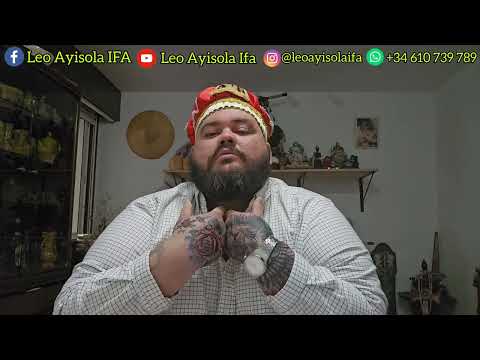
Santeria, Santeria Cubana Religión Yoruba, Orishas.Respuestas Para Una Tesis Universitaria.
Introduction and Context Welcoming the Community
Opening Remarks
- The speaker welcomes the audience, invoking blessings from God and encouraging viewers on Facebook to like and share videos for wider dissemination of their message.
- The speaker mentions a growing interest in their religion among university students in Spain, highlighting the importance of engaging with this demographic.
Interview Request Engaging with Academia
Student Inquiry
- A student from Poland studying Spanish philology expresses interest in interviewing the speaker about syncretic religions, particularly Santería.
- The speaker feels honored by this request and prefers to respond via video for broader community benefit.
Personal Background Speaker's Identity
Introduction of the Interviewee
- The interviewee introduces himself as Leonardo Morales Fernández, a 36-year-old Cuban nationalized Spanish citizen living in Spain for ten years.
- He shares his professional background as an IT engineer who transitioned fully into religious practice after being called by Orula.
Religious Dedication Transitioning to Full-Time Faith Practice
Commitment to Religion
- After nine years working at a hotel, he dedicates himself entirely to religious duties as mandated by Orula, emphasizing the importance of serving humanity through faith.
- Despite his previous job, he managed to engage in religious activities during breaks and off-hours.
Historical Context of Syncretism Roots of Syncretic Religions
Understanding Syncretism
- The speaker explains that syncretism arises from various cultural interactions, often through conquest or unification among peoples.
- He discusses how syncretism is evident in Cuba’s blend of Catholicism and Yoruba traditions within Santería practices.
Cultural Sensitivity
- Many practitioners find the term "Santería" offensive due to its historical context; however, it reflects a significant cultural union among enslaved Africans who maintained their spiritual practices under colonial rule.
Broader Implications of Syncretism
Global Influence
Understanding Syncretism as Spiritual Resistance
The Nature of Syncretism
- Syncretism is described as a form of spiritual resistance, emerging from the struggles faced by enslaved individuals who sought to maintain their beliefs despite oppression.
- Enslaved people lost many aspects of their lives, but their internal spiritual identity remained intact, leading them to practice their religion in secret.
- There is a contemporary debate regarding syncretism, particularly among practitioners of Nigerian traditions who view it differently due to its incorporation of Catholic saints.
Historical Context and Adaptation
- Even after emancipation, former slaves continued to venerate certain Catholic saints while integrating these practices into their own religious ceremonies.
- Syncretism represents a unification of diverse cultural roots influenced by colonial conquests and the imposition of dominant religions.
Survival of Santería in Cuban Culture
- The survival of Santería amidst Spanish colonization and imposed Catholicism raises questions about how this faith persisted over time.
- Enslaved Africans brought with them profound knowledge about their religion, which they practiced secretly while seeking similarities between African deities and Catholic figures.
Cultural Exchange and Knowledge Transfer
- The adaptation process involved learning from indigenous Cubans about local flora and fauna, which became integral to religious practices.
- For example, parallels were drawn between Changó (the god of thunder) and Santa Bárbara based on shared attributes like weaponry and symbolism.
Challenges and Resilience
- The resilience shown by enslaved individuals was crucial for preserving their beliefs through memory, teaching, perseverance, and adaptation to new environments.
- They had to modify rituals according to the resources available in Cuba while maintaining core elements of their faith.
Institutional Responses
- Spanish authorities initially prohibited African religious practices but later allowed gatherings known as "cabildos" under strict supervision as a means to control potential rebellions.
Cultural Syncretism in Afro-Cuban Religion
Origins of Syncretism
- The syncretism in Afro-Cuban religion stems from the merging of various African traditions, particularly the Yoruba culture from Nigeria and the Mayombe practices from Congo.
- The foundation of this religion is attributed to a historical figure named Odua, who was expelled from Mecca during Muhammad's time due to polytheistic worship.
- Odua was known for his wealth and power, leading an army while practicing idol worship before leaving Nigeria after conflicts with local rulers.
Spiritual Practices and Influences
- The religious practices include elements that resemble Islamic rituals, such as specific movements performed on mats, indicating a blend of African and Muslim influences.
- In Cuba, Catholicism also played a significant role in shaping these practices; enslaved Africans used Catholic figures to conceal their traditional beliefs during oppression.
Resistance and Adaptation
- Enslaved individuals found spiritual power in Catholic saints like the Virgin of Charity, using them as symbols to maintain their faith under duress.
- There is a sense of gratitude among practitioners towards these Catholic figures for providing a means to practice their spirituality discreetly.
Differences Between Worship Practices
- The way Orichas (Yoruba deities) are worshipped differs significantly from Catholic saints; while both involve devotion, the ceremonial aspects vary greatly.
- In Cuba, there are unique adaptations within ceremonies that reflect both African roots and local customs influenced by Christianity.
Historical Context and Survival
- Santería has survived not only through its integration with Catholicism but also through resistance against communism in Cuba when religious practices were heavily suppressed.
- Despite prohibitions on religion during communist rule, many continued to practice secretly or openly resist oppression for their beliefs.
Contemporary Practice Variations
- There are notable differences between Afro-Cuban religions practiced today compared to those originally practiced in Africa; Cuban traditions have evolved uniquely over time.
Cuban Religious Practices and Their Global Influence
The Role of Ancestry in Religion
- The transmission of religious practices is linked to ancestry, with influences from both Islam and Christianity stemming from Nigerian roots.
- The resilience of Cuban religious traditions is attributed to the sacrifices made by enslaved individuals who maintained their beliefs despite adversity.
Becoming a Priest in the Religion
- Unlike Catholicism, where anyone can become a priest through seminary training, this religion requires a predestined calling for priesthood.
- Belief in reincarnation plays a crucial role; individuals are thought to be born with specific destinies assigned by divine forces.
Initiation and Spiritual Guidance
- Initiation involves connecting with ancestral spirits and receiving guidance from Orula, which includes being bestowed with warrior orichas (deities).
- Orumila provides insight into an individual's life purpose, revealing why they descended to Earth and what path they should follow.
Understanding Destiny Through Ritual
- Individuals express desires before God regarding their earthly experiences, which shape their spiritual growth across lifetimes.
- The teachings emphasize obedience to spiritual guidance as essential for fulfilling one's destiny.
Steps to Priesthood: Ceremonial Process
- After initial initiation, candidates must undergo various ceremonies that test their suitability for becoming babalawos (priests).
Understanding the Path of Knowledge and Sacrifice in Santería
The Role of Humility and Constant Struggle
- Knowledge is attained through humility, constant struggle for salvation, rectification, self-improvement, and adherence to moral practices.
- The priesthood in Ifá involves a significant commitment; not everyone is destined to become a babalawo (priest), as it requires specific ceremonial preparations.
Daily Routine of a Priest
- A priest's daily routine begins at 6 AM with rituals and prayers to honor all saints and orishas.
- After greeting the deities, priests prepare divination tools for consultations throughout the day.
Consultation Practices
- Consultations involve using the Ifá oracle to guide individuals seeking help; each session includes advice and actions aimed at personal salvation.
- Offerings may include fruits, sweets, flowers, or even animal sacrifices depending on circumstances; some practices are restricted in certain locations like Spain.
Teaching and Spiritual Guidance
- The speaker runs a theological academy where they teach both babalawos and non-babalawos about religious practices.
- Classes focus on imparting knowledge necessary for practicing Santería effectively while ensuring students understand their spiritual responsibilities.
Spiritual Leadership Responsibilities
- Priests serve as spiritual guides beyond just performing rituals; they provide ongoing support to their godchildren throughout their lives.
Religious Syncretism and Inclusivity
Principles of the Religion
- The religion discussed is syncretic, with unique principles and doctrines that differ from traditional beliefs. It emphasizes inclusivity rather than condemnation for non-believers or those practicing other faiths.
- Salvation is accessible to all who seek it, regardless of their prior knowledge or belief in the practices. This highlights a compassionate approach to spirituality.
Non-Discrimination in Practice
- The religion does not discriminate based on race, prayer style, or sexual orientation. It promotes acceptance and support for all individuals seeking spiritual guidance.
- While there are restrictions on certain roles (e.g., homosexuals cannot be balados), the religion encourages participation in other significant roles such as priestesses.
Role of Women and LGBTQ+ Individuals
- Women hold vital positions within the religion as priestesses (Yala), showcasing their importance in spiritual leadership and community.
- Although there are limitations regarding specific titles, LGBTQ+ individuals can still serve important functions within the religious framework.
Ethical Teachings
- The core doctrine teaches against causing harm to others; personal vices like alcoholism do not equate to sinning against God unless they lead to harm towards others.
- The focus is on self-improvement rather than guilt over personal struggles, promoting a positive view of human flaws.
Divination Practices
- A variety of divination methods exist within this religious context: spiritists communicate with spirits, while others use tools like cowrie shells or opele for guidance.
- These practices are seen as ways to connect with divine signs that guide believers toward betterment rather than mere fortune-telling.
Understanding Orichas
- Orichas play a central role in the belief system; each has distinct characteristics and practices associated with them.
- The origin story involves deities sent to Earth by God during its creation, emphasizing a deep historical connection between spirituality and natural phenomena.
Historical Context and Recognition
- The religion possesses ancient knowledge about the world’s shape long before scientific validation, highlighting its intellectual heritage.
The Role of Orichas in Santería
Origins and Creation Myths
- The discussion begins with the acknowledgment that the region is not widely recognized globally, despite its ancient roots. It mentions 4001 significant figures who became orichas, highlighting Olocum as a key figure who cooled the world with water.
- The volcanic activity led to atmospheric changes, creating fertile lands. Isaaco is introduced as a deity responsible for making the earth fertile after it was initially created by malevolent forces.
Functions of Orichas
- Each oricha has a specific function in creation; Yemayá is noted as the "universal mother" who brings life into existence. This illustrates how each oricha contributes uniquely to human experience and spirituality.
- When individuals receive their spiritual crowns (Santo), they gain virtues necessary for navigating life's challenges, emphasizing the personal connection between practitioners and their orichas.
Importance of Rituals in Santería
- All rituals are deemed important within Santería, reflecting individual beliefs rather than a hierarchy of significance among them. Personal experiences shape what rituals hold meaning for practitioners.
- The act of receiving an amulet or collar can be seen as one of the most crucial ceremonies for an individual, showcasing how personal significance varies across different practices.
Individualism in Practice
- The religion emphasizes individualism; what may be considered a major ceremony for one person might differ greatly from another's perspective. This highlights the subjective nature of spiritual experiences within Santería.
- Practitioners often have unique ceremonies that resonate deeply with them personally, reinforcing that all rituals hold value based on individual acceptance and identification.
Spiritual Tools and Amulets
- Amulets and talismans play vital roles in spiritual practices; they are personalized tools prepared specifically for individuals based on divination results.
- These items serve protective purposes against negative energies and various life challenges, illustrating their importance in daily spiritual practice.
Challenges Faced by Practitioners
- Followers face ignorance regarding their beliefs; many confuse Santería with witchcraft due to misconceptions about animal sacrifices associated with various religions.
- There’s a need to clarify that animal sacrifices occur across multiple faith traditions (e.g., Islam, Judaism), which helps contextualize practices within Santería amidst widespread judgment.
Expansion and Challenges of Syncretic Religions
The Growth of Syncretic Religions
- There has been significant expansion in the practice of syncretic religions, with many prophets and practitioners emerging on social media.
- Challenges include ignorance about the religion and negative practices by some religious individuals that tarnish its image.
Misunderstandings and Practices
- Many rituals, such as songs and prayers, are often misunderstood by outsiders, leading to misconceptions about the religion's practices.
- Despite misunderstandings, there is a growing number of Spaniards and foreigners who appreciate the beauty and peace offered by this religion.
Youth Engagement
- Young people are increasingly drawn to syncretic religions as they find guidance towards their destinies through these beliefs.
- Aspirations among youth are being fulfilled through their engagement with the religion, which they view positively.
Political Impact on Religious Practices
- Political factors influence syncretic religions, particularly laws affecting animal sacrifices that are part of certain rituals.
- These laws create challenges for practitioners but do not diminish their faith or commitment to their beliefs.
Ethical Considerations in Sacrifices
- The process of animal sacrifice is conducted ethically within the religion; animals are treated humanely before being sacrificed for spiritual purposes.
- A contrast is drawn between ritual sacrifices and industrial meat production practices that often involve suffering for animals.
Societal Perceptions and Tolerance
- There exists societal hypocrisy regarding animal sacrifices; while some criticize ritualistic practices, they overlook mass production methods in supermarkets.
- Acceptance of syncretic religions varies; however, personal practice remains unaffected by societal tolerance levels.
Personal Practice vs. Societal Norms
- Practitioners focus on personal belief rather than societal acceptance; they engage with others who share similar values without imposing beliefs on outsiders.
Impact of Syncretic Religions on Society
The Role of Tolerance in Religion
- The speaker emphasizes that external tolerance should not dictate one's life, as true living comes from internal beliefs rather than external mandates.
Positive Impact of Afro-Cuban Religions
- The speaker argues that syncretic religions like Afro-Cuban and Santería have a significantly positive impact on society, promoting peace and non-discrimination.
Characteristics of Afro-Cuban Religion
- These religions empower women and foster personal growth, tranquility, and wisdom. They are seen as essential for global expansion due to their teachings on self-improvement.
Moral Values in Santería
- Santería is guided by moral values such as honesty, respect, and the importance of helping others. It encourages individuals to live ethically and support their community.
Spiritual Guidance in Daily Life
The Role of Religion in Personal Transformation
The Significance of Religion
- The speaker emphasizes that religion is central to their life, providing salvation, protection, and guidance. It has transformed them into a better human being.
- They express that their faith allows them to help others and contribute positively to humanity, feeling empowered by their beliefs.
Challenges and Inspirations in Faith
- The speaker reflects on what inspires them in their faith, highlighting the joy of witnessing personal transformations in others through divine intervention.
- They recount experiences where individuals facing severe problems found resolution through religious practices and the influence of orishas (deities).
Disillusionment with Religious Practices
- Acknowledging the darker side of religion, the speaker discusses how negative practices and deceitful religious figures can be disheartening.
- They share stories about individuals who have been misled or scammed within religious contexts, which contributes to their frustration.
The Power of Syncretism
- When asked about syncretism in religion, the speaker mentions San Lázaro as an example of a saint associated with an orisha, illustrating how different beliefs can merge.
- They discuss various saints venerated in Cuba that reflect this blending of traditions and highlight the deep faith people have towards these figures.
Commonalities Between Religions
- The speaker notes similarities between Afro-Cuban religions and Catholicism regarding reverence for ancestors (egguns), suggesting a shared spiritual connection despite differing practices.
Understanding Afro-Cuban Religion and Its Evolution
The Importance of Education in Religion
- A Catholic individual emphasizes the significance of understanding and studying their religion deeply, encouraging students to reach out with questions.
- Historically, there has been a stigma surrounding the practice of this religion, often associated with lower social classes until it expanded globally from Cuba.
Misconceptions and Knowledge Transmission
- The speaker highlights that many practitioners were knowledgeable despite lacking formal education; their understanding was derived from oral history rather than written texts.
Current Issues in Nigerian Practices
- The discussion shifts to contemporary practices in Nigeria, where certain aspects of the religion are criticized for discrimination against women and LGBTQ+ individuals.
- There is a noted tension between different religious practices, with criticism directed towards those who engage in discriminatory behaviors while claiming to uphold religious values.
Afro-Cuban Religion's Historical Journey
- The speaker identifies as a practitioner of Afro-Cuban religion, noting its roots in Nigeria before its establishment in Cuba. This journey reflects a significant cultural exchange.
Future Aspirations for Religious Expansion