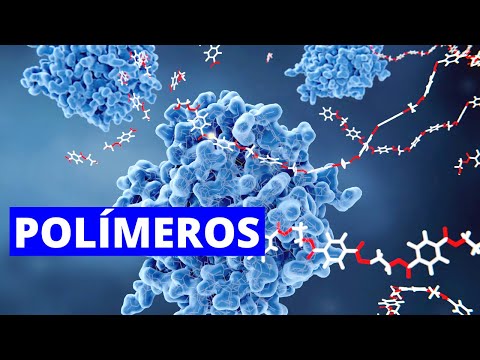
¿Qué son los POLÍMEROS y cuáles son sus propiedades? (Ejemplos de polímeros)
What Are Polymers?
Introduction to Polymers
- The speaker introduces the topic of polymers, explaining their definition as substances made up of large molecules called macromolecules, which consist of repeating units known as monomers.
- The analogy of building blocks is used to illustrate how monomers link together to form polymers, emphasizing that they can be identical or a mix of different types.
Everyday Presence of Polymers
- Examples are provided showing the ubiquity of polymers in daily life, including plastics (like grocery bags), proteins, carbohydrates, and even DNA.
Properties and Classifications of Polymers
Common Properties
- Most polymers form amorphous solids rather than crystalline ones and exhibit a range of properties such as thermoplasticity and elasticity.
- Many synthetic polymers are inert and non-biodegradable but some can be recycled; they vary in transparency and conductivity.
Types Based on Origin
- Polymers are classified into three categories based on origin:
- Synthetic: Artificially produced (e.g., plastics).
- Natural/Biopolymers: Produced by living organisms (e.g., proteins).
- Semi-synthetic: Modified natural polymers.
Further Classifications Based on Structure
Monomer Composition
- Homopolymers consist of one type of monomer (e.g., polyethylene), while copolymers contain two different monomers arranged in various patterns. Heteropolymers have more than two types.
Physical Properties
- Thermoplastics can be reshaped upon heating; thermosetting polymers become harder when heated due to new bond formation. Bakelite is cited as an example.
Structural Variations
- Linear polymers have unbranched chains; branched ones include side chains. Cross-linked structures involve interconnected chains forming networks.
Types Based on Chemical Bonds
Specific Polymer Types
- Different types include:
- Polyolefins: Formed from unsaturated hydrocarbons.
- Polyesters: Created through condensation between acids and alcohol.
- Polyamides: Linked via acid and amine reactions.
Examples of Common Polymers
Notable Examples
- Polyethylene (PE): The most widely produced polymer used in various plastic products.
- DNA: A biopolymer composed of nucleotides that encodes genetic information.
Additional Examples
- RNA: Similar to DNA but contains ribose instead of deoxyribose.
- Bakelite: The first synthetic polymer used for durable applications like knife handles.
More Biopolymers
- Starch: Energy storage biopolymer made from glucose units produced by plants.