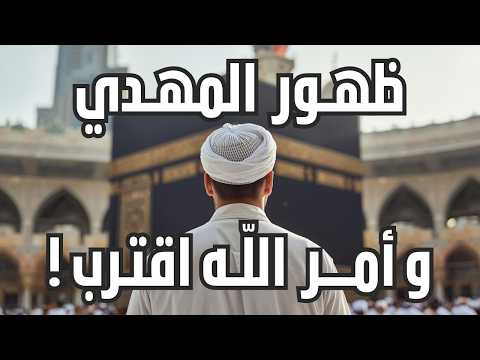
بالدليل أمر الله اقترب والمهدي سيظهر قريبا
The Coming of the Mahdi and Global Caliphate
Introduction to the Mahdi's Rule
- The Mahdi will establish a caliphate based on prophetic traditions, similar to that of the four rightly guided caliphs.
- This caliphate is described as having a global influence, extending its moral and spiritual authority across the earth.
Characteristics of the Mahdi's Era
- Prophet Muhammad described this period as one where justice fills the earth, replacing oppression and tyranny.
- During this time, both heaven and earth will be pleased with his rule; nature will flourish abundantly under his governance.
Understanding Divine Will
- The return of the caliphate is framed as a divine command, marking a significant turning point in history. It signifies "zero hour" for humanity.
- Current global conditions are characterized by oppression and tyranny, with rulers indulging in immoral behaviors while being sustained by their power.
Signs Preceding Change
- A series of catastrophic events will precede this divine intervention, including natural disasters and societal upheaval among oppressive regimes. These signs indicate God's preparation for monumental change.
- The concept of divine intervention suggests that when God decides to act, it will not be trivial but rather transformative on a grand scale.
Misconceptions about Governance
- The notion of caliphate transcends mere political systems; it embodies a profound shift towards justice rather than simply replacing tyrannical regimes with just ones.
- There is an emphasis on understanding that true governance under the Mahdi involves more than administrative changes; it represents a holistic transformation in society’s moral fabric.
Historical Context and Future Vision
- Reflecting on past Islamic empires' reach from China to Spain highlights that current Muslim communities do not represent this historical unity or strength today due to geopolitical divisions post-colonialism (Sykes-Picot).
- The speaker argues that there is no existing political entity representing Muslims globally today akin to what was once established during Islam's golden age; instead, Muslims exist within fragmented states lacking true representation or protection under Islamic law.
This structured summary captures key insights from the transcript regarding expectations surrounding the Mahdi's rule and its implications for future governance within an Islamic framework while linking back to specific timestamps for further exploration.
The Role of Faith and Governance in Islam
The Influence of the Vatican
- The Vatican operates numerous radio stations, television channels, magazines, and publishing houses worldwide, engaging in missionary activities even in remote islands.
A Deteriorating State of Faith
- A prophecy indicates a time when only the name of Islam remains, with mosques filled yet devoid of true guidance; scholars of that era are described as the worst under heaven.
Control Over Global Policies
- Current global financial policies are influenced by powerful entities who determine what constitutes trade versus theft, including decisions on jihad being labeled as terrorism.
Moral and Ethical Standards
- There is a debate over moral issues such as abortion and sexual conduct; societal norms are challenged by those who advocate for personal freedoms over traditional values.
The Struggle for Sacred Land
- Despite historical claims to sacred lands, there exists a significant presence of opposing symbols that challenge Islamic heritage; this reflects a broader struggle against evil forces throughout history.
The Promise of Divine Fulfillment
Prophetic Assurance
- The Prophet Muhammad's vision has not yet been realized; however, it is assured that God's light will prevail despite opposition from disbelievers.
Completion at the End Times
- God promises that His light will be completed at the end times, indicating that fulfillment occurs not at the beginning or middle but at the conclusion of human history.
Conditions for Divine Succession
- God assures believers that they will be granted authority on Earth if they adhere to pure worship without associating partners with Him.
The Future Caliphate: A Return to True Leadership
Historical Context and Future Expectations
- Just as there was an initial caliphate led by righteous predecessors, a second caliphate is expected to emerge under similar conditions in sacred lands.
Conditional Promises from God
- The promise of empowerment is conditional upon sincere worship according to divine standards rather than diluted interpretations prevalent today.
Unity in Worship Practices
- Emphasis is placed on unifying worship practices free from sectarian divisions; true devotion must focus solely on God without any form of association.
The Ultimate Test and Assurance
Purpose of Existence
- Humanity's primary purpose is to worship God alone; achieving this leads to eventual empowerment and leadership within society.
Certainty in Divine Promises
- Belief in God's promises should remain steadfast regardless of circumstances; ultimate victory belongs to truth over falsehood.
Finality Before Judgment Day
- It’s asserted that before the world ends, justice will prevail through Islam’s resurgence—God can extend time until righteousness prevails.
This structured summary encapsulates key themes discussed within the transcript while providing timestamps for easy reference.
The Role of the Mahdi in Islamic Eschatology
The Necessity of the Mahdi
- The emergence of truth and falsehood is inevitable at the end of times, as Muslims are witnesses to humanity. If they neglect this honor, God will replace them with others.
- God's promise regarding the return of the caliphate after oppressive rule is not only found in the Quran but also in all holy scriptures, indicating a global caliphate led by Al-Mahdi.
Prophecies and Historical Context
- A prophecy from Kabb al-Ahbar states that if Jews corrupt themselves before God, they will face swift destruction and be scattered among nations.
- The Mahdi is seen as a political and existential necessity for uniting the Muslim Ummah amidst current fragmentation; Arabs are viewed as essential glue for unity.
Leadership and Unity Among Muslims
- The Prophet Muhammad foretold that an Arab man from his lineage would lead before the world ends, emphasizing Arab leadership despite being a caliph for all Muslims.
- Ibn Khaldun noted that Arabs require religious legitimacy to unite under one leader due to their competitive nature; divine guidance can mitigate their pride.
Divine Mandate for Allegiance
- The Prophet emphasized that allegiance to Al-Mahdi is obligatory without democratic options; neutrality or opposition equates to disobedience against God.
- Those who resist Al-Mahdi's call risk severe consequences, including being labeled as infidels whose lives and properties become permissible targets.
Future Prospects for Islam
- There’s a belief that a singular Islamic destiny exists where either Muslims thrive or perish like past civilizations; this fate hinges on recognizing Al-Mahdi's role.
- Al-Mahdi is expected to establish an unprecedented state with Jerusalem as its capital, marking a significant turning point in Islamic history.