Curso de Extensão: Educação Superior e a formação nas áreas de Ciências Humanas e Sociais Aplicadas
Introduction to the Discussion
Overview of the Session
- The session is coordinated by a host who introduces Professor Marcela, emphasizing her presence for about an hour to discuss simple and complex work formation.
- Participants include postgraduates, professors, and undergraduate students from various fields interested in higher education discussions.
Background on Professor Marcela
- Marcela has a background in education with degrees from Argentina and Brazil, including a doctorate in History from Universidade Federal Fluminense.
- She has conducted postdoctoral research on supranational educational policies at Universidad Autónoma de Madrid and coordinates research groups focused on state politics and public space.
Importance of the Course
Significance of the Course Content
- Marcela expresses gratitude for being part of the course, highlighting its relevance for understanding contemporary Brazilian society through social sciences.
Key Themes in Marcela's Work
Focus on Knowledge Markets
- The discussion centers around her significant work titled "The Market of Knowledge and Knowledge for the Market," co-authored with Lucia Neves, which explores training for complex work in contemporary Brazil.
Historical Context of Education
Research Elements
- Marcela plans to present theoretical assumptions and historical elements related to her book while updating it with recent developments since its publication in 2008.
Evolution of Educational Trends
Current Relevance
- Despite changes over nearly two decades, many trends identified in 2008 remain relevant today regarding simple versus complex work formation in Brazil.
Presentation Structure
Outline of Topics
- A structured presentation will be shared that includes key findings from her research along with historical context regarding Brazilian education systems.
Commemoration of Historical Events
Reflection on Argentine History
- On this date marking the anniversary of Argentina's military coup, she emphasizes the importance of memory and justice within historical narratives.
Duality in Brazilian Education
Social Formation Dynamics
- The lecture will address how Brazilian social formation leads to a dual educational structure where most are trained for simple tasks while few receive training for complex roles.
Research Objectives
Determinants Influencing Education
- The original research aimed to identify economic, political, social, and cultural determinants affecting educational dynamics at the beginning of the 21st century.
Historical Trajectory Analysis
Understanding Educational Development
- The book reconstructively analyzes Brazilian education history from the 19th century onward while linking it to broader societal formations.
International Policy Influence
Globalization Effects
- It discusses how international organizations influence educational policies globally, particularly concerning technological advancements impacting knowledge production.
Methodological Approach
Capitalism's Role in Education
- Emphasizes that analyzing labor processes under capitalism requires understanding both capital accumulation logic and broader social relations beyond mere economics.
Types of Privatization in Higher Education
Articulated Types of Privatization
- The discussion begins with two articulated types of privatization in higher education, focusing on the transformation of education into a commodity within Brazil.
- The speaker notes that the process has evolved from creating a new bourgeoisie in educational services to being influenced by intense financialization, expanding private higher education and blurring institutional boundaries.
Financialization and Public Institutions
- A second type of privatization is linked to business financing for public educational projects, leading public institutions to adopt more entrepreneurial management styles.
- Since the 1990s, there has been a refunctionalization of education driven by international organizations, particularly visible in higher education.
International Perspectives on Tertiary Education
Definition and Implications
- The OECD's definition from 1999 describes tertiary education as any studies following secondary education, including various forms such as long university courses or short technological programs.
- This broad definition allows for flexibility and fragmentation within educational systems, undermining traditional notions of universities based on teaching, research, and extension.
Shift in Educational Paradigms
- By redefining tertiary education to include diverse learning environments beyond traditional universities, it challenges the established role of universities as primary knowledge producers.
World Bank Strategies Post-2011
Changes in Educational Systems
- In 2011, the World Bank introduced its "Learning for All" strategy which redefined educational systems to encompass all learning opportunities rather than just formal institutions.
- This shift emphasizes inclusivity but also dilutes institutional identities by framing them as mere providers within a broader landscape of learning opportunities.
Focus on Learning Opportunities
- The new perspective allows countries to leverage various learning opportunities while eliminating barriers traditionally associated with formal educational structures.
Impact on Universities and Knowledge Production
Fragmentation vs. Institutional Identity
- The concept of tertiary education diminishes the national identity tied to universities; they become one among many entities providing learning experiences without exclusive status.
Global Educational Reform Agenda
- This approach aligns with global trends towards reforming educational practices under capitalist influences aimed at homogenizing diverse educational realities worldwide.
Key Documents Influencing Educational Policies
Important Reports from the World Bank
- Four key documents are highlighted that shape World Bank policies regarding privatization and fragmentation in higher education between 2011 and 2024.
Learning for All (2011)
- Emphasizes individual responsibility for seizing learning opportunities amidst changing definitions surrounding what constitutes an educational system.
Mind Society Behavior (2015)
- Introduces behavioral economics into social policy discussions impacting how individuals make decisions about their educational paths amid poverty.
Resilience and Entrepreneurship
Characteristics Required for Modern Society
- Highlights resilience and entrepreneurship as essential traits needed for navigating contemporary societal challenges; these concepts are increasingly integrated into social policies including education.
Competencies Development
- The focus shifts towards socio-emotional competencies within modern curricula reflecting broader economic demands rather than holistic human development.
Digital Transformation in Education
Role of Technology
- Discusses how digital technology is reshaping higher education delivery methods post-pandemic while reinforcing existing trends toward privatization.
EdTech Integration
- Emphasizes that integrating technology enhances teaching effectiveness but also ties back into broader market-driven reforms affecting access to quality education.
Market Dynamics in Higher Education
Growth of Private Institutions
- Observations indicate exponential growth in enrollments at private institutions funded through government programs like FIES and ProUni contributing significantly to market dynamics.
Policy Implications
- These policies have inadvertently fostered large conglomerates within Brazilian higher education despite intentions framed around inclusion.
International Financial Influence
Role of International Finance Corporation (IFC)
- IFC actively promotes private sector involvement in higher ed globally emphasizing digital solutions tailored towards enhancing accessibility.
Democratizing Access Through Choices
- Advocates argue that democratizing access involves diversifying choices available rather than merely increasing enrollment numbers across traditional pathways.
The Role of Innovation in Contemporary Capitalism
Innovation and Strategic Value
- Innovation is linked to productive character, becoming a strategic element in contemporary capitalism aimed at accelerating capital valuation.
- Social sciences are reconfigured within science and technology policies, emphasizing the need for human sciences to produce applicable knowledge for public policy formulation.
Education and Market Dynamics
- Higher education increasingly aligns with market logic, focusing on producing concrete solutions to real-world problems as demanded by CAPES standards.
- In 2008, Brazilian educational policies reflected a dual direction: consolidating the knowledge market while deepening private interests in higher education.
Brazil's Educational Policy and Dependency
Societal Project and Knowledge Production
- Brazil's societal project is characterized by dependency on hegemonic capitalist centers through science and technology policies that prioritize innovation consumption.
- Educational policies reinforce schools' dependence on capital requirements, leading to an immediate interest in scientific principles for market integration.
Dialogue on Educational Outcomes
Engagement with Participants
- The speaker invites dialogue after presenting their ideas, indicating a willingness to engage with audience questions regarding educational practices.
Course Structure and Resources
Bibliography and Certification
- Participants are encouraged to read reference materials; a book summarizing course content will be provided alongside recorded lectures.
Questions from the Audience
Inquiry into Educational Purpose
- A participant asks about the school's purpose concerning higher education's relationship with labor markets, highlighting concerns over educational outcomes.
Dual Purpose of Education in Capitalism
Technical vs. Ethical Formation
- The school serves a dual purpose: technical training for job readiness and ethical-political formation necessary for societal integration.
Skills Required for Modern Occupations
Digital Literacy as Essential Skill
- Basic digital skills are now prerequisites across various occupations; even simple jobs require technological proficiency alongside communication abilities.
Higher Education's Role in Workforce Integration
Specialization Needs
- Higher education provides specialization essential for complex job roles or leadership positions within organizations across different sectors.
Influence of Foundations on Public Education
Corporate Interests in Education
- The Leman Foundation exemplifies corporate influence over public education policy, aiming to shape future workers aligned with business needs rather than addressing broader educational goals.
Intellectual Formation Under Capitalism
Organic Intellectual Development
- Organic intellectual development occurs not solely within institutions but also through everyday experiences; class dynamics influence this formation significantly.
Consequences of Privatization on Quality
Impact of Deficient Secondary Education
- Privatization leads to lower quality professionals due to inadequate secondary education; it caters more efficiently to market demands than holistic learning needs.
Collective Knowledge Production
Importance of Collaboration
- Emphasizing collective understanding is crucial against individualistic trends exacerbated by digitalization; fostering community engagement can counteract fragmentation in knowledge production.
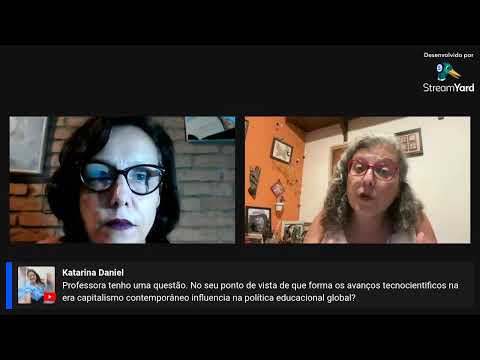
Influence of Technical-Scientific Advances on Global Educational Policy
Overview of the Discussion
- The conversation begins with a focus on how technical-scientific advancements in contemporary capitalism influence global educational policies, highlighting the need for reflection on these changes.
- The speaker expresses limited familiarity with the "Jovem Aprendiz" program but acknowledges its historical significance in Brazil's industrial learning tradition.
- The origins of industrial apprenticeship programs are traced back to the establishment of SENAI in the 1940s, aimed at integrating youth into systematic industrial work processes.
Characteristics of Industrial Apprenticeship Programs
- These programs primarily prepare young individuals for simple labor roles rather than providing comprehensive technical education; they emphasize ethical-political knowledge through real-world experience.
- The "Jovem Aprendiz" program is characterized as a form of paid adaptation training rather than a long-term systematic educational framework, focusing on immediate workplace integration.
Impact of Information and Communication Technologies
Shaping Educational Formats
- Advances in information and communication technologies are reshaping global educational policies by influencing how learning opportunities are structured and delivered.
- A reference is made to a previously published text discussing platforms like Coursera, which evolved from short courses to comprehensive adaptable learning experiences during the pandemic.
Future Implications for Education
- The discussion emphasizes that technological advancements may lead to alternative forms of education that could overshadow traditional schooling systems while still recognizing schools' essential functions.
- There is an urgent call for collective knowledge-building processes that can address fragmented educational experiences and promote holistic understanding amidst changing paradigms.
Reflections on Learning and Resilience
Importance of Critical Reflection
- Participants express gratitude towards Marcela for her insightful contributions, emphasizing the importance of critical reflections drawn from her book published by Fiocruz.
- Attendees are encouraged to read Marcela's book as it provides foundational insights relevant to understanding complex labor formations within capitalist societies.
Relevance to Various Fields
- Discussions highlight how concepts such as resilience and self-employment entrepreneurship are crucial for students across various disciplines, including social work and humanities.
- The impact of distance education on professional training is noted, particularly concerning maintaining critical perspectives accumulated over decades within professions like social work.
Conclusion and Future Engagement
Closing Remarks
- Marcela expresses appreciation for participant engagement while acknowledging time constraints that limit further discussion; she encourages ongoing dialogue throughout future sessions.
- Plans are shared regarding upcoming course meetings and publication efforts related to their discussions, reinforcing commitment to accessible educational resources.
Turn any video into a summary like this
YouTube links, meetings, lectures. With transcripts, search, and chat.