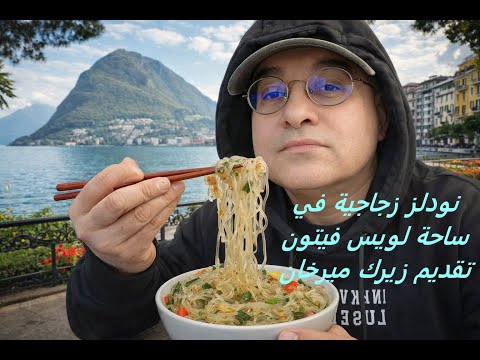
نودلز زجاجية. لويس فيتون . الحياة ليمونه اريد استرداد نقودي
Reflections on Life and Consumerism in Lugano
Journey to Ticino, Switzerland
- The speaker describes their emotional state upon arriving in the Italian-speaking canton of Ticino, expressing feelings of frustration and sadness.
- They recount living with friends but facing financial constraints regarding food and drink during their stay.
Dining Experience
- The speaker visits a small eatery called "Great Rice," where they order glass noodles with teriyaki chicken, highlighting their love for this dish.
- While eating, they encounter restrictions at the café about consuming takeout orders inside, prompting them to find a public space to enjoy their meal.
Observations of Luxury
- The speaker describes a large Louis Vuitton store nearby, noting its impressive architecture and luxurious interior design.
- They reflect on Louis Vuitton's long history as a high-end brand specializing in bags and accessories for affluent customers.
Cultural Commentary
- As they eat their noodles under the shelter of the Louis Vuitton store from the rain, they observe wealthy families shopping for expensive items like handbags priced around $10,000.
- The speaker contrasts their modest situation with that of affluent Gulf families shopping luxuriously while he enjoys his inexpensive meal.
Socioeconomic Reflections
- Despite feeling no envy towards wealthy shoppers, the speaker reflects on societal disparities between rich Arabs buying luxury goods and his own financial struggles.
- They express thoughts on gender roles within relationships, emphasizing how men feel validated when purchasing gifts for women.
Personal Insights Amidst Cultural Events
- The narrative shifts to mention an event commemorating Imam Musa al-Kadhim's death anniversary in Iraq, illustrating cultural practices involving mud rituals among attendees.
- The speaker critiques socioeconomic conditions in Iraq compared to wealthier nations while observing people engaging in traditional customs despite harsh weather.
Final Thoughts on Identity and Aspirations
- A reflection emerges about shared identities among Arabs regardless of wealth or background while questioning consumer behavior related to luxury purchases.
- The speaker concludes by pondering personal aspirations amidst contrasting lifestyles observed during their experience in Lugano.
Understanding Emotional Stupidity and Cognitive Dissonance
The Concept of Emotional Stupidity
- The speaker discusses the idea of "emotional stupidity," a term coined by Dietrich Bonhoeffer, which refers to intelligent individuals who fail to process information logically due to emotional filters.
- People may understand causal relationships but can be blinded by their emotions, leading them to reject logical information that contradicts their beliefs.
Environmental Influence on Beliefs
- The environment shapes individuals' identities; for example, growing up in a household of doctors may lead one to become a doctor themselves.
- Early religious upbringing can deeply influence one's cognitive framework, embedding beliefs into neural pathways that resist contradiction from scientific understanding.
Conflict Between Science and Faith
- A reference is made to an individual claiming that black holes are mentioned in religious texts (the Quran, Bible, and Torah), showcasing how some reconcile faith with scientific concepts.
- The speaker highlights the historical context of black hole theories developed by Einstein and Hawking, emphasizing the complexity behind these scientific discoveries.
Reactions to Scientific Evidence
- Some individuals dismiss established scientific theories like evolution despite being educated professionals due to their emotional attachments to religious beliefs.
- This denial often stems from cognitive dissonance where conflicting ideas create discomfort, prompting individuals either to rationalize or outright reject new information.
Shared History vs. Language Barriers
- The speaker reflects on personal experiences with cultural identity and shared history among different ethnic groups within Iraq, emphasizing mutual respect despite language differences.
- They argue that while there is a common linguistic heritage among Arabs, dialectical variations create barriers that complicate communication and understanding between communities.
Cultural Identities and National Constructs
The Illusion of Shared Identity
- Discussion on the creation of a false identity based on shared interests among various groups in Kuwait, highlighting the diversity within the population including Bedouins, urban dwellers, and expatriates.
- Examination of Saudi identities, noting differences between regions such as Jeddah and Qassim, emphasizing that these identities are constructed around shared national interests rather than cultural homogeneity.
Historical Context and Interconnections
- Reference to historical marriages among tribes in Saudi Arabia as a means of creating connections across different groups, illustrating how personal relationships can transcend political boundaries.
- Mention of intermarriage between Sunni and Shia communities in Iraq, indicating a complex web of familial ties that challenge simplistic ethnic or sectarian divisions.
Political Dynamics and Identity Politics
- Acknowledgment of shifting political landscapes where individuals may have to navigate their sectarian identities amidst changing governance structures in Iraq.
- Emphasis on the need for mutual respect for diverse identities (Shia, Kurdish), advocating for a democratic framework that honors individual heritage while promoting unity.
Challenges to Unity
- Discussion about the potential for conflict arising from entrenched identities; calls for equitable representation within state structures to avoid marginalization.
- Reflection on past civil wars in Iraq as a result of failed attempts at creating a cohesive national identity despite shared history.
Cultural Diversity vs. Nationalism
- Critique of pan-Arab nationalism which often overlooks local cultures; highlights how colonial histories have shaped current identities across North Africa.
- Exploration of Druze identity within Arab contexts; emphasizes that religious affiliations complicate national narratives and highlight internal divisions.
Language and Historical Narratives
- Analysis of language imposition throughout history; discusses how Arabic became dominant post-Ottoman rule while many communities retained their original languages.
- Commentary on the failure of historical empires (like Umayyads and Abbasids) to recognize cultural diversity leading to eventual decline; stresses importance of inclusivity in governance.
Misconceptions About Arab Identity
- Argument against oversimplified notions of Arab identity; points out that many people historically did not speak Arabic until much later due to colonial influences.
- Highlights the rich linguistic tapestry prior to Arabization efforts, suggesting that modern narratives often ignore this complexity.
Conclusion: Rethinking National Identity
- Urges reconsideration of what constitutes national identity by acknowledging historical truths rather than relying solely on contemporary constructs imposed by political agendas.
- Final thoughts emphasize that millions living in these regions do not identify strictly as Arabs but possess unique cultural heritages deserving recognition.
Cultural Identity and Language in Iraq
Historical Linguistic Landscape
- The speaker discusses the historical use of multiple languages in Iraq, including Turkish, Persian, and Arabic. This reflects a diverse linguistic heritage where people communicated in various languages depending on their social context.
- An anecdote from 1980 highlights an individual from Tal Afar who identifies as Ottoman rather than Turkish, emphasizing the complex identity narratives shaped by historical governance and cultural influences.
Identity Politics and Nationalism
- The speaker critiques the imposition of rigid identities that force individuals to conform to nationalistic narratives, suggesting that such pressures can lead to ignorance and conflict among different ethnic groups within Iraq.
- There is a discussion about how economic interests often overshadow genuine identity concerns, with individuals prioritizing financial gain over cultural affiliations.
Government Influence on Identity
- Since 2014, Iraqi governments have emphasized cultural symbols (like specific clothing styles) as part of national identity campaigns. This raises questions about authenticity versus imposed identity.
- The speaker argues for an open and inclusive understanding of identity that welcomes diversity rather than fostering aggressive nationalism.
Education and Cultural Narratives
- The education system is critiqued for promoting narrow views of history that foster hatred towards certain historical figures or groups, which can perpetuate cycles of animosity among citizens.
- A call for critical engagement with history is made; the speaker suggests that hating shared historical figures only serves to deepen divisions within society.
Personal Experiences with Identity
- The narrative shifts to personal experiences regarding identity fluidity. Individuals are encouraged to embrace change rather than be confined by traditional labels or expectations.
- A story about a Swiss individual who chooses Spanish culture over his own illustrates how modern identities can be flexible and chosen based on personal affinity rather than imposed heritage.
Language Diversity vs. National Unity
- The speaker emphasizes the importance of recognizing linguistic diversity as a strength rather than a barrier. He critiques simplistic notions of ethnicity tied solely to language or geography.
- A comparison between Kurdish language structures and Persian grammar highlights the complexity of linguistic identities, arguing against oversimplified ethnic categorizations based on language alone.
This structured summary captures key themes from the transcript while providing timestamps for easy reference back to specific points discussed in the video.
Cultural Identity and Historical Narratives
The Role of Media and Ethnic Identity
- The speaker discusses the concept of media empires, particularly focusing on the Ahwazi people, emphasizing their shared ethnicity, language, and ideas. This challenges the notion that Persians are a singular ethnic group.
Language and Cultural Revival
- The revival of the Persian language is attributed to Ferdowsi, who redefined it after its decline due to Arab conquests. His work parallels Dante's creation of Italian from various dialects.
Cultural Genocide
- The speaker highlights cultural genocide as a significant issue often overlooked compared to physical extermination. They reference historical instances where cultures were systematically erased, including Kurdish and Persian cultures.
Demographic Changes in Iraq
- Discussion on how demographic shifts in Iraq have altered identities over time. Many tribes changed names to align with Arab identity while retaining their original ethnic backgrounds.
Migration Patterns Among Kurds
- The speaker notes that many Kurdish tribes were originally nomadic but have settled in cities like Erbil and Amadiyah. This transition reflects broader socio-political changes affecting their identity.
Integration into Iraqi Society
- Observations about how Kurdish families integrated into Iraqi society through marriage and education, leading to a blend of cultural influences within urban settings.
Government Policies on Ethnic Groups
- Reference to Saddam Hussein's policies that aimed at integrating various ethnic groups into Iraqi society by providing citizenship and employment opportunities for marginalized communities like the Kurds.
Personal Reflections on Identity
- A personal narrative about childhood experiences with different ethnic groups in Iraq illustrates the complexities of identity formation amidst political changes.
Collective Identity Challenges
- The speaker critiques the artificial construction of collective identities among Arabs and Kurds, suggesting that these identities often ignore individual histories and regional differences.
Call for Unity Among Arabs
- A plea for unity among Arab nations is made, emphasizing shared struggles against divisive narratives perpetuated by leaders who exploit sectarianism for power.
Cultural Identity and Historical Ties Among Kurds
The Complexity of Kurdish Identity
- Discussion on the diverse identities among Kurds in Turkey, Syria, and Iran, highlighting the differences and similarities that exist within these groups.
- Mention of historical figures like Nur al-Din Kakai and their roles in Kurdish history, emphasizing the importance of shared experiences against colonial powers.
- Exploration of intermarriage and cultural exchanges between Arabs and Kurds, illustrating a complex web of relationships that contribute to a collective identity.
- Acknowledgment of economic ties and shared histories as foundational elements for Kurdish unity despite external divisions imposed by colonialism.
- Reflection on the emergence of a national Iraqi identity among younger generations, influenced by social media connections across different regions.
The Role of History in Shaping Identities
- Examination of how personal relationships across borders (e.g., love stories between individuals from different cities) contribute to a sense of national identity.
- Commentary on the historical context where Iraqis have formed communities abroad (e.g., in Jordan), maintaining cultural ties while also integrating with local populations.
- Analysis of British colonial strategies that shaped modern identities in Iraq, drawing parallels with Ireland's historical struggles for independence.
- Insight into royal lineage issues in Britain as an analogy for understanding tribal leadership dynamics within Arab communities in Iraq.
- Discussion about neutrality in conflict resolution among tribes, suggesting that outsiders can sometimes mediate disputes more effectively than internal factions.
Challenges to National Unity
- Critique on how rigid identities can hinder progress towards national interests; stressing the need for flexibility within cultural affiliations to foster cooperation.
- Emphasis on intermarriage rates between sects as evidence for potential unity but cautioning against allowing identity politics to overshadow practical needs.
- Personal anecdote reflecting frustrations over financial dealings intertwined with cultural expectations; metaphorically comparing it to being misled about one's investments.