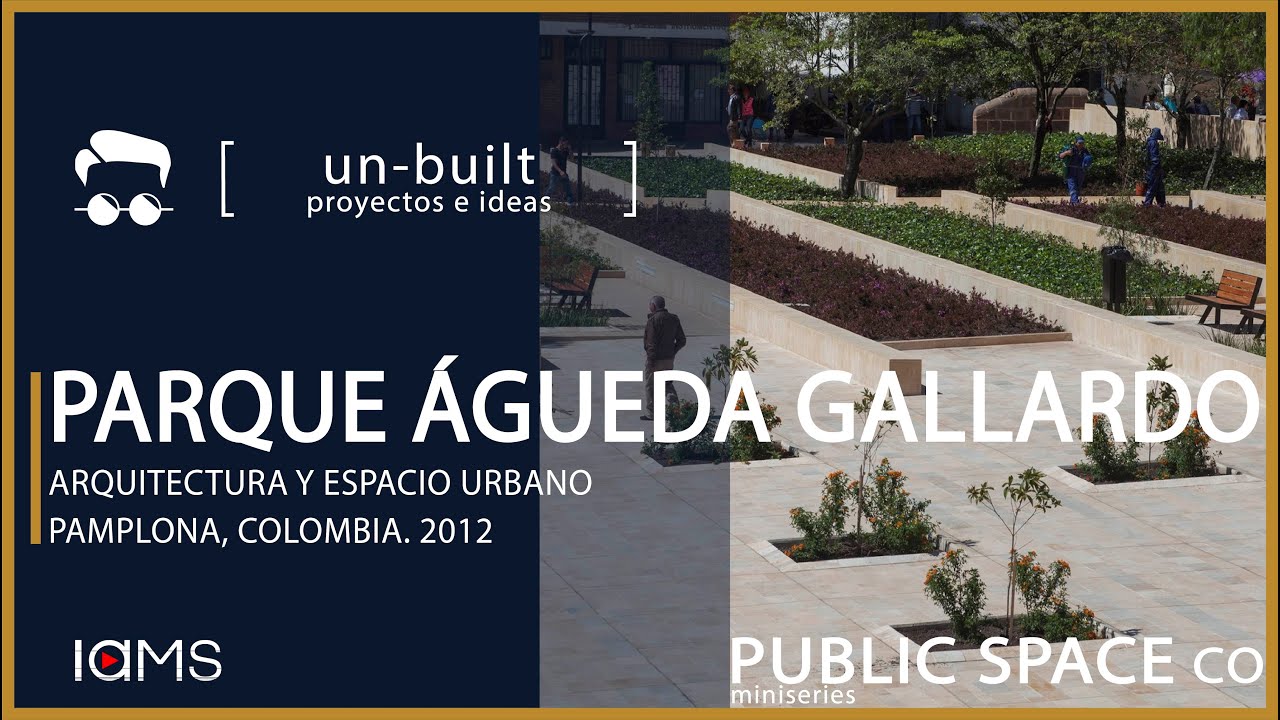
PARQUE ÁGUEDA GALLARDO. AEU
New Section
The discussion revolves around the project of recovering a public space in the historic center of Pamplona. Verónica Ortiz and Carlos Puerta from the architecture and public space office, aeu, discuss their project, focusing on strategies used to revitalize the existing plaza.
Project Strategies
- The winning office aimed to create a continuous surface to reduce traffic on surrounding streets.
- Emphasized highlighting heritage values of existing buildings and using lighting for contrast.
- Creating diverse urban activities areas and unique urban furniture for park's identity.
Project Overview
An introduction to the Agueda Gallardo Park project in Pamplona, constructed in 2012 by aeu Architecture and Public Space office. The park covers 16,384 square meters and involves architects Carlos Puerta and Verónica Ortiz.
Project Details
- Constructed in 2012 with an area of 16,384 square meters.
- Architects Carlos Puerta and Verónica Ortiz from aeu lead the project.
Office Focus and Experience
Verónica discusses aeu's focus on state projects, urban spaces consultancy, cultural facilities design, institutional spaces design, emphasizing community-centric urban development.
Office Focus
- Founded by architects Carlos Puerta Lloroni Corti from Universidad Nacional de Colombia.
- Specializes in state projects consultancy focusing on public spaces design.
Challenges and Experiences
The conversation delves into aeu's experiences working on public space projects across various Colombian cities like Bogotá, Magdalena, San Andrés, Medellín. They highlight the enriching challenges faced due to Colombia's historical centers' significance.
Design Challenges
- Working across different cities provided valuable insights into designing projects that resonate with diverse communities.
- Sharing experiences nationally and internationally enriched their approach to urban space proposals.
Public Space Competitions
Verónica elaborates on how public space interventions often stem from competitions organized by entities like the Colombian Society of Architects. She emphasizes the democratic nature of competitions for emerging offices like theirs.
Competition Insights
- Participation in public space competitions facilitated by organizations like the Colombian Society of Architects.
Detailed Discussion on Architectural Projects
The discussion delves into the rapid development of architectural projects, focusing on the selection process and responsibilities associated with such endeavors.
Development Process and Selection Criteria
- The project evolved swiftly over a design period of approximately seven to eight months, benefiting from funding available at that time.
- Pamplona was selected as the historical center for intervention after various proposals were presented by the Ministry.
- Participation in competitions like the one in Medellín offers a democratic platform for emerging architects to engage in significant projects.
- Winning such competitions entails a substantial responsibility, as it involves redefining and revitalizing historical centers.
- Engaging in these opportunities not only benefits architects but also contributes to democratizing professional practice and addressing societal needs.
Impact of Competitions on Professional Practice
- Competitions serve as a favorable platform for emergent offices to showcase their capabilities and address community challenges effectively.
- Emphasizing the significance of public spaces developed through competition-based initiatives, highlighting Colombia's exemplary approach to promoting democratic professional engagement.
Insights into Architectural Project Execution
The conversation transitions towards discussing specific projects, emphasizing sustainability, methodology development, and urban planning concepts.
Project Execution Insights
- Reflecting on the duration flexibility of presentations based on audience engagement levels during live interactions.
- Encouraging detailed discussions during presentations to cater to audience curiosity and enhance understanding of architectural works.
Acknowledgment of Team Efforts in Architectural Endeavors
Acknowledgment is given to team members involved in architectural projects, underscoring their contributions behind-the-scenes.
Team Recognition
- Highlighting the absence of an architect due to health reasons while recognizing their pivotal role within the office environment.
- Emphasizing the collective effort put forth by team members across various technical and regulatory aspects essential for project realization.
Emphasis on Sustainability in Urban Planning
The importance of sustainability in urban planning is underscored as a fundamental aspect driving architectural initiatives forward.
Sustainable Urban Planning Focus
- Detailing the national competition that led to the restoration of Pamplona's historic center as an exemplar of sustainable urban planning efforts.
Development of Sustainable Projects in Emerging Cities
The speaker discusses the importance of sustainable development, quality education, decent work, sustainable cities, and communities. These concepts aim to raise awareness about current and future urban environments.
Linking Sustainability with Architectural Practice
- Architects play a crucial role in interpreting specific contexts to understand how physical interventions can address the unique characteristics of each territory.
- Projects must consider both physical interventions and historical context to create sustainable impacts on territories.
- Sustainability should be understood as a way projects impact territories by considering local conditions and historical context.
Challenges Faced by Emerging Cities
Emerging cities like those in South America face environmental, urban, and social crises that require clear analysis to design truly sustainable projects.
Addressing Urban Challenges in Emerging Cities
- Emerging cities must design sustainable projects that meet current needs while anticipating future conditions.
- Understanding local habits, dynamics, and memories is essential for designing successful urban projects.
Incorporating Sustainability into Urban Design
The process of integrating sustainability into urban design involves understanding community needs and creating long-lasting projects.
Elements of Sustainable Urban Design
- Initial project stages focus on developing ideas and concepts that guide the direction of the project based on site readings.
- Urban spaces are defined by materiality, furniture, lighting, landscaping elements along with human activities within these spaces.
Multidisciplinary Approaches for Sustainable Projects
Collaboration between architects and engineers is vital for creating feasible and enduring projects that benefit both communities and local administrations.
Collaborative Efforts for Project Feasibility
- Engineers provide technical insights that complement architectural visions to ensure decisions align with sustainability principles.
New Section
The speaker discusses the elements that make up urban spaces, emphasizing the importance of understanding what can be done in these spaces and the significance of sustainable design in addressing community needs.
Elements of Urban Spaces
- The speaker highlights the importance of recognizing what can be achieved in urban spaces.
- Architects are urged to prioritize creating comprehensive projects that meet daily habit and activity needs while also promoting sustainability and minimal maintenance.
- Sustainable design is emphasized for durability and minimal upkeep, fostering a discussion on integrating designers' vision with multidisciplinary team input.
- Projects must transcend time to address minimum conditions within resource-limited communities, emphasizing viability and longevity.
- Design considerations should encompass understanding the location's history, time, and memory to create spaces that facilitate collective interaction and preserve cultural habits.
Exploring Pamplona's Historical Significance
The historical context of Pamplona is explored, highlighting its geographical location, historical importance as a transit hub, and architectural heritage.
Historical Context of Pamplona
- Pamplona is situated in the northern Santander department near Cúcuta and Venezuela, historically serving as a significant transit point due to its elevated position.
- It was an intermediate resting place for Conquistadors traveling between Venezuela and Bogotá.
- The city's proximity to Cúcuta underscores its historical relevance as a crucial stopover location.
- The initial intervention area included the main park and aimed to connect it with Carrera 2 through thoughtful design strategies.
Preservation Efforts in Pamplona
Preservation initiatives in Pamplona are discussed, focusing on strategic interventions around cultural heritage sites.
Preservation Initiatives
- While resources were primarily allocated to the main park initially, preservation efforts extended to Carrera Cuarta and surrounding streets.
- Pamplona's strategic location led to its classification by the Ministry of Culture as having significant cultural assets requiring conservation measures.
Cultural Significance of Gallardo Agreda
The discussion highlights the national cultural significance of Gallardo Agreda, emphasizing her role in the Eastern sector of the country and her influence on events such as the signing of the Constitution.
Gallardo Agreda's Cultural Relevance
- Gallardo Agreda is a significant figure in the Eastern sector, playing a crucial role in historical events like the signing of the Constitution.
- Villamizar, an important artist from the past century, is mentioned in connection with Ramírez.
- Villamizar's extensive work across the country is acknowledged, highlighting his origin from Pamplona and his association with religious structures like Palacio Arzobispal.
Design Concept and Symbolism
The conversation delves into the design concept behind creating a space that emphasizes historical and architectural values while balancing green areas and hard surfaces.
Design Approach for Symbolic Value
- Initial focus on symbolically charged historical buildings surrounding a plaza to create a visual narrative.
- Emphasis on generating transitional spaces to enhance unity within architectural elements.
- Creation of zones with varying characteristics - hard surfaces versus green areas - to achieve balance and highlight heritage values.
Integration of Architecture and Urban Space
Exploring how architecture and urban spaces are intertwined, influencing each other's presence within a cityscape.
Interplay Between Architecture and Urban Space
- Introduction of strategies to integrate architecture back into public spaces like parks.
- Acknowledgment of interdependence between architecture and urban spaces, emphasizing their mutual influence on each other's aesthetics.
Diverse Usage of Urban Spaces
Discussing how diverse activities shape urban spaces by differentiating areas based on their functions.
Utilization Diversity in Urban Planning
- Importance placed on creating distinct zones within urban settings to accommodate various activities.
Memory Patio Design Strategy
In this section, the speaker discusses the design strategy behind the Memory Patio, emphasizing the aim to enhance diversity of activities within urban spaces.
Memory Patio Design Objectives
- The goal was to create a space that fosters a variety of activities within a contained area.
- The initial area, known as "the atrium," aimed to serve as a prelude to the Cathedral, invoking notions of time, movement, and ritual grace associated with events like Holy Week in Pamplona.
- By connecting the space to the cathedral, it sought to evoke historical and cultural significance related to events like Holy Week in Pamplona.
Architectural Significance
- The design incorporated elements such as furniture and markings to guide visitors through different areas, enhancing the civic character of the plaza.
- Emphasizing architecture highlighted local cultural heritage and encouraged community members to identify with their surroundings more consciously.
Community Engagement and Institutional Presence
- Recognition of local values through architectural features aimed at fostering community pride and ownership, potentially influencing behavior patterns positively.
- Institutional presence reinforced a sense of belonging among individuals within the community, contributing significantly to civic engagement and identity formation.
Cultural Elements in Park Spaces
This segment delves into park spaces within the project, focusing on cultural aspects and contemplative experiences integrated into these areas.
Cultural Significance of Park Spaces
- The park spaces were designed for cultural contemplation, incorporating elements like landscaping and trees that created microclimates while adding aesthetic value.
- These areas facilitated everyday activities such as conversations and shared experiences, aligning with the project's intent to observe human behaviors in different contexts.
Evolution of Existing Structures
- A kiosk originally used for musical activities on Sundays lost its cultural significance over time. Efforts were made to restore its importance as a hub for cultural events during weekends.
Revitalizing Cultural Heritage Through Design
This part emphasizes efforts towards revitalizing cultural heritage by reestablishing structures' roles within communal memory spaces.
Restoring Cultural Significance
- Reintroducing neglected structures like the kiosk aimed at reinstating their role as vital cultural hubs within community consciousness.
Designing Urban Spaces for Community Engagement
In this section, the speaker discusses the importance of elements like lighting and furniture in urban design to create warmth and foster community engagement.
Importance of Lighting and Warmth in Urban Design
- Urban spaces have immediate, distant, and certain relationships with defining elements. Lighting plays a crucial role in creating contrast and evoking warmth.
- Understanding the qualities of territories is essential; for instance, Pamplona's cold climate near a moor requires design choices that bring warmth through materials and lighting.
- Warmth in design fosters a sense of ownership and enhances space utilization. Furniture acts as a facilitator shaping how people inhabit spaces, emphasizing identity creation.
Significance of Furniture in Shaping Community Interaction
- Furniture not only provides seating but also influences how spaces are inhabited. It serves as a tool for generating identity and reinforcing activities based on inhabitants' habits.
- Recognizing residents' habits is crucial as furniture can strengthen community activities. Designing benches for face-to-face conversations or linear benches for observation alters spatial dynamics.
Impactful Elements in Successful Community Projects
- Traditional and linear bench designs encourage different interactions, contributing to successful community engagement projects by aligning with residents' habits.
- Six key elements including materiality, habit formation, and identity generation were pivotal in the success of a project by enhancing community recognition of their territory.
Creating Sustainable Urban Spaces Through Coherence
This segment delves into the concept of sustainability in urban projects through coherence among stakeholders from conception to execution.
Stakeholder Collaboration for Sustainability
- Sustainability goes beyond concepts; it involves conscious responses to each location's unique needs.
- Various actors such as cultural ministries, local groups, infrastructure bodies, and merchants play diverse roles with distinct interests in urban projects.
Ensuring Coherence Amid Diverse Interests
- Coherence is vital from project inception to completion amidst numerous stakeholders with varying interests like commerce or governance.
- Managing decisions effectively involves articulating why specific choices matter to stakeholders while ensuring alignment with community requirements.
Architectural Responsibility for Project Success
- Architects bear significant responsibility from conceptual clarity to decision-making throughout project phases compared to other involved parties.
New Section
In this section, the speaker discusses the importance of community-driven projects and sustainability in architectural design.
Community-Driven Projects and Sustainability
- The project should not be solely based on the architect's preferences but should cater to the needs of the community.
- Architecture can create new memories and values for individuals within a space.
- Sustainably developing spaces like cultural hubs can lead to economic, cultural, and educational growth within communities.
- Transforming spaces into cultural hubs can enhance their symbolic, cultural, and sports significance for municipalities.
- Engaging communities through cultural activities fosters self-recognition and mutual understanding among residents.
Another New Section
This section delves into the technical aspects of sustainable architectural design focusing on material selection, modularity, and longevity of projects.
Sustainable Architectural Design
- Material selection such as local stone aligns with the municipality's aesthetic while ensuring durability over time.
- Sustainability in emerging cities involves creating projects that endure over time by considering local conditions and materials.
- Thoughtful material choices like stone cutting techniques contribute to project longevity and minimize future maintenance costs.
- Technical considerations like modular construction methods ensure efficient installation, reduce waste, and enhance project sustainability.
Detailed Discussion on Architectural Design Process
In this section, the speaker delves into the architectural design process, emphasizing the importance of coherence in criteria and sustainability within community projects.
Exploring Architectural Elements
- The design process involves highlighting historical figures' preferences to emphasize local character.
- Technical aspects like development and execution play a crucial role in creating viable architectural elements.
- Considerations include construction systems, sustainability, and community involvement for project viability.
- Architectural elements extend beyond mere benches to encompass diverse forms of public space utilization.
- Technical refinement is essential for elements to enhance urban spaces through lighting and user experience.
Supervision and Project Viability
This segment focuses on project supervision, architectural oversight, and ensuring project viability from conception to completion.
Project Supervision Insights
- Supervision involves overseeing architectural details on-site for project alignment with initial intentions.
- The speaker emphasizes their commitment from project inception to inauguration, ensuring comprehensive knowledge and involvement.
- Architectural supervision post-design phase aims at meeting technical requirements for project success.
- Active participation during construction ensures design adherence while prioritizing community needs over personal preferences.
- Architecture as a service underscores the profession's dedication to community-centric projects for communal ownership.
Community-Centric Design Impact
This part highlights the transformative impact of community-centric architecture on public spaces and communal engagement.
Community-Centric Architecture
- Architecture should prioritize community needs over personal desires for spaces that resonate with inhabitants.
Detailed Discussion on Urban Spaces
In this section, the speaker delves into the concept of urban spaces and how individuals interact with and shape these environments.
Prioritizing Appropriation of Spaces
- Individuals are encouraged to appropriate urban spaces that were previously disjointed, allowing for a more cohesive experience.
Understanding Spatial Scales
- Different spatial scales, from close-up to distant views, enable individuals to perceive beyond immediate surroundings.
Evolution of Everyday Spaces
- Urban spaces evolve from being mundane to characterized by distinct features like furniture, lines, and various planes.
Fostering Community Engagement
- Urban spaces become habitual daily environments where individuals can recognize themselves within a context and actively participate in community life.
Cultivating Place Memories
Verónica and Lorena Discussing Landscape Design
Verónica and Lorena discuss the importance of accurate readings of locations for landscape design, emphasizing the selection of plant species based on endemic characteristics and creating sustainable projects.
Importance of Accurate Readings for Landscape Design
- The team includes a forest engineer and a landscape architect to ensure appropriate readings and sustainable project development.
- The forest engineer assesses endemic species in the park to understand current tree conditions, aligning with the landscape architect's vision for color intentions in different zones.
- Emphasis on using endemic species to reflect local values and create visual contrasts through color variations.
Creating Warmth in Public Spaces Through Lighting
Discussion on utilizing lighting design to create warmth in public spaces, particularly in cold environments like Pamplona.
Utilizing Lighting for Warmth
- Lighting design aims to provide a sense of warmth in cold climates, allowing public spaces to be inviting regardless of weather conditions.
- Consideration of materiality plays a crucial role in achieving warmth through lighting, focusing on selecting materials that are easy to install while meeting aesthetic expectations.
Community Engagement in Urban Projects
Exploring the significance of community engagement through interviews and co-creation processes in urban projects.
Community Engagement Benefits
- Interviewing and engaging with communities is essential for understanding their real needs and perceptions towards space utilization.
Las Comunidades y la Responsabilidad en los Proyectos
In this segment, the speaker discusses the importance of meeting community expectations in project execution and the role of communities in holding administrations accountable.
Community Expectations and Project Execution
- Communities demand projects to be executed as presented initially to ensure inclusion.
- Communities become involved in processes, making them demanding towards administrations for accountability.
- Communities act as overseers ensuring projects align with promised outcomes.
Defining Urban Space
The conversation shifts towards defining urban space from different perspectives and professional experiences.
Understanding Urban Space
- Defining urban space is crucial from various professional viewpoints.
- Urban space is often associated with urban characteristics influenced by inhabitants' habits.
- Urban space reflects a correlation between built structures and empty spaces, impacting human actions and individual/collective identities.
Professional Commitment to Public Spaces
The discussion emphasizes the commitment to creating quality public spaces that serve individuals and communities effectively.
Commitment to Public Spaces
- Professional dedication lies in creating effective public spaces for individuals and communities.
- Projects should focus on enhancing city life rather than individual interests, emphasizing collective benefits.
Appreciation for Participation
Gratitude is expressed towards participants for sharing experiences, enriching knowledge exchange within the professional community.
Acknowledgment of Participation
- Appreciation extended to participants for enriching knowledge exchange through shared experiences.