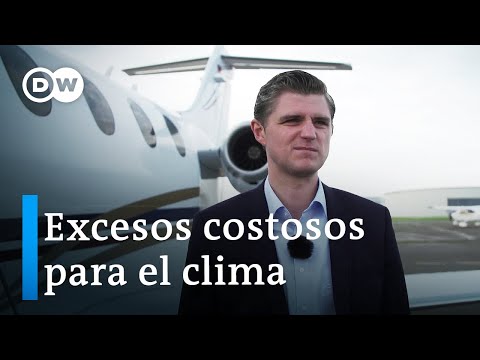
El cambio climático y los ricos | DW Documental
Traveling in Luxury: The Environmental Impact of Private Jets
The Comfort vs. Climate Debate
- The speaker expresses disdain for public transport, preferring private jets for comfort despite acknowledging the environmental harm caused by such travel.
- There is a discussion about wealth and its correlation with climate damage, suggesting that the richer one is, the more they contribute to environmental degradation.
- Acknowledgment of an article praising the speaker's lifestyle raises questions about luxury living amidst climate concerns.
Economic Implications of Private Travel
- The cost of private jet travel is highlighted, with a flight costing around 8,000 euros for a round trip to Frankfurt.
- The increase in private jet flights in Germany (9% rise in one year) indicates a growing trend among the wealthy to travel luxuriously without concern for their carbon footprint.
Climate Consequences and Personal Responsibility
- Emissions from private jets are discussed as significant contributors to greenhouse gases, linking them directly to climate crises like wildfires and floods.
- A prominent climate researcher emphasizes that humanity must limit CO2 emissions to ensure survival; each person should ideally emit no more than three tons annually.
Disparities in Emission Contributions
- The speaker illustrates how a single short flight can exhaust an individual's annual CO2 budget, highlighting inequities in emissions between rich and poor.
- A proposal for equal CO2 budgets raises questions about fairness and abundance; however, it’s deemed impractical given current societal structures.
Real-Life Examples of Economic Strain
- Discussion shifts to those who cannot afford luxury travel; only a small percentage can fly privately while others struggle with basic transportation costs.
- Data reveals that the wealthiest 1% produce disproportionately high emissions compared to poorer populations who contribute significantly less.
Everyday Life and Environmental Choices
- An example from lower-income families shows how financial constraints lead them to make environmentally friendly choices out of necessity rather than choice.
- Comparisons are made between everyday family transportation methods versus extravagant jet travel; it highlights economic disparities affecting environmental impact decisions.
Cultural Attitudes Towards Wealth and Consumption
The Environmental Impact of Maserati Cars
Fuel Consumption and CO2 Emissions
- Most Maserati cars consume a significant amount of fuel; for instance, a weekend trip can emit nearly 0.3 tons of CO2, which is a tenth of the annual budget of three tons.
Climate Change Awareness
- The speaker discusses the urgency of climate change, emphasizing that scientific evidence from the last 10 to 15 years clearly indicates its severity.
Personal Responsibility vs. Enjoyment
- There is a moral dilemma regarding pleasure trips in luxury cars during a climate crisis; while some enjoy driving classic cars, they also contribute to CO2 emissions as a hobby.
Regulatory Challenges
- Many acknowledge the climate problem but resist stricter laws and regulations, fearing loss of personal freedoms and financial investments made over decades.
Ethical Considerations in Emission Reductions
- The discussion touches on ethical issues surrounding carbon footprints; it raises questions about fairness when wealthier individuals can afford higher emissions without consequences.
Technology and Carbon Footprint Reduction
Need for Technological Advancement
- A call for rapid development of climate-friendly technology is made; however, relying solely on future technologies is seen as self-deception.
Immediate Action Required
- It’s emphasized that CO2 emissions must decrease drastically now rather than waiting for new technologies to emerge.
Economic Disparities in Energy Costs
- Lower-income individuals are increasingly aware of their energy consumption due to rising costs; many use online calculators to assess their carbon footprint based on lifestyle choices.
Home Renovation Challenges
- Many homes require costly renovations for better energy efficiency; older buildings often have poor insulation leading to higher heating costs.
Quality of Life Concerns
- As people strive to reduce their carbon footprint, they face challenges that threaten their quality of life due to financial constraints limiting further environmental protection efforts.
Wealth Inequality and Environmental Impact
Disparity in Emissions Among Income Levels
- There's an unfair burden placed on lower-income individuals who must cut back on emissions while wealthier people continue excessive consumption without repercussions.
High Emissions from the Wealthy
- On average, wealthy individuals produce over 100 tons of CO2 annually compared to the German average of 11 tons per person due to luxurious lifestyles involving travel and property ownership.
Accumulation Effects on Climate
- The accumulation of wealth has been shown to have detrimental effects on climate health, with billionaires contributing disproportionately high levels of greenhouse gases through lavish expenditures.
Lifestyle Choices Among the Wealthy
Business Travel Habits
The Role of Climate Change in Investment Decisions
Importance of Professionalism in Operations
- The necessity to maintain machinery professionally is emphasized, especially in industries where climate change is a significant factor.
- Climate change plays an important role in investment decisions, but the approach may differ from common assumptions; investments are made where climate change could be beneficial.
Strategic Investment Locations
- Investments are strategically chosen based on locations that can benefit from climate changes, such as tourism or sustainable practices.
- There is a call for concrete steps to mitigate impending climate disasters rather than just warnings about their occurrence.
Carbon Emission Management
- A proposal suggests assigning each person three tons of CO2 emissions per year, with wealthier individuals needing to purchase additional allowances.
- This system aims to balance emissions and promote fairness; wealthy individuals would pay for their higher carbon footprints.
Challenges and Solutions in Climate Policy
Urgency of Action
- The urgency of addressing climate issues is highlighted; failure to act could lead to severe consequences like drought and conflict.
- Renewable energy and building renovations are necessary measures, but massive savings among the wealthy are crucial for reducing CO2 emissions effectively.
Economic Implications
- Products that harm the climate must become more expensive to encourage a shift towards sustainability; this aligns with broader European strategies.
- Justice in climate policy requires equitable distribution of resources and responsibilities regarding carbon budgets.
Inequality in Emissions: A Growing Concern
Taxation vs. Wealth Accumulation
- Addressing social justice involves taxation rather than prohibiting wealth accumulation; however, current tax systems have not deterred luxury lifestyles among the rich.
Future Projections
- Experts warn that current measures are insufficient, predicting increased inequality in CO2 emissions between classes over time.
Disparity Among Income Levels
- While middle-class emissions have remained stable over 30 years, those from the wealthiest 0.01% have nearly doubled during the same period.
Collective Responsibility for Climate Action
Need for Inclusive Participation
- Policymakers avoid limiting emissions from the wealthy, which could hinder efforts against climate change affecting future generations.
Essential Collaboration