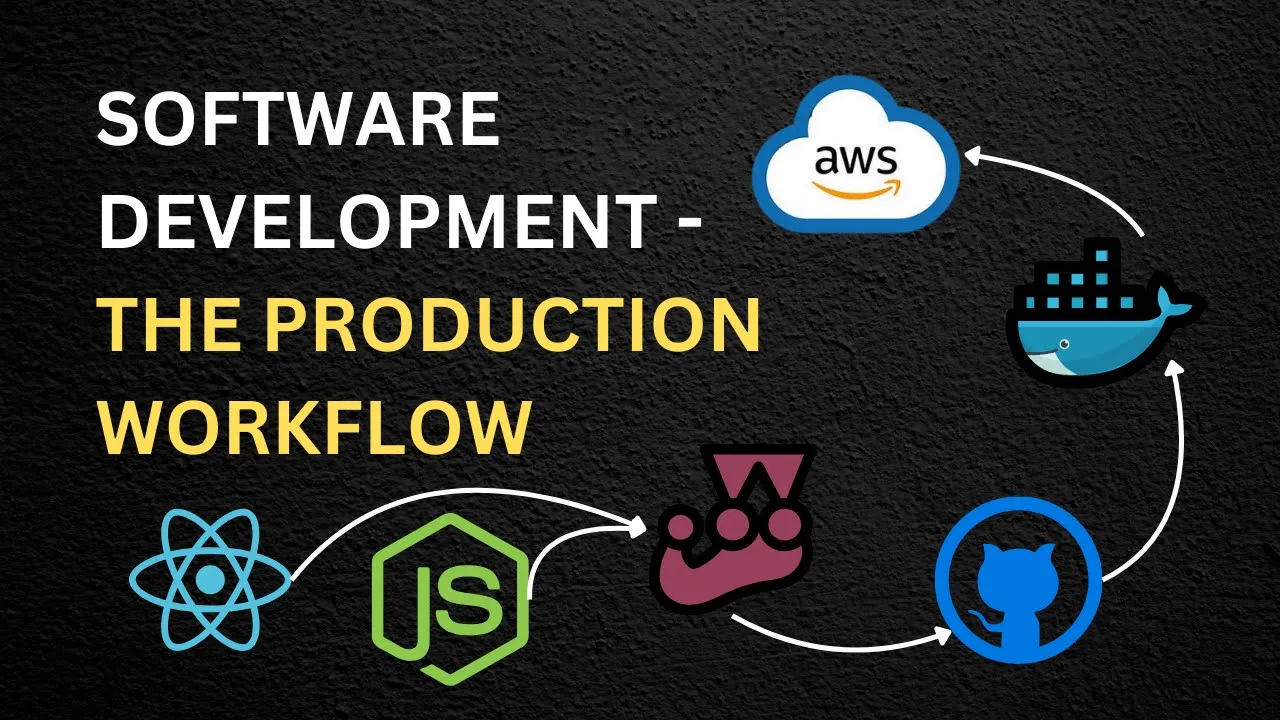
Software Development - The Production Workflow
Learning Software Development Workflow
In this section, the speaker introduces the importance of understanding the big picture in software development rather than getting lost in programming language details.
Explaining Software Development Production Workflow
- Understanding the significance of having a clear idea of what to build and who will use the end product.
- Discussing key points of the software development production workflow from development to production phases.
- Highlighting different teams involved in the development phase such as front-end developers, backend developers, and specific technologies used like React, Python, or Node.js.
- Emphasizing the importance of writing tests for features developed by developers to ensure professionalism and quality.
- Explaining Continuous Integration (CI) pipelines and various tools like GitHub Actions for automating testing processes.
Development Workflow Overview
In this section, the speaker explains the development workflow, including stages like staging and production environments, quality assurance, stakeholder involvement, and the importance of feedback loops.
Staging Environment
- The staging environment is used for internal testing by stakeholders, business owners, and QA teams. It mirrors the production environment but uses fake databases for testing purposes.
Production Phase
- After acceptance in the staging environment, features are pushed to production for end users to benefit from. Stakeholders and QA teams play a crucial role in approving features before deployment.
Collaboration and Automation
- Development teams collaborate with stakeholders and QA teams to ensure alignment on project goals. Automation in deployment to production is considered to streamline processes and reduce manual testing efforts.
Importance of Understanding the Big Picture
This segment emphasizes the significance of developers understanding the broader context beyond their specific roles to become valuable team members.
Stakeholder Engagement
- Developers work not only for stakeholders who benefit from selling products but also for end users who derive value from solving problems. Understanding both perspectives is essential for effective development.
Continuous Improvement
- Iterative development involves incorporating user feedback to enhance products continually. By grasping how all components fit together, developers can deliver high-quality solutions that meet user needs effectively.
Exploring Additional Learning Resources
The speaker introduces various learning resources related to testing, Docker, Node.js, JavaScript, Kubernetes, AWS, catering to different interests within web development.
Testing and Development Tools
- Extensive content on testing methodologies is available for those interested in enhancing their skills in this critical aspect of web development.
DevOps Technologies
- Resources covering Docker and Kubernetes offer insights into backend operations and DevOps practices that can broaden developers' skill sets beyond frontend development alone.
Cloud Computing with AWS
- Beginner-friendly blog posts on AWS provide foundational knowledge about cloud computing services like AWS through accessible content tailored for learners at all levels of expertise.